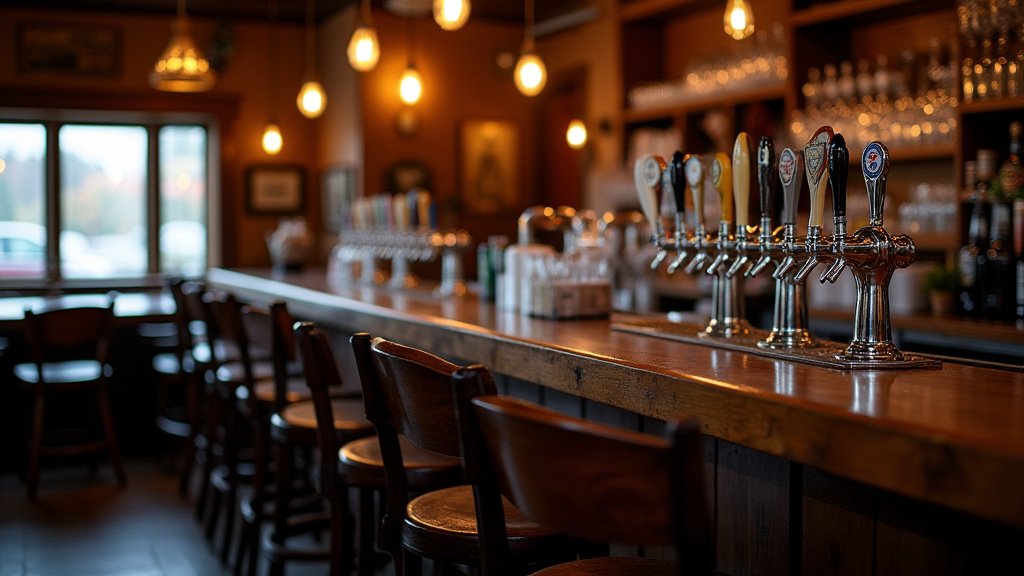
The landscape of Oregon’s craft beer industry witnessed a significant moment of reprieve this week as Oakshire Brewing announced it has officially reversed its decision to close the Oakshire Public House. Located at 207 Madison Street in Eugene, the venue, which many locals feared was on the verge of shuttering, will continue operations under the same ownership. This development arrives as a welcome relief to the Eugene community, where the Public House has served as a cultural and social anchor for years.
A Strategic Reversal in a Volatile Market
The initial announcement of the closure sent ripples through the Pacific Northwest craft beverage scene, highlighting the harsh economic realities currently facing independent breweries. Rising operational costs, labor shortages, and an increasingly saturated market have forced many historic institutions to reconsider their footprint. However, Oakshire’s decision to maintain the Public House is not merely a return to business as usual; it is a calculated strategic pivot. By keeping the venue open, the brewery retains a vital touchpoint for consumer engagement and brand visibility in its home market.
Management confirmed that the reversal was made possible by reevaluating the logistical and financial burdens associated with the location. Instead of treating the Public House as an isolated unit with its own distinct production struggles, the company is embracing a collaborative model. The most significant element of this new strategy involves partnering with another brewery for production. This division of labor allows Oakshire to focus on what it does best—maintaining the customer-facing experience and curated craft selection at the Public House—while outsourcing or consolidating the production volumes that were previously creating overhead pressure.
The Mechanics of the Production Partnership
The pivot towards a partnership model is increasingly common in the modern craft beer ecosystem. As the industry matures, the ‘survival of the fittest’ mentality is being replaced by ‘survival of the connected.’ By aligning with a third-party production partner, Oakshire is essentially diversifying its operational risk. This setup allows the Public House to continue serving the same portfolio of Oakshire favorites while benefiting from a more efficient, shared production stream. This move effectively untangles the retail-facing identity of the Public House from the capital-intensive production demands that were previously jeopardizing its viability.
For the consumer, the change is likely to be imperceptible in terms of quality, but it represents a fundamental shift in how the business operates on the back end. It safeguards the venue’s role as a gathering space, protecting jobs and preserving a space that has become synonymous with the local Eugene beer culture. This operational agility is critical for independent breweries that lack the massive corporate scale of national competitors.
The Evolution of the Eugene Beer Scene
Eugene has long been a bedrock of the craft beer movement, and the presence of stalwarts like Oakshire is instrumental in maintaining the city’s identity. The Public House has served as more than just a bar; it has been a venue for community events, a supporter of local causes, and a testing ground for experimental brews. The decision to remain open is a vote of confidence in the local economy. It suggests that while the craft beer ‘bubble’ has indeed burst, leaving only the strongest and most adaptable models, there is still immense value in physical, community-centric brick-and-mortar locations.
As the industry continues to navigate a landscape of changing consumer preferences—where drinkers are increasingly shifting toward non-alcoholic options, ciders, and ready-to-drink cocktails—breweries must be hyper-responsive. Oakshire’s ability to pivot rather than fold is an indicator of managerial maturity. The company is prioritizing its direct-to-consumer relationship, recognizing that in an era of infinite choice, the ‘third place’—the social environment outside of home and work—is the most valuable asset a brand can possess.
Looking Ahead: Stability and Collaboration
With the future of the 207 Madison Street location secured, attention now turns to how this partnership will perform in the coming fiscal quarters. The success of this model will largely depend on the seamless integration of the partner brewery’s supply chain with Oakshire’s distribution and quality standards. If successful, this could serve as a blueprint for other regional breweries struggling to balance the costs of maintaining high-touch retail locations with the volatile economics of production.
Ultimately, the story of Oakshire Public House is one of adaptation. It is a testament to the fact that while the industry is undeniably changing, there is still room for brands that can effectively balance their historical legacy with the necessity of modern, flexible business operations. Eugene residents can expect the familiar taps to keep flowing, but they are also witnessing a subtle, professional evolution in how one of the city’s most beloved brands intends to navigate the next decade of craft beverage competition.