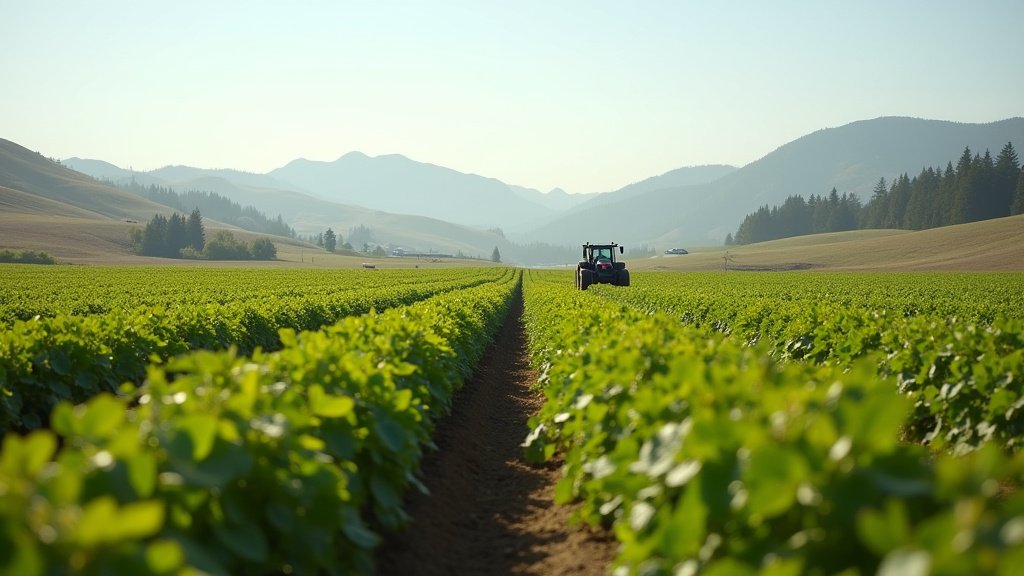
The economic landscape for Pacific Northwest agriculture has taken a sobering turn as recent data reveals that the appreciation of farmland values has stalled when adjusted for the corrosive effects of inflation. For the second consecutive year, Oregon’s agricultural real estate has failed to keep pace with the broader economic inflationary trend, leaving many producers facing a stagnation in wealth accumulation and reduced equity growth. Research highlighted by Oregon State University economist Dan Bigelow underscores a critical pivot in the regional market: while nominal prices for land may appear to be rising on paper, the underlying purchasing power of these assets is actually eroding. Specifically, the data indicates a 0.3% decrease in inflation-adjusted farmland values for the state, a development that carries significant implications for farm operators, lenders, and investors alike.
The Mechanics of Real vs. Nominal Valuation
To understand the gravity of this 0.3% decline, it is essential to distinguish between nominal values and real-value adjustments. Nominal value represents the face-value price of the land—the figure often seen on property tax assessments or listing prices. In many parts of Oregon and Washington, these figures have shown modest growth, leading to a superficial impression of market health. However, when we apply an inflation-adjusted metric, which accounts for the rising cost of goods, services, and the general devaluation of the dollar over time, the picture changes significantly. This 0.3% contraction is not merely a statistical outlier; it is a clear indicator that the cost of maintaining, insuring, and operating agricultural land is rising faster than the value of the land itself. For the average multi-generational farm in the Willamette Valley or the fertile expanses of Eastern Washington, this means that even as property values appear stable, the owners are technically losing ground. The divergence between asset price appreciation and general inflation creates a tightening margin that complicates long-term financial planning.
Economic Implications for Producers and Lenders
The implications of this stagnant valuation extend far beyond simple ledger entries; they reach into the heart of agricultural credit and expansion. Agricultural businesses rely heavily on the equity of their land to secure operating loans, equipment financing, and seasonal lines of credit. When inflation-adjusted values decline, the collateral value of the land diminishes in real terms, even if the nominal appraisal remains high. This can lead to tighter credit conditions, as lenders may perceive a lower buffer in the debt-to-equity ratio, potentially resulting in higher interest rates or more stringent lending requirements for farmers. Furthermore, for those looking to expand their operations, the reality of a 0.3% real-value decline makes acquisition more challenging. If the return on land investment is failing to outpace the rate of inflation, the logic of land acquisition as a ‘safe harbor’ investment is called into question. This scenario forces producers to focus more on operational efficiency and yield maximization rather than relying on land appreciation to drive overall farm net worth.
Historical Context: A Departure from Trend
Historically, Pacific Northwest farmland has been viewed as a durable, inflation-hedging asset. Over the last three decades, land values in Oregon and Washington often outperformed inflation, providing farmers with a reliable buffer against volatile commodity prices. The current two-year trend of real-value declines represents a notable departure from this historical narrative. It suggests that the macro-economic environment—characterized by fluctuating interest rates, labor market tightness, and shifts in global export demand—is exerting a pressure that the traditional land market cannot fully absorb. We are witnessing a realignment of expectations. Whereas in the past, a farmer could count on land equity growth to bridge the gap during lean crop years, this “equity cushion” is currently thinning. The role of institutions like the USDA National Agricultural Statistics Service (NASS) becomes vital here, as they provide the granular data necessary for farmers to make sense of these broader trends. Analysts monitoring the sector are paying close attention to whether this will be a multi-year plateau or if the market is headed for a more significant correction.
Adapting to the New Reality
What are the survival strategies in an environment where land values are effectively shrinking? Many producers are pivotting toward intensive management strategies that prioritize immediate cash flow over long-term speculative land value. This includes diversifying crop profiles to include higher-value specialty crops that can withstand inflationary pressures better than traditional commodities. Others are looking at “value-add” operations, such as on-farm processing or direct-to-consumer sales, which capture a larger share of the retail dollar and are less dependent on the inherent appreciation of the soil itself. Additionally, the role of government policy and agricultural extension services will be crucial in the coming months. Farmers are increasingly seeking guidance from state universities and financial advisors on how to restructure debt and hedge against rising input costs. The narrative of the 2026 fiscal year is not one of collapse, but one of adjustment, challenging the agricultural sector to prove its resilience through operational excellence rather than passive asset growth.
FAQ: People Also Ask
1. What does it mean when farmland values ‘fail to keep pace with inflation’?
It means that while the dollar price of the land might be increasing (nominal growth), it is rising slower than the general rate of inflation. When you adjust for the rising cost of living and inputs, the land’s ‘real’ value has actually decreased, meaning it has lost purchasing power.
2. How does this trend impact small family farms versus large corporate operations?
Smaller farms often feel the pressure more acutely because they have less liquidity to absorb rising operational costs. Large operations may have better access to capital, but both are forced to rely more on operational profit margins rather than land equity appreciation for their financial stability.
3. Will this trend lead to a crash in Pacific Northwest land prices?
Current data from analysts like Dan Bigelow points to a period of stagnation rather than a crash. The primary concern is the erosion of real value, which creates financial pressure, but it does not necessarily mean an immediate, dramatic drop in nominal land prices.
4. What are the main entities involved in monitoring these agricultural trends?
Key entities include the USDA National Agricultural Statistics Service (NASS), which provides the raw data; land-grant universities such as Oregon State University, which provide academic analysis; and regional agricultural lending institutions that adjust their credit policies based on these valuations.