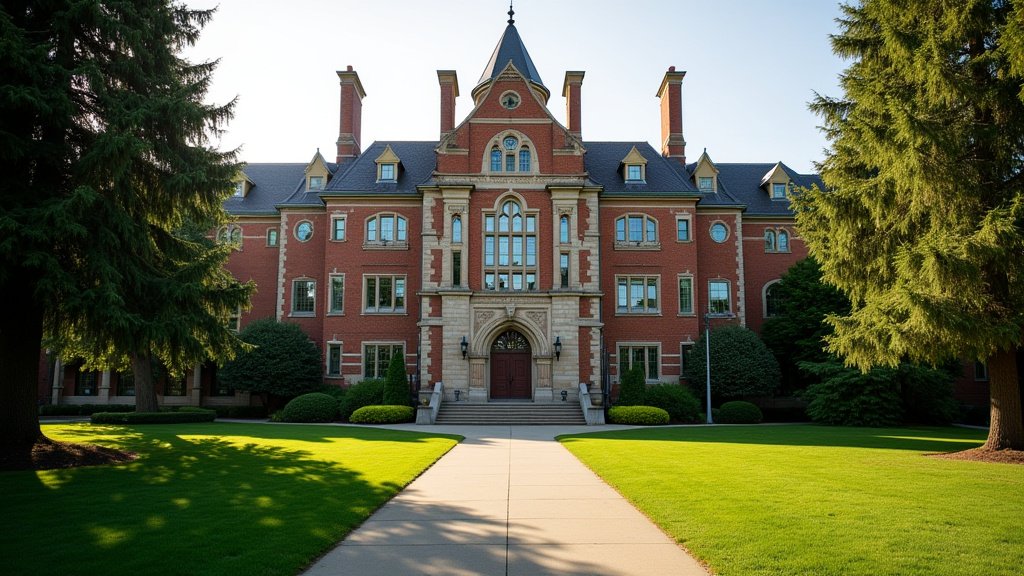
The University of Oregon is navigating a stark financial turning point as it formally announces a $65 million reduction in its operating budget. This sweeping austerity measure, prompted by a confluence of rising operational costs, inflationary pressures, and enrollment fluctuations, will see the institution consolidate its campus footprint by closing at least one student dormitory and eliminating five academic departments. The move marks a definitive shift in the university’s strategy, moving from an era of expansion to a period of rigorous fiscal recalibration aimed at ensuring long-term institutional solvency.
Key Highlights
- $65 Million Budget Reduction: A comprehensive cut to the institution’s operating budget, necessitated by long-term financial pressure.
- Infrastructure Consolidation: The closure of at least one major student dormitory, reflecting a strategy to centralize housing and reduce maintenance overhead.
- Academic Retrenchment: The elimination of five specific academic departments, impacting faculty distribution and program availability.
- Focus on Fiscal Stability: These actions represent a preemptive move by the administration to mitigate ongoing operational deficits.
A University At A Fiscal Crossroads
The announcement of a $65 million budget reduction at the University of Oregon is not merely an administrative exercise but a fundamental re-evaluation of the university’s resource allocation. As higher education institutions across the United States face a ‘demographic cliff’—a decline in the traditional college-aged population—and rising costs, the University of Oregon (UO) finds itself among a growing cohort of public universities forced to make difficult, unpopular choices to maintain financial viability. The $65 million figure represents a substantial portion of the university’s discretionary spending, and its removal will be felt across every echelon of campus life.
The Anatomy Of The Cuts
At the center of this financial recalibration is the goal of streamlining operations. The administration has identified that maintaining legacy infrastructure, such as older dormitory facilities, is becoming increasingly cost-prohibitive. By closing at least one dormitory, the university is effectively pruning its real estate portfolio, choosing to consolidate students into newer, more energy-efficient facilities. While this improves operational margins, it raises immediate questions regarding student capacity and the potential impact on campus culture, which is deeply rooted in the residential experience.
Furthermore, the decision to eliminate five academic departments is perhaps the most controversial aspect of the cuts. These departments, while often niche or suffering from low enrollment, are vital components of the liberal arts ecosystem. The process of departmental elimination is never a simple ledger adjustment; it involves the complex negotiation of tenured faculty contracts, the cessation of research pipelines, and the disruption of student academic paths. This reduction reflects a strategic pivot toward prioritizing high-demand programs, a trend that is becoming the new standard in modern academic administration.
Secondary Angles: Analyzing The Impact
1. The Human Cost of Efficiency: While the $65 million figure is abstract, the impact on students and faculty is concrete. The loss of five departments necessitates the displacement of students currently enrolled in those programs. The university is obligated to create ‘teach-out’ plans, but the disruption to academic momentum and mentorship networks is an intangible cost that will likely linger for years. Students are increasingly asking whether the cost of tuition, which has steadily risen, is being met with a corresponding decrease in access to diverse academic offerings.
2. The Macro Landscape of Higher Education: The University of Oregon’s situation is a microcosm of a national crisis. Across the Pacific Northwest and beyond, public institutions are grappling with the limitations of state funding versus rising operational demands. This fiscal retrenchment serves as a leading indicator of what many universities will face over the next decade. The era of unchecked growth is being replaced by an era of ‘strategic retrenchment,’ where universities must prove their value proposition in an increasingly skeptical market.
3. Future Strategic Outlook: Looking ahead, the question remains: is this $65 million cut a one-time ‘correction,’ or the first phase of a longer-term contraction? The university’s administration maintains that these moves are necessary to secure future stability. However, critics and alumni organizations are closely monitoring whether this will lead to a ‘hollowing out’ of the university’s unique intellectual identity. The future viability of the institution will depend not just on balancing the budget, but on how effectively it can maintain its academic prestige while operating on a leaner, more restricted financial model.
FAQ: People Also Ask
Q: Why is the University of Oregon cutting its budget by $65 million?
A: The university is responding to a combination of inflationary pressures, rising operational costs, and shifting enrollment trends. The administration has deemed these measures necessary to align spending with projected revenue and ensure the long-term financial health of the institution.
Q: Which dormitories and departments are being affected?
A: While the university has confirmed the closure of at least one dormitory and the termination of five academic departments, specific names and timelines are being communicated directly to the affected faculty, staff, and student bodies through official university channels to manage transitions effectively.
Q: Will student tuition be affected by these cuts?
A: The budget cuts are primarily focused on operational and structural expenses rather than direct tuition adjustments. However, students may see changes in available course selections and on-campus housing options as a direct result of these institutional consolidations.
Q: Are these layoffs part of the budget reduction?
A: Whenever an institution reduces its budget by $65 million and eliminates entire departments, personnel changes are an inevitable consequence. The university has indicated it is working through the appropriate administrative procedures to manage staff and faculty transitions in compliance with union contracts and university policy.