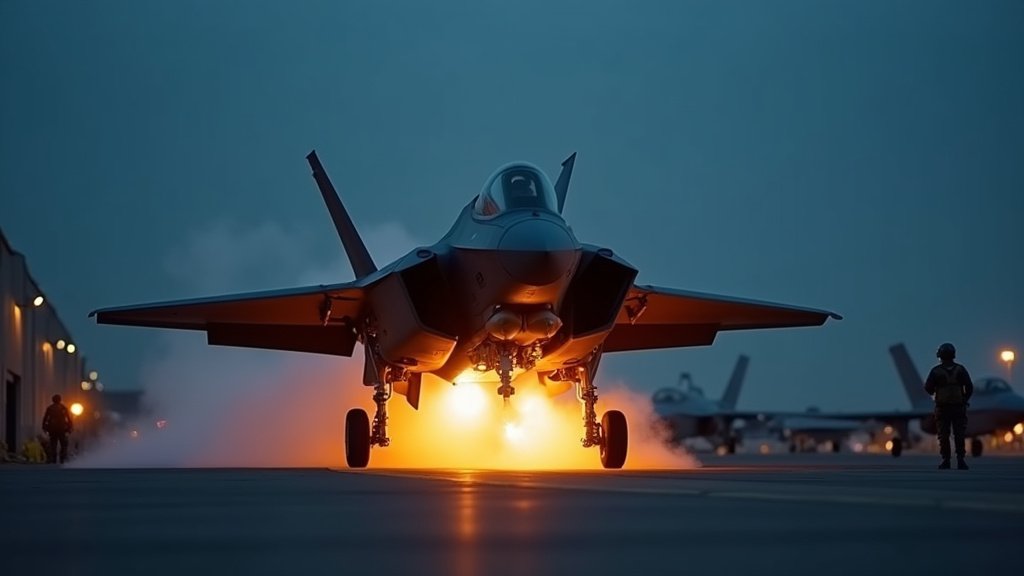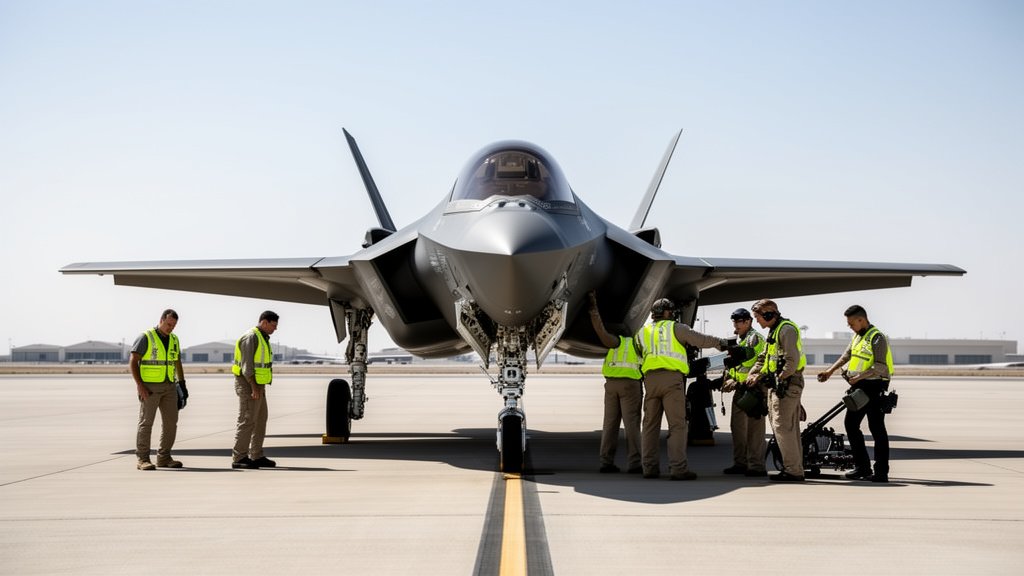
The US administration has formally notified Congress of its intention to approve a landmark $24.3 billion sale of 48 F-35 Lightning II fighter jets to Saudi Arabia, a move that fundamentally recalibrates the defense architecture of the Middle East. This announcement signals a significant shift in US foreign military sales policy, underscoring a commitment to bolstering the kingdom’s aerial defense capabilities amid an evolving threat landscape in the Gulf region. The deal, which includes comprehensive logistics, support, and training packages, is now subject to a 30-day Congressional review period, a standard procedural milestone that will likely spark intense debate regarding regional arms proliferation, the Qualitative Military Edge (QME) doctrine, and the broader geopolitical strategy of the United States.
The Strategic Anatomy of the $24.3 Billion Package
At the core of this transaction is the F-35 Lightning II, the world’s most advanced multi-role stealth fighter, manufactured by Lockheed Martin. The $24.3 billion valuation encompasses far more than just the airframes. Industry analysts note that this figure includes advanced sensors, long-term maintenance infrastructure, spare parts, and the integration of sophisticated network-centric warfare capabilities. By equipping the Royal Saudi Air Force with 48 of these fifth-generation aircraft, the US is not merely providing hardware; it is integrating the kingdom into a digital combat ecosystem that links ground, sea, and air assets in real-time.
From a strategic perspective, the introduction of the F-35 into the Saudi arsenal is designed to act as a significant deterrent. The stealth capabilities of the F-35 allow for deep penetration into contested airspace, theoretically neutralizing surface-to-air missile threats that traditional fourth-generation aircraft struggle to overcome. This capability is viewed by defense planners as essential for maintaining regional stability, particularly in the face of increasingly complex drone and missile threats emanating from non-state actors and regional rivals.
The 30-Day Legislative Clock
Under the Arms Export Control Act, the administration’s notification to Congress triggers a 30-day period during which lawmakers can scrutinize the deal. While the executive branch maintains significant latitude in foreign military sales, this specific acquisition is expected to face rigorous oversight. Proponents of the sale argue that it strengthens a key strategic alliance and creates high-skilled jobs within the American defense manufacturing sector, particularly across the Lockheed Martin supply chain.
Conversely, skeptics often raise concerns regarding the impact on regional power balances. A central theme in this debate is the QME, a long-standing US policy requiring the government to ensure that Israel maintains a military advantage over its neighbors. Defense officials have indicated that the specific configuration of the F-35s offered to Saudi Arabia will be designed to address these concerns, ensuring that while the kingdom gains significant defensive parity, the regional military equilibrium remains intact.
A New Era of Defense Integration
Beyond the raw numbers, the deal represents a shift toward a more integrated regional air defense network. The F-35’s ability to share data with other platforms, such as the Patriot missile defense systems and the Aegis combat system, allows for the creation of a ‘shield’ that is significantly more effective than the sum of its parts. By standardizing advanced hardware across allied nations, the US is attempting to reduce its own physical presence in the region while maintaining a high degree of influence and stability.
Economic and Industrial Ripples
On the domestic front, the economic impact of a $24.3 billion defense contract is substantial. Such a massive procurement cycle sustains thousands of manufacturing jobs across various US states and promotes technological R&D investment. For Lockheed Martin, this order represents a long-term revenue stream that guarantees the production line remains active and efficient, effectively lowering the per-unit cost of the aircraft for the US military itself through economies of scale.
This sale acts as a barometer for the current administration’s ‘America First’ approach to global security—prioritizing strong alliances, regional burden-sharing, and the export of high-end military technology to trusted partners. As the 30-day clock ticks, the global defense industry will be watching closely to see if this deal clears the legislative hurdles, setting a new precedent for military cooperation in the 21st century.
FAQ: People Also Ask
1. What does the $24.3 billion F-35 package actually include?
It is not just the 48 F-35 aircraft. The deal includes comprehensive support packages, including pilot training, logistical support, maintenance equipment, spare parts, and integrated network-centric warfare software, ensuring the RSAF can operate and maintain the jets for years to come.
2. What is the ‘Qualitative Military Edge’ (QME) and why does it matter here?
QME is a US legal requirement ensuring Israel’s military capabilities are superior to those of any potential combination of regional state actors. Critics of the Saudi sale argue it could challenge this edge, while the administration maintains the configuration provided will not compromise Israel’s security.
3. How does the 30-day Congressional review process work?
Once the executive branch formally notifies Congress of a major arms sale, lawmakers have 30 days to review the proposal. Congress can pass a joint resolution of disapproval to block or modify the sale, though this is historically rare and would face the threat of a presidential veto.
4. Why is the F-35 considered a ‘game-changer’ for Saudi Arabia?
Unlike fourth-generation fighters, the F-35’s stealth technology, advanced avionics, and sensor fusion capabilities allow it to operate in ‘denied’ environments (highly defended airspace) while providing commanders with a real-time, comprehensive view of the battlefield, acting as a force multiplier for all other military assets.