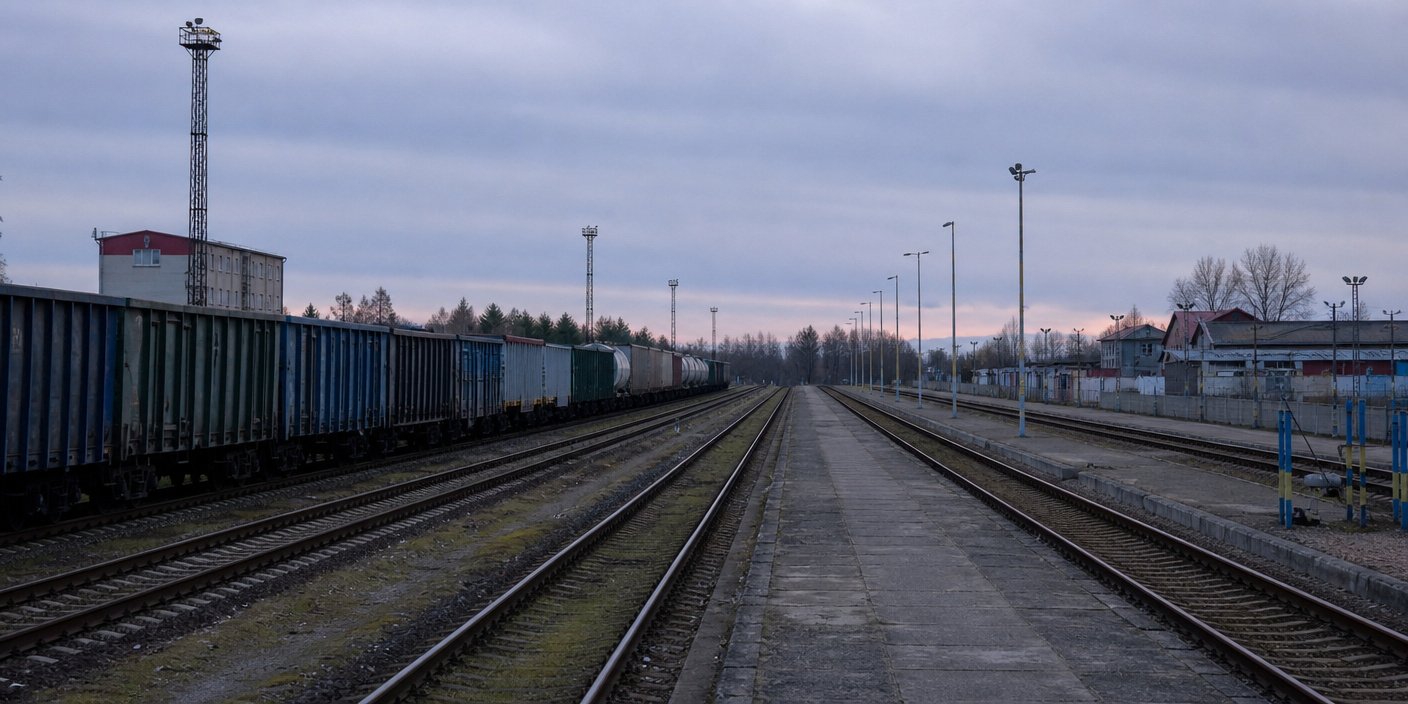
A Russian drone strike targeted a railway infrastructure hub in Yahodyn, Ukraine, occurring in the immediate wake of a transit involving former UK Prime Minister Boris Johnson. The strike, which struck a critical logistics point near the Polish border, serves as a jarring reminder of the precarious security landscape facing high-profile Western officials navigating the ongoing conflict zone. While no casualties were reported in this specific incident, the proximity of the detonation to the travel route of a former NATO-aligned head of state represents a significant escalation in the tactical targeting of regional logistics nodes.
Key Highlights:
- Tactical Proximity: The Russian drone strike occurred at the Yahodyn train station shortly after Boris Johnson’s security detail had cleared the location.
- Strategic Geography: Yahodyn sits at a vital transit intersection near the Polish border, making it a critical point for both humanitarian aid and the movement of high-level diplomatic delegations.
- No Casualties: Despite the precision and timing of the strike, there were no reported injuries to the diplomatic party or local staff, though the infrastructure sustained damage.
- Escalation Pattern: This event highlights the extreme operational risks associated with “Iron Diplomacy,” the practice of Western leaders traveling into Ukraine by rail to maintain political solidarity.
The Strategic Fragility of Rail Diplomacy
The incident at Yahodyn brings into sharp focus the vulnerabilities inherent in the “Iron Diplomacy” strategy, which has become a hallmark of Western engagement with Kyiv. Since the onset of the full-scale invasion, international leaders—ranging from prime ministers to cabinet secretaries—have relied almost exclusively on Ukraine’s rail network to traverse the country. This reliance is necessitated by the absolute closure of Ukrainian airspace to civilian traffic, forcing high-stakes diplomatic traffic onto the very infrastructure that Russian military intelligence views as a primary strategic target.
The Operational Reality of the Yahodyn Route
Yahodyn is not merely a border crossing; it is a critical artery for the western flank of the conflict. The station functions as a vital customs and transit hub, linking the European Union’s rail gauge standard with the broader Ukrainian network. For years, this location has been scrutinized by both Kremlin strategists seeking to sever supply lines and Western intelligence agencies attempting to secure transit corridors. The recent drone strike demonstrates a high degree of situational awareness by Russian forces, who have increasingly utilized long-range reconnaissance drones to monitor high-value transit zones. The timing of the strike—immediately following Johnson’s departure—suggests a window of opportunity that was exploited, whether by precise intelligence or opportunistic monitoring of diplomatic convoys.
The Risk of Border-Proximity Escalation
There is a broader geopolitical dimension to the targeting of Yahodyn. By striking infrastructure within close proximity to the Polish border, Moscow is signaling a willingness to aggressively test the boundaries of NATO’s containment zone. While the strike remained technically within Ukrainian sovereign territory, the kinetic impact and the subsequent shockwave were felt perilously close to the border of a NATO member state. This creates a volatile feedback loop: the closer Western leaders venture toward the front, the more likely the Kremlin is to treat logistics hubs near NATO borders as legitimate, high-priority military targets. This shift in targeting philosophy raises the potential for miscalculation, as Western security details and Russian drone assets operate in increasing proximity to one another.
Protecting the Modern Diplomat in War
This “near miss” event forces a reevaluation of the security protocols governing high-profile visits. Previously, the secrecy surrounding travel dates and routes was considered sufficient to ensure safety. However, as the conflict persists, the efficacy of information security is diminishing. The Russian military’s ability to conduct near-instantaneous strikes on transit hubs indicates a more integrated approach to intelligence gathering—likely leveraging satellite imagery, signal interception, and human intelligence on the ground. For Western officials, the dilemma is clear: how to project strength and maintain morale-boosting visits while minimizing the risk of a catastrophic “collateral” event that could inadvertently force a major geopolitical crisis.
FAQ: People Also Ask
Was Boris Johnson intentionally targeted in this drone strike?
While the proximity of the strike to his transit suggests awareness of high-value movement in the area, official channels have not confirmed if Johnson was a specifically targeted individual or if the strike was part of a wider campaign against transit infrastructure.
How dangerous is rail travel in Ukraine for diplomats?
Rail travel is the primary method for safe transit in Ukraine, but it is not without significant risk. Russia consistently targets logistics and power infrastructure. Diplomatic security teams employ rigorous “deconfliction” protocols, yet the fluidity of the battlefield makes absolute security impossible.
What is the strategic importance of the Yahodyn rail station?
Yahodyn serves as a critical gateway between Ukraine and Poland. It is a key node for customs, logistics, and the movement of humanitarian supplies, making it a high-value target for disruption by Russian forces aiming to isolate Ukraine from European support lines.
Will this incident stop international leaders from visiting?
It is unlikely to halt visits entirely, but it will almost certainly lead to a tightening of security protocols, more restrictive route planning, and potentially a reduction in the publicization of travel itineraries until after the officials have safely departed the country.