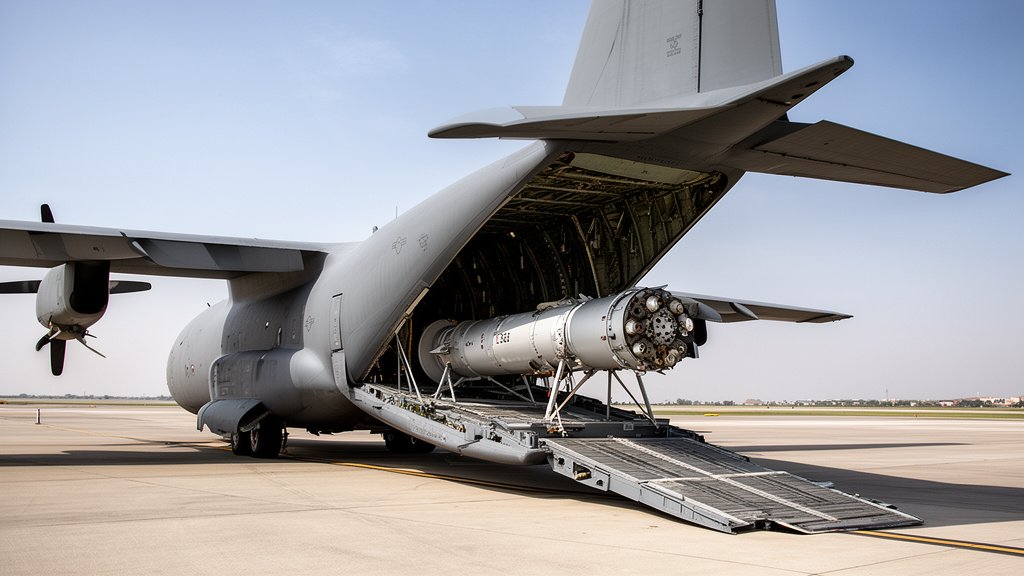
U.S. military planners are currently evaluating the potential deployment of the GBU-43/B Massive Ordnance Air Blast (MOAB), colloquially known as the ‘Mother of All Bombs,’ as a component of a high-stakes strike strategy against Iranian energy infrastructure and nuclear facilities. As the U.S. prepares for a phased military withdrawal from the broader region, officials have confirmed that this non-nuclear, high-yield weapon is being reconsidered as a psychological and physical deterrent to neutralize hardened sites without resorting to tactical nuclear alternatives.
Key Highlights
- Strategic Shift: The GBU-43/B is under review to target critical Iranian energy sectors and nuclear research facilities, potentially replacing smaller conventional munition alternatives.
- Weapon Specification: The MOAB, weighing approximately 21,600 pounds, utilizes a GPS-guided blast to generate an immense pressure wave, capable of destroying hardened or underground targets.
- Withdrawal Context: The potential deployment is tied to planning stages for a strategic U.S. military withdrawal, signaling a final effort to ensure infrastructure degradation before force reduction.
- Psychological Deterrence: Beyond physical destruction, the use of the MOAB serves as a critical signal of U.S. resolve to maintain regional stability during the post-withdrawal transition.
The Strategic Rationale for the MOAB Option
The GBU-43/B Massive Ordnance Air Blast represents a unique capability in the U.S. military arsenal. Unlike bunker-busters designed for deep penetration, the MOAB is a fuel-air explosive designed to detonate above the surface, creating an overwhelming, wide-area overpressure wave. For U.S. military planners, the appeal of the MOAB in a potential Iranian strike scenario lies in its sheer explosive footprint, which can theoretically incapacitate large-scale surface facilities, communication nodes, and auxiliary infrastructure surrounding sensitive nuclear sites.
Targeting Infrastructure and Nuclear Sites
Reports suggest the planning focus has narrowed to energy infrastructure—such as refineries and critical distribution hubs—and nuclear development facilities. The rationale is to inflict severe, long-term damage to the logistical backbone of Iran’s nuclear program rather than purely tactical target sets. By deploying the MOAB, the military could effectively disrupt operations at sites that are otherwise hardened against standard aerial bombardment. The bomb’s GPS guidance ensures high precision, allowing the U.S. Air Force to target specific nodes with high confidence, even in complex terrain.
The Logistics of Deployment
Deploying the MOAB is a significant logistical undertaking. Unlike standard munitions, the GBU-43/B must be deployed from the rear cargo bay of an MC-130 Combat Talon aircraft, as it is too large to fit in the bomb bay of conventional fighter or bomber jets. This requirement necessitates a specific operational environment, including air superiority to ensure the slow-moving transport aircraft remains protected throughout the mission. Planners are currently analyzing the risk-to-reward ratio of such a deployment in the context of contested airspace over Iran.
Geopolitical Implications of a Potential Strike
The consideration of the MOAB is occurring within a delicate diplomatic and military framework. As the U.S. moves toward a planned withdrawal, the strike plans appear designed to function as a final, decisive action that leaves the adversary’s strategic capabilities significantly degraded.
Deterrence vs. Escalation
One of the primary debates within the Pentagon remains the risk of regional escalation. While the MOAB is a conventional weapon, its destructive power is often equated with tactical nuclear options in terms of psychological impact. Analysts argue that a strike could either effectively deter further aggression by demonstrating unwavering U.S. military capacity or, conversely, trigger a wider regional conflict that complicates the very withdrawal process the U.S. is attempting to facilitate.
Historical Context and Modern Readiness
The GBU-43/B has only been used once in a combat environment: in April 2017, when the U.S. military struck an ISIS-K tunnel complex in the Nangarhar Province of Afghanistan. That deployment served to neutralize caves and tunnels that were impervious to traditional munitions. Utilizing this asset against a nation-state actor like Iran would represent a massive escalation in doctrine, moving from counter-terrorism applications to state-on-state strategic warfare.
FAQ: People Also Ask
What makes the GBU-43/B MOAB different from other bombs?
Unlike kinetic bunker-busters that penetrate the earth, the MOAB is a fuel-air explosive. It detonates just above the ground to create a massive blast wave, destroying everything on the surface and causing significant structural damage to nearby hardened facilities through shockwaves.
Why is the U.S. considering this now?
The potential use is being evaluated as part of a final strategic posture before a planned military withdrawal. It is viewed as a way to ensure that critical nuclear and energy infrastructure is degraded to a point where it cannot be easily weaponized or repaired in the immediate aftermath of a U.S. force reduction.
Does the MOAB contain nuclear material?
No. The GBU-43/B is a conventional weapon. It is the largest non-nuclear weapon in the U.S. inventory, designed for psychological impact and massive physical destruction, but it contains no nuclear or radiological components.