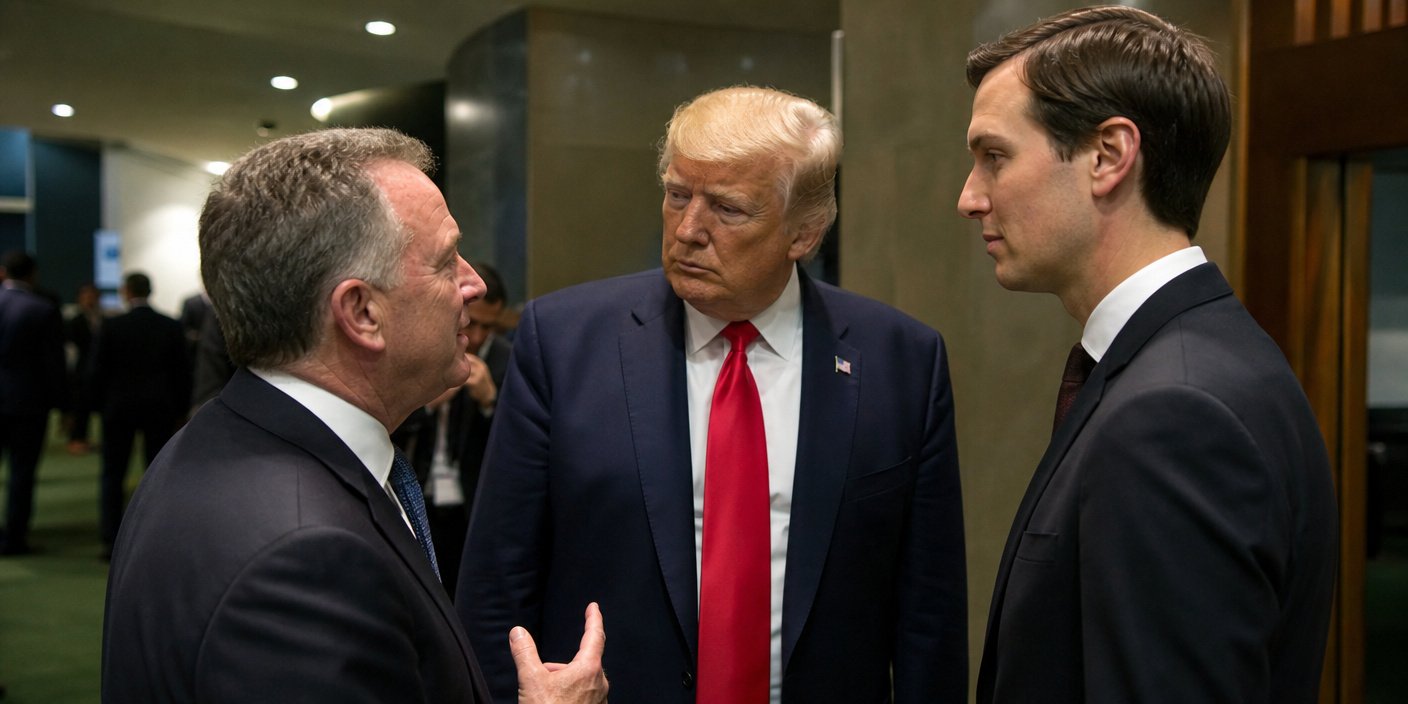
In a display of traditional ‘maximum pressure’ tactics, President Trump has issued a stark, public warning to Iranian leadership, stating that the nation faces ‘annihilation’ should a formal deal regarding nuclear and regional security protocols remain out of reach. This rhetoric, delivered with the gravity typical of the UN General Assembly, stands in sharp contrast to the quiet, tactical maneuvers unfolding behind the scenes. While the public posture remains one of impending conflict, intelligence reports confirm that President Trump has deployed a specialized diplomatic team—comprising Steve Witkoff and Jared Kushner—to facilitate direct, secret sideline talks with Iranian officials. The primary focus of these high-stakes negotiations is the Strait of Hormuz, the world’s most critical maritime chokepoint for global oil transit.
Key Highlights
- The ‘Annihilation’ Doctrine: President Trump has explicitly linked the preservation of Iran’s sovereignty to the immediate reaching of a new, comprehensive agreement, signaling a zero-sum endgame.
- The Witkoff-Kushner Envoy Model: Utilizing non-traditional diplomatic channels, Steve Witkoff and Jared Kushner are engaged in private, high-level discussions, bypassing standard State Department protocols to accelerate potential breakthroughs.
- Strategic Chokepoint: The central subject of these secret talks is the Strait of Hormuz, where Iranian military presence poses a direct, systemic risk to global energy markets and supply chains.
- Duality of Strategy: The administration is operating on a two-pronged strategy: aggressive public deterrence paired with discreet, transactional diplomacy.
The Paradox of Diplomatic Duality: Rhetoric vs. Reality
The current diplomatic landscape at the United Nations General Assembly has become a theater of extreme contrasts. On one side of the stage, President Trump’s rhetoric regarding Iran has returned to the stark, confrontational language of his first term. By invoking the term ‘annihilation,’ the administration is attempting to maximize the cost of non-compliance for Tehran, signaling that the patience for prolonged, indecisive negotiations has officially expired. This approach is designed to compel immediate action by creating a perception of an unavoidable, catastrophic outcome if a deal is not signed.
However, the presence of Steve Witkoff and Jared Kushner in private meetings with Iranian representatives suggests that the administration is not merely bluffing. The use of private envoys—individuals with deep ties to the President’s personal business and political circle—indicates a preference for deal-making that operates outside the bureaucratic inertia of traditional diplomacy. By utilizing Witkoff and Kushner, the White House is signaling that they are seeking a transactional, business-oriented resolution rather than a protracted ideological framework, which was the hallmark of the previous JCPOA (Joint Comprehensive Plan of Action) era.
The Strait of Hormuz: The Economic Center of Gravity
The focus on the Strait of Hormuz is not accidental; it is the strategic heart of this negotiation. Approximately 20% of the world’s total petroleum consumption passes through this narrow waterway. For Iran, the ability to threaten or impede transit through these waters serves as their most potent leverage in any negotiation. Conversely, for the United States, neutralizing this threat is the paramount objective for regional stability.
By engaging in sideline talks specifically regarding the Strait, the Trump administration is attempting to decouple maritime security from the broader, more complex issues of nuclear proliferation. If Witkoff and Kushner can secure a ‘de-escalation’ agreement regarding the strait—perhaps involving neutral maritime policing or guaranteed freedom of navigation—it would provide the administration with a concrete ‘win’ that can be presented to the international community as proof of their diplomatic efficacy, even while the ‘annihilation’ rhetoric continues to serve as the necessary pressure cooker to force Iranian concessions.
The Envoy Strategy: Why Witkoff and Kushner?
The selection of Steve Witkoff and Jared Kushner as the primary conduits for these talks is a calculated decision. Jared Kushner, having served as the architect of the Abraham Accords, possesses significant experience in navigating the complex web of Middle Eastern power dynamics. His inclusion suggests the administration wants to leverage previous diplomatic successes, applying a similar ‘peace-through-prosperity’ model that prioritizes economic incentives over ideological alignment.
Steve Witkoff, a real estate executive with deep personal loyalty to the President, brings a negotiator’s mindset to the table. In the world of high-stakes real estate, deals are reached through direct, often brutal, assessment of leverage. By inserting these two figures, the administration is stripping away the pretense of formal, slow-moving diplomatic channels. They are not there to discuss broad-ranging policy adjustments; they are there to hammer out a specific, localized agreement that can stabilize the Strait of Hormuz, and by extension, global oil prices.
Geopolitical Fallout and Market Reaction
The markets have reacted to the news with expected volatility. Energy prices, sensitive to any disruption in the Strait of Hormuz, are trading on rumors of these secret talks. If this backchannel diplomacy succeeds, the immediate risk premium on oil could evaporate, providing a significant tailwind for the U.S. economy. Conversely, if the talks fail, the rhetoric of ‘annihilation’ becomes the new baseline, likely pushing tensions to their highest point in years.
What makes this development particularly volatile is the lack of transparency. Because these talks are taking place on the sidelines of the UN, away from the scrutiny of the press and congressional oversight, the potential for misunderstanding is high. However, the administration clearly believes that the speed and discretion offered by this informal envoy model outweigh the risks of miscalculation. The coming weeks will determine whether this blend of extreme public pressure and private transactionalism is the breakthrough the region has been waiting for, or a prelude to a much more dangerous escalation.
FAQ: People Also Ask
1. Why is the Strait of Hormuz so critical to these negotiations?
The Strait of Hormuz is a vital energy chokepoint. If this channel is blocked or threatened, it could cause global oil prices to spike, triggering an international economic crisis. Securing freedom of navigation here is a non-negotiable US priority.
2. What is the goal of involving private envoys like Steve Witkoff and Jared Kushner?
The administration utilizes these individuals to bypass bureaucratic delays and standard diplomatic channels. They are task-oriented negotiators focused on transactional outcomes rather than lengthy diplomatic processes, aiming to secure quick, tangible agreements.
3. Is the ‘annihilation’ rhetoric a shift in official US policy?
It represents a return to the ‘maximum pressure’ campaign, suggesting the administration is willing to threaten existential consequences to force a deal. It functions as a coercive diplomatic tool to set the terms of engagement before the private negotiations commence.