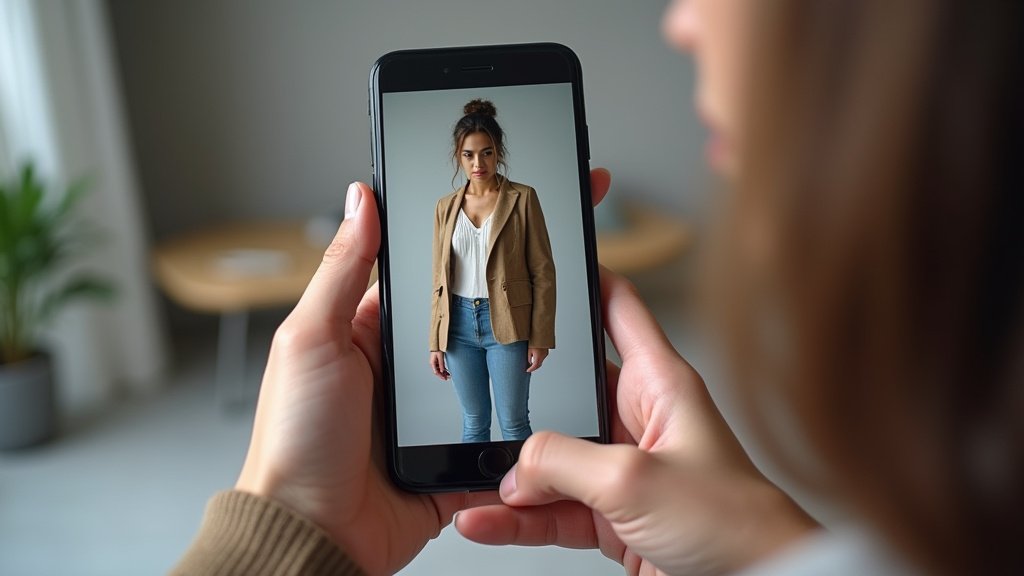
ChatGPT users can now leverage a sophisticated virtual clothing try-on feature directly within the interface, marking a pivotal shift in how consumers interact with retail brands. By utilizing the multimodal capabilities of OpenAI’s GPT-4o and advanced image processing frameworks, the new tool enables users to upload personal photos and seamlessly overlay garments, effectively digitizing the traditional “fitting room” experience. This feature sits at the intersection of generative artificial intelligence and e-commerce, promising to bridge the gap between digital representation and physical reality.
Key Highlights
- Multimodal Integration: The feature utilizes GPT-4o’s vision-processing power to understand body dimensions and lighting, ensuring accurate outfit mapping.
- Retail Impact: Designed to address the high costs of e-commerce returns, which currently cost retailers billions annually due to sizing and aesthetic mismatches.
- Privacy-First Processing: OpenAI has implemented strict data handling protocols, ensuring user-uploaded images are processed temporarily and not stored for long-term model training by default.
- Seamless Workflow: The process requires only a simple prompt—”Try this on”—alongside an image of the clothing and a reference photo of the user.
The AI Fitting Room: Reshaping Global Retail
The announcement of this virtual try-on feature represents more than just a novelty; it is a fundamental infrastructure update to the digital shopping ecosystem. Historically, online fashion retail has struggled with a singular, insurmountable barrier: the lack of tactile or visual confirmation that a garment will fit or look appropriate on a specific individual. By integrating this technology directly into ChatGPT, OpenAI is bypassing dedicated third-party apps, bringing high-end visual computation to the average consumer.
The Engine Under the Hood
At its core, this feature relies on sophisticated computer vision and generative diffusion models. Unlike early “overlay” technologies that simply pasted an image on top of a user, this new implementation performs depth analysis. When a user uploads a photo, the AI maps the geometry of the torso, shoulders, and posture. It then adjusts the texture and “drape” of the clothing to match the specific lighting conditions and angles of the source photo. This is achieved through a specialized pipeline that combines DALL-E 3’s creative rendering capabilities with the latent analysis of GPT-4o, ensuring that the clothing doesn’t just look “placed” but appears “worn.”
Disrupting the Return Rate Economics
For the fashion industry, the implications are profound. Return rates in online apparel shopping consistently hover between 20% and 30%, with sizing dissatisfaction serving as the primary driver. Retailers spend billions annually in logistical costs, inventory restock fees, and lost revenue associated with these returns. By empowering customers to “try before they buy” via a ubiquitous tool like ChatGPT, OpenAI is offering a potential solution to a massive economic drain. If a user can visualize a garment in a high-fidelity environment before purchase, the probability of a finalized, non-returned transaction increases significantly. Analysts predict that if widely adopted by retail API partners, this could shave significant percentages off current return rate metrics.
Privacy, Security, and Ethical Considerations
With the introduction of personal photo processing, privacy remains a paramount concern. OpenAI has confirmed that the system is built with “privacy-by-design” principles. Images processed through the try-on feature are subjected to ephemeral processing paths. The company has clarified that these images are not used to train future iterations of the base model without explicit user consent, creating a boundary between the user’s personal data and the model’s learning infrastructure. However, as deepfake technology evolves, the responsibility lies both with the developer and the user to ensure these tools are used for legitimate retail exploration rather than malicious synthetic content creation.
The Future of Personalized Styling
Beyond mere fitting, this technology lays the groundwork for AI-driven personal stylists. Imagine a version of ChatGPT that doesn’t just show you how a jacket looks, but suggests matching trousers, accessories, or shoes based on current fashion trends and the user’s existing wardrobe. By combining the visual try-on feature with the LLM’s conversational capabilities, we are moving toward a future where “Shopping Assistant” is no longer a search bar, but a persistent, intelligent agent that understands both the physical world and the shifting landscape of fashion trends.
FAQ: People Also Ask
Does this feature work with every type of clothing?
Currently, the feature is optimized for standard apparel such as shirts, jackets, dresses, and trousers. Highly complex accessories or layered, multi-textured items may still experience minor rendering artifacts as the system continues to learn from user data.
Is the virtual try-on feature available for free?
Access tiers for this feature are determined by the user’s subscription level. While basic visualization capabilities are being rolled out to wider tiers, high-resolution processing and advanced styling features may be restricted to ChatGPT Plus and Enterprise users.
How accurate is the fit representation?
The technology is designed for visual approximation and aesthetic styling, not for measuring exact garment dimensions. While it provides a realistic preview of how an item looks on the user, it should not replace manufacturer size charts for precision fitting.
Can I use the images for commercial purposes?
Content generated through ChatGPT for personal use is subject to the standard Terms of Service. If you intend to use the images for business or commercial retail applications, you must utilize OpenAI’s official API and adhere to their commercial usage policies.