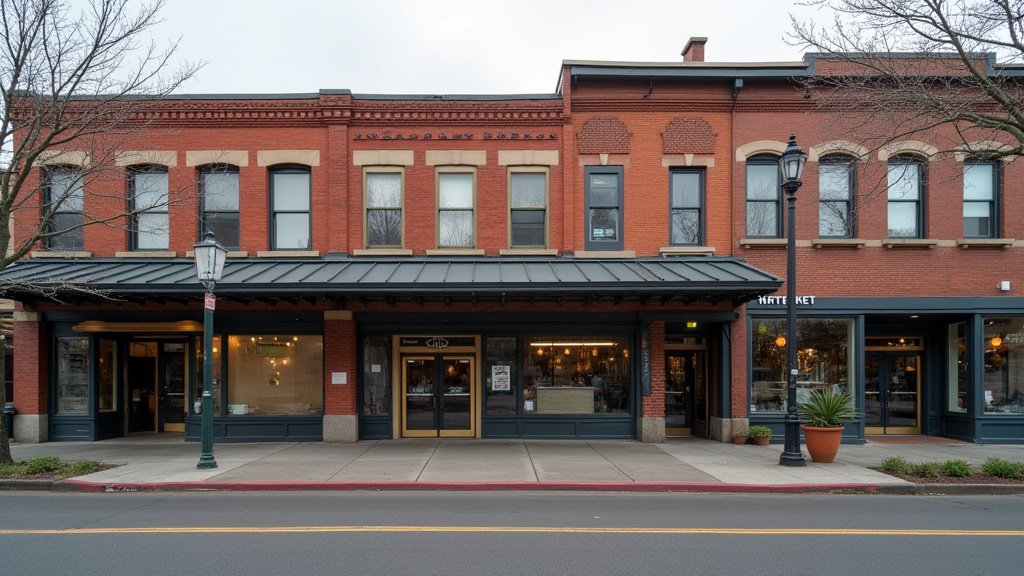
Eugene-Springfield’s culinary landscape is undergoing a significant transformation, balancing the arrival of national chains against the loss of long-standing independent pillars. From the debut of high-profile franchises like Raising Cane’s to the closure of local favorites like Cornucopia at the 5th Street Market and Oakshire Brewing’s longstanding taproom, the local dining scene reflects a complex tension between rapid urban growth and the preservation of community history.
Key Highlights
- National Expansion: Raising Cane’s has officially planted its flag in the local market, signaling a shift toward more high-traffic, national fast-casual presence.
- Brewery Evolution: Hop Valley Brewing continues its strategic growth with the launch of a new downtown public house, reinforcing the city’s beer-centric identity.
- The End of an Era: The 5th Street Market location of Cornucopia has ceased operations, marking a major departure for a staple of the local burger scene.
- Legacy Closures: Oakshire Brewing has concluded its nearly two-decade run at its original public house location, serving as a reminder of the fragility of local hospitality icons.
Navigating the Changing Palette of the Willamette Valley
The Eugene-Springfield dining scene is currently a microcosm of a broader national trend: the struggle between established local character and the inevitable encroachment of high-efficiency, standardized corporate dining. For residents, this transition is not merely about menu changes; it is about the physical restructuring of the ‘third places’ where the community gathers to socialize and celebrate.
The Corporate Influx
Raising Cane’s, the Louisiana-founded chicken finger chain, represents the aggressive commercial expansion that has characterized parts of the Willamette Valley’s growth. Their arrival is rarely just about food; it represents a shift in commercial zoning preference and a bet on consumer appetite for rapid, consistent, and recognizable dining experiences. When these chains move into markets that have historically favored independent cafes and gastropubs, they bring with them significant marketing budgets and logistical efficiency that can disrupt the local balance.
Parallel to this, Hop Valley Brewing continues to adapt. By securing a new downtown pub location, they are doubling down on the urban core. This move is significant because it signals a transition from the ‘neighborhood brewery’ model to an ‘anchor tenant’ model, where established local brands must compete for prime real estate in high-traffic commercial zones to remain relevant.
The Cost of Sentimentality: Lost Institutions
The closure of the Cornucopia outpost at the 5th Street Market hit harder than most transitions. For many, Cornucopia was more than just a place to get a burger; it was a defining feature of the downtown social circuit. Its departure from the 5th Street Market is a poignant indicator of shifting real estate dynamics in the city’s most popular lifestyle center. As rents rise and foot traffic patterns evolve, even ‘institutions’ are finding it difficult to sustain the overheads that come with prime location tenancy.
Similarly, the conclusion of Oakshire Brewing’s two-decade legacy at their original site serves as a somber chapter for local craft beer enthusiasts. Oakshire was pivotal in building the reputation of Eugene as a premier beer destination. Seeing a twenty-year legacy come to a close highlights the reality that even the most successful local brands face existential pressures as the market matures and their business models require pivots to keep pace with modern consumer habits.
The Economic Undercurrent: Why This Matters
To understand these closures, one must look at the ‘Triple Threat’ facing local restauranteurs: rising labor costs, inflated supply chain prices, and the changing nature of commercial leasing. The 5th Street Market, once a hub for distinct local flavor, is finding itself at a crossroads. When a legacy tenant like Cornucopia exits, it is rarely due to a loss of customer loyalty; it is almost always a calculation of unit economics.
Furthermore, the ‘death’ of a space like Oakshire’s original public house often isn’t the end of the brand, but it represents the end of a cultural epoch. For Eugene, this creates an ‘identity gap.’ When locally rooted businesses are replaced by larger commercial entities, the city risks becoming a ‘generic’ urban center, losing the unique aesthetic and social vibrancy that originally attracted many residents to the Willamette Valley.
Looking Toward a New Future
Despite the closures, the Eugene-Springfield culinary scene is not dying—it is recalibrating. The emergence of new dining concepts, often leaner and more tech-integrated, is filling the void left by legacy closures. While the loss of landmarks like Cornucopia and the original Oakshire spot leaves a sentimental void, the market is demonstrating an ability to absorb these changes. The future of dining in the area will likely be defined by a hybrid model: local brands that are agile enough to operate in the modern market, and a community of residents who are increasingly conscious of supporting those local pillars amidst a sea of national convenience.
Ultimately, the dining landscape of Eugene-Springfield remains a resilient, if battered, ecosystem. As the region continues to grow, the dialogue between history and progress will remain the central theme of the dinner table. Whether this transition leads to a more diverse dining experience or a sterilized corporate landscape depends as much on the consumer as it does on the landlords and the restaurateurs themselves.
FAQ: People Also Ask
1. Why are so many local restaurants closing in Eugene?
Many factors contribute to these closures, including rising commercial rent prices, increased labor costs, and a shifting consumer preference toward fast-casual dining, which makes maintaining a traditional restaurant model increasingly difficult.
2. Is Raising Cane’s replacing local favorites?
While Raising Cane’s is expanding in the area, it is not necessarily ‘replacing’ existing restaurants directly, but it is taking up commercial real estate space that was previously home to or could have been used by local businesses, signaling a shift in the city’s commercial focus.
3. What does the closure of Oakshire’s original pub mean for the brewery?
It marks the end of an 18-to-20-year era for that specific location, but the brand remains active. It signifies a shift in strategy where the company is likely focusing on broader distribution and potentially different, more efficient taproom models rather than maintaining a long-tenured, high-overhead footprint.
4. Where can I find updates on new restaurant openings in Eugene?
Readers looking to track the evolving culinary scene should continue to monitor local publications like Eugene Weekly, which track permits, business license filings, and local announcements to stay ahead of upcoming openings and closures.