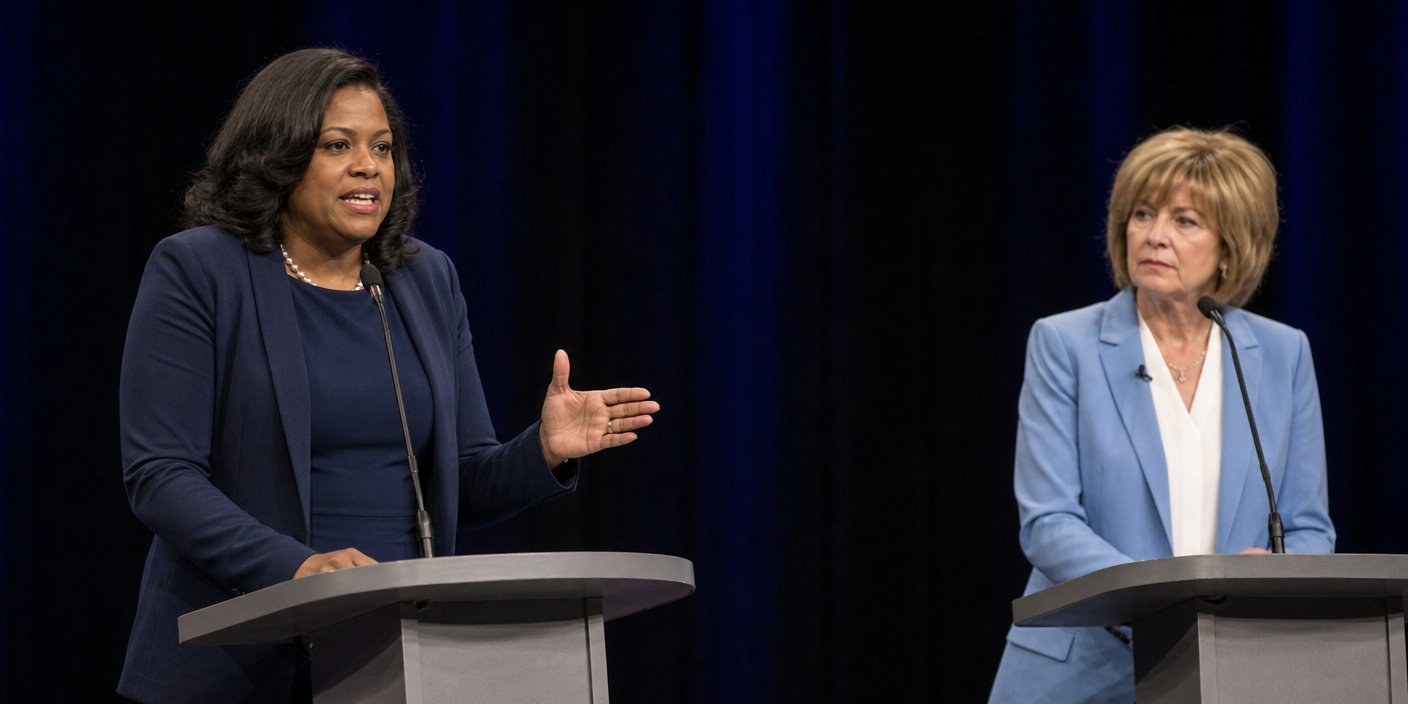
Oregon’s 5th Congressional District has officially entered the final stretch of the election season, and with it comes a heightened sense of urgency regarding the region’s most pressing challenges. On Wednesday night, the political landscape shifted into focus as Democratic candidate Janelle Bynum and her Republican challenger, Patti Adair, participated in a high-stakes debate that underscored the deep ideological divide shaping the race. The event, which touched on critical pillars of education, infrastructure, and the increasingly dire issue of wildfire policy, highlighted how divergent the two candidates’ pathways are for the future of the district.
The Wildfire Crisis: A Policy Divide
Perhaps the most pressing topic of the evening was the ongoing threat of wildfires, which have become a defining reality for Oregonians. The discussion regarding wildfire management highlighted a fundamental disagreement on the scope and reach of federal policy.
Janelle Bynum, currently serving as a State Representative, argued that the solution requires a robust, collaborative approach involving significant federal investment. Her strategy centers on the necessity of securing federal grants to bolster forest management programs and modernizing fire suppression infrastructure. Bynum emphasized that the state cannot handle the financial burden of year-round fire mitigation in isolation. She proposed that the federal government must serve as a primary partner in wildfire prevention, focusing on sustainable timber practices and climate-resilient landscape planning. For Bynum, the issue is not just about response but about preemptive federal policy that treats fire mitigation as a pillar of national security.
Conversely, Patti Adair, the Republican challenger, presented a vision focused on decentralized control. Adair argued that excessive federal bureaucracy is currently stalling essential forest management efforts, such as thinning and controlled burns, which are vital for reducing fuel loads. Her platform advocates for transferring more authority to local officials and private landowners who, she contends, understand the topography and environmental conditions of the 5th District better than Washington D.C. bureaucrats. Adair’s stance reflects a broader conservative push to cut federal red tape, suggesting that streamlining local decision-making would lead to faster, more effective fire prevention strategies.
Economic Infrastructure and Rural Growth
Moving beyond environmental policy, the candidates sparred over the future of the district’s infrastructure. Oregon’s 5th District is a unique tapestry of suburban hubs and rural landscapes, each with vastly different needs. The debate clarified how both candidates view the role of federal funding in bridge maintenance, transportation corridors, and rural connectivity.
Bynum advocated for continued support from federal infrastructure acts, arguing that the district relies on federal dollars to repair aging roads and bridges that are essential for agricultural transport. She positioned infrastructure development not just as a construction project, but as an economic engine capable of creating jobs while ensuring rural communities are not left behind in the digital age.
Adair countered by highlighting the fiscal implications of current spending policies. She expressed concern over the inflationary pressures that large-scale federal infrastructure projects place on rural families. Her focus remains on fiscal restraint and targeting federal spending toward essential, high-impact projects that directly benefit the movement of goods and services, rather than broader initiatives that she claims often bloat project costs.
Education: Funding and Federal Oversight
Education policy provided another sharp contrast. The candidates debated the merits of federal involvement in curriculum and school funding, a topic that has become a flashpoint for voters across the country.
Bynum defended the role of federal education grants in supporting Oregon’s schools, particularly regarding special education programs and vocational training initiatives. She argued that federal funds are an essential equalizer for schools in lower-income areas, providing the resources necessary to keep pace with the state’s educational standards. Bynum emphasized that federal support allows districts to innovate in technical and career-readiness training, which she sees as a pathway to high-wage jobs.
Adair pushed back against what she characterized as federal overreach in local classrooms. Her approach prioritizes parental rights and local school board autonomy, suggesting that Oregon’s education system would benefit from reduced federal guidance. Adair articulated a vision where funding is prioritized for foundational literacy and math skills, with a shift away from federal mandates that she argues take focus away from core competencies and local community values.
The Path Forward: Political Stakes in OR-05
The debate served as a critical temperature check for voters in the 5th District. As the election cycle continues, the core question facing the electorate is clear: should the district lean toward a model of enhanced federal partnership, as championed by Bynum, or a model of local autonomy and fiscal restraint, as advocated by Adair?
This election is widely viewed as a bellwether for the state. Both candidates are under intense pressure to articulate how their specific policies will impact the daily lives of their constituents, from the cost of groceries and fuel to the physical safety of their homes during wildfire season. As voters digest the points raised in this debate, the distinction between these two candidates has never been more pronounced, setting the stage for what promises to be a deeply consequential election outcome for Oregon’s 5th District.