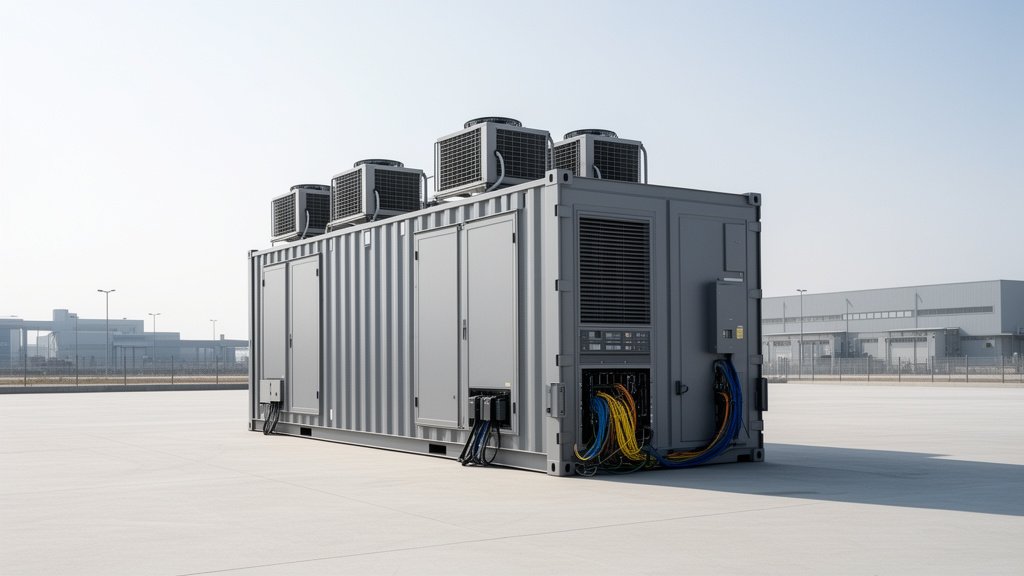
The landscape of global digital infrastructure is undergoing a historic transformation, with JLL Research projecting total global data center investment to reach a staggering $3 trillion by 2030. This unprecedented capital infusion is not merely a result of increased server demand, but represents a fundamental pivot in how AI hardware is deployed globally. As the industry races to meet the hunger of generative AI and machine learning, the physical requirements for computing are evolving rapidly, necessitating a move toward decentralized, smaller-scale architectures that deviate from the traditional hyperscale model.
Key Highlights
- $3 Trillion Milestone: Total global investment in data center assets is forecast to climb to $3 trillion by the end of the decade, reflecting a rapid acceleration in capital expenditure.
- The 2027 Inference Pivot: By 2027, AI inference—the process of running pre-trained models—will officially overtake training as the primary workload in data centers.
- Decentralization Trend: The industry is shifting from monolithic facilities toward decentralized, smaller-scale architectures to handle latency-sensitive workloads.
- Infrastructure Reallocation: Capital is increasingly being diverted from massive centralized hubs to edge-ready, distributed server environments.
The $3 Trillion Infrastructure Transformation
The trajectory of modern computing is being rewritten by the voracious demands of artificial intelligence. According to JLL Research, the projection of $3 trillion in cumulative investment by 2030 signals a ‘gold rush’ mentality among developers, investors, and hyperscalers. This influx of capital is being directed toward a complete modernization of the global grid, where the old rules of server farm construction—prioritizing land footprint and raw connectivity—are being superseded by considerations of power density and latency.
Decoding the Investment Surge
The sheer volume of this investment is a response to the rapid maturation of generative AI technologies. Unlike previous cycles of digital growth, which were characterized by gradual, predictable increases in storage and throughput, the current demand is erratic and intensely localized. Investors are not just funding brick-and-mortar structures; they are pouring billions into specialized cooling technologies, high-efficiency power distribution units (PDUs), and cutting-edge networking gear designed to handle the massive I/O throughput required by the latest generation of GPUs. The geographic distribution of this $3 trillion is also shifting. While established hubs like Northern Virginia remain critical, capital is flowing into secondary markets closer to the energy source and the end-user, illustrating a strategic imperative to minimize transmission losses and enhance reliability.
The 2027 Pivot: Training vs. Inference
Perhaps the most consequential finding in the latest research is the projected tipping point in 2027. Currently, much of the data center industry’s focus is on ‘training’ large language models, a process that is compute-intensive, lengthy, and centralized. However, as these models move from laboratories to consumer applications, the demand for ‘inference’—the execution of these models in real-time—will dominate the workload. Inference requires a fundamentally different hardware setup. It is less about cramming thousands of processors into a single room and more about delivering processed data to the user with near-zero latency. This shift is driving a redesign of data center layouts, favoring ‘distributed’ designs where compute resources are placed in closer proximity to the end-users, rather than concentrated in massive, isolated server farms. This creates a need for modular, smaller-scale data centers that can be deployed rapidly in urban centers or industrial parks.
The Move Toward Decentralized Architectures
The move toward decentralized architecture is not just a trend; it is a necessity driven by the laws of physics and economics. As inference tasks move to the ‘edge,’ the traditional hyperscale model faces limitations regarding bandwidth costs and speed of light delays. Consequently, we are seeing the rise of a hybrid infrastructure. Hyperscalers are now increasingly partnering with edge computing providers to create a tiered network. In this hierarchy, the core hyperscale data centers continue to handle the heavy training tasks and long-term storage, while a new, wider network of decentralized facilities handles the real-time inference requests. This architecture is more resilient, offering redundancy that traditional designs lacked. If one node in a decentralized network fails, the traffic is automatically rerouted, ensuring that mission-critical AI services remain online. This resilience is a key factor in the $3 trillion valuation, as institutional investors place a premium on reliability in an increasingly volatile digital economy.
Economic and Sustainability Implications
This $3 trillion investment is not without its controversies. The massive power draw required to support modern AI infrastructure is putting unprecedented strain on regional power grids. Utilities and data center operators are now entering into complex agreements to secure energy, often focusing on renewable sources like nuclear, wind, and solar, to satisfy both regulatory requirements and ESG (Environmental, Social, and Governance) targets. The economic impact is equally profound; the construction and operation of these facilities are creating a ripple effect of employment and innovation in telecommunications, cybersecurity, and real estate development. As we look toward 2030, the ability of a region to offer both reliable power and high-speed, decentralized fiber connectivity will become the primary metric for competitiveness in the global digital market.
FAQ: People Also Ask
Q: Why is the transition to inference workloads significant for data center design?
A: Inference is latency-sensitive and occurs closer to the user. Unlike training, which can be done anywhere with sufficient power, inference requires a decentralized, edge-centric architecture to ensure speed and performance, requiring a redesign of facility distribution.
Q: Will massive hyperscale data centers become obsolete by 2030?
A: No. Hyperscale facilities will remain essential for massive model training and large-scale data storage. However, they will function as the ‘core’ of a hybrid network, supported by a growing, critical tier of smaller, decentralized edge facilities.
Q: What is the primary driver behind the $3 trillion investment figure?
A: The primary driver is the global adoption of generative AI. The compute capacity needed to train and run these advanced models exceeds current global infrastructure capabilities, necessitating massive, multi-year capital expenditure projects across the globe.