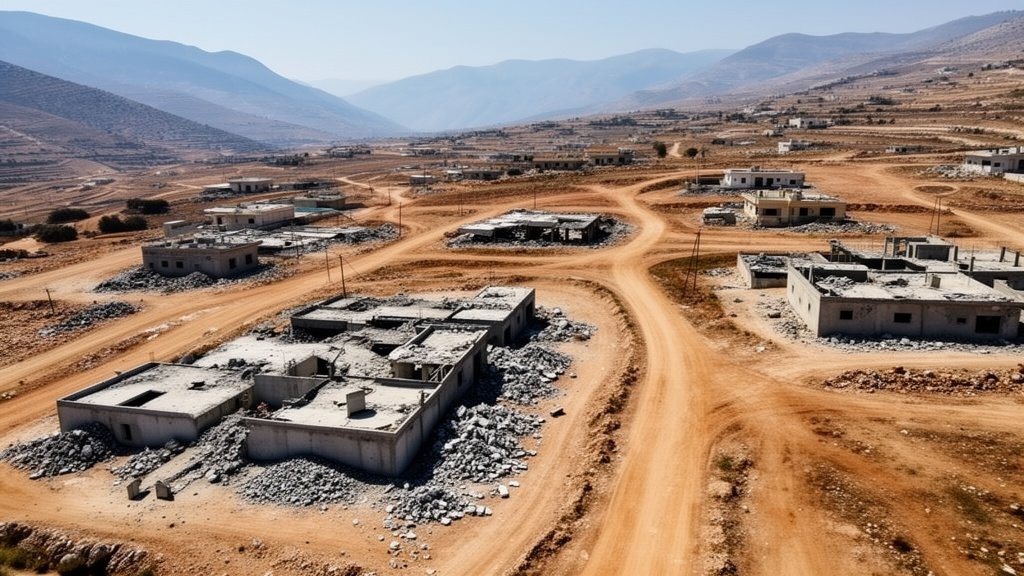
The systematic erasure of residential and civic infrastructure in Southern Lebanon has reached a critical threshold, with recent investigative reports confirming that Israeli forces have leveled at least 48 villages and towns along the border. This widespread destruction, documented through comparative satellite imagery, has moved beyond isolated tactical strikes, signaling a broader, potentially permanent alteration of the geographical and demographic landscape of the region. As international observers express alarm, the focus has shifted to the strategic intent behind the flattening of these border communities and the humanitarian implications for the thousands of displaced civilians who once called these areas home.
Key Highlights
- Systematic Demolition: Satellite analysis confirms the intentional destruction of infrastructure across 48 distinct villages and towns in Southern Lebanon, extending deep into the border region.
- The Buffer Zone Strategy: The pattern of destruction correlates with the creation of a de facto security buffer zone, aimed at neutralizing direct threats near the Blue Line.
- Humanitarian Crisis: The permanent nature of the destruction raises concerns about the feasibility of return for local populations, exacerbating the humanitarian crisis in the Levant.
- Sectarian and Geopolitical Tensions: The targeted nature of the demolitions has drawn comparisons to previous historical conflicts, fueling concerns about sectarian displacement and long-term instability.
The Architecture of Erasure: Analyzing the Southern Lebanon Demolitions
The scale of the destruction currently being observed in Southern Lebanon is unprecedented in the modern history of the Israel-Hezbollah conflict. By utilizing high-resolution satellite imagery—often provided by open-source intelligence entities like Bellingcat and verified by major news outlets—investigators have mapped a systematic process of demolition. Unlike the collateral damage common in urban warfare, the evidence shows the deliberate leveling of entire blocks, including homes, community centers, and local shrines, in a manner that suggests planned structural clearing rather than incidental combat damage.
Evidence from the Blue Line
The Blue Line, the unofficial border between Israel and Lebanon, has long been a flashpoint for conflict. However, the current operations represent a shift in the IDF (Israel Defense Forces) doctrine. Analysts note that the destruction is not sporadic. Instead, it follows a calculated geometry, concentrating on the villages that sit in the immediate shadow of the border. By destroying the vertical infrastructure—the buildings that provide sightlines and defensive cover—military planners are effectively creating a ‘scorched earth’ perimeter. This technique, historically used to deny adversaries the ability to embed themselves within civilian populations, has effectively rendered these villages uninhabitable.
The Strategic Buffer Zone: Historical Context
The concept of a ‘buffer zone’ in Southern Lebanon is not new. In 1978, during the Litani operation, and again during the extended occupation of the 1980s and 90s, the goal of creating a ‘security belt’ was central to Israeli military policy. However, the current strategy appears more final. By obliterating the built environment, the intent is to eliminate the ‘human geography’ of the border. This shift fundamentally challenges the viability of UN Resolution 1701, which was designed to keep the region demilitarized and facilitate the return of residents. If there are no homes to return to, the return of displaced Lebanese civilians becomes a logistical and economic impossibility, thereby securing the border in a way that is divorced from diplomatic consensus.
Legal and Humanitarian Fallout
The destruction of civilian infrastructure is subject to strict guidelines under International Humanitarian Law and the Geneva Conventions. While military necessity can justify the targeting of structures used by combatants—such as those housing weapons caches or command centers—the indiscriminate leveling of entire villages raises severe legal questions. Human rights organizations have begun to document the scope of the destruction, noting that the erasure of sectarian cultural sites (such as historical shrines and village mosques) compounds the trauma for the local population. This destruction is perceived not just as a military tactic, but as a symbolic act of displacement, aimed at permanently altering the demographics of the borderlands.
The Economic and Future Implications
Beyond the immediate tactical gains, the destruction of these 48 villages carries a long-term economic cost. These communities were agricultural hubs, reliant on local infrastructure. The removal of this infrastructure acts as a barrier to future recovery. With the Lebanese economy already in a state of hyperinflation and collapse, the destruction of 48 villages represents a devastating blow to the nation’s fragile stability. Furthermore, this policy sets a dangerous precedent for future conflict, where ‘clearing’ territories becomes the standard operating procedure for securing borders, rather than diplomatic de-escalation.
FAQ: People Also Ask
Why are these specific 48 villages being demolished?
The demolition is part of a strategic effort to establish a tactical buffer zone. By removing the built environment, the IDF aims to strip the border region of any cover or infrastructure that Hezbollah could utilize for offensive operations, effectively creating a ‘dead zone’ that is easier to monitor and defend.
What does the destruction imply for future peace treaties?
The leveling of these towns complicates future peace negotiations. A foundational element of any potential resolution, such as the implementation of UN Resolution 1701, requires the return of civilians to their homes. The total destruction of these homes removes the physical basis for that return, effectively freezing the status quo and prolonging the humanitarian crisis indefinitely.
Is this level of destruction legal under international law?
Under the Geneva Conventions, the destruction of civilian property is prohibited unless it is absolutely necessary for military operations. While military necessity is often cited as a justification by the IDF, the systematic scale—targeting entire villages rather than specific military nodes—has drawn intense scrutiny from the UN and international legal experts, who argue that the scale of the destruction may constitute a violation of the principle of proportionality.