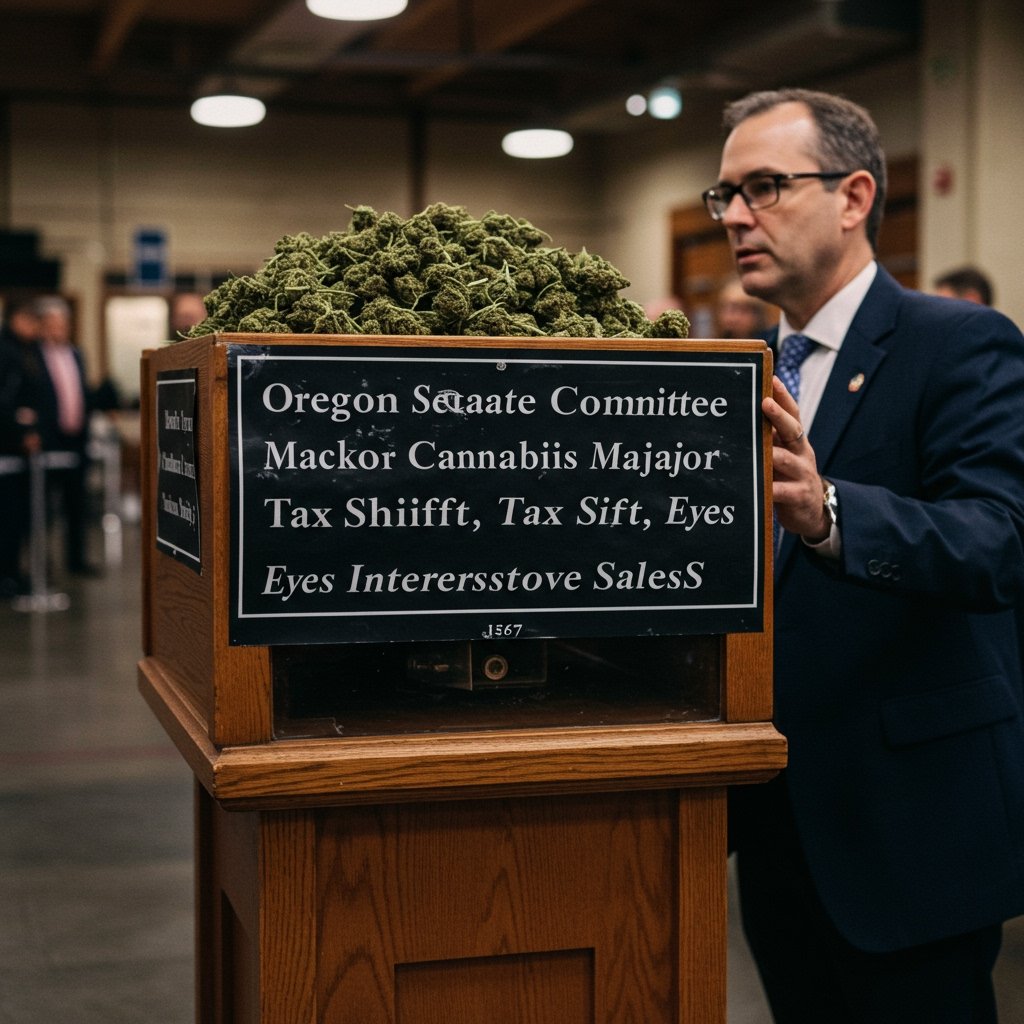
President Trump’s administration has initiated a move to reschedule marijuana, a decision that a leading reform group suggests could pave the way for legal interstate commerce of cannabis across the United States.
Key Highlights:
- A potential rescheduling of marijuana by the Trump administration could have significant implications for the legal cannabis industry.
- The move is seen by reform advocates as a critical step towards enabling cross-state sales of cannabis products.
- This development could fundamentally alter the landscape of cannabis business and regulation.
Rescheduling Marijuana: A Gateway to Interstate Commerce
The potential rescheduling of marijuana under the Controlled Substances Act (CSA) by the Trump administration represents a pivotal moment for the burgeoning cannabis industry. While not outright legalization, a rescheduling to a lower-offense category could drastically reduce federal barriers that currently prevent cannabis businesses from operating across state lines. The Marijuana Policy Project (MPP), a prominent reform advocacy group, has stated that this administrative action is a crucial signal that could open the door to interstate cannabis commerce, a long-sought goal for many in the industry. This shift, if realized, would allow for more efficient supply chains, potentially leading to more competitive pricing and greater market stability. Currently, cannabis businesses are largely confined to operating within the states where they are legal, creating fragmented markets and limiting scalability. Interstate commerce would mean that products manufactured or grown in one state could be legally transported and sold in another, mirroring how other commodities are traded.
Economic Implications and Market Expansion
The economic impact of enabling interstate commerce is projected to be substantial. States with mature cannabis markets could see significant growth as they can serve neighboring states or regions with unmet demand. This could also lead to a more robust and legitimate financial sector for the cannabis industry, attracting more investment and creating jobs. Furthermore, it could streamline the process for businesses looking to expand their operations, reducing the complexity and cost associated with navigating multiple state-by-state regulatory frameworks. The ability to move cannabis products across state lines would also allow for greater specialization, with states potentially focusing on cultivation, manufacturing, or distribution based on their unique advantages.
Regulatory Hurdles and Federal Stance
Despite the potential for interstate commerce, significant regulatory hurdles remain. Rescheduling marijuana would likely involve reclassifying it from Schedule I, a category reserved for drugs with no accepted medical use and a high potential for abuse. A lower schedule could acknowledge its medical utility and reduce its perceived risk. However, the specifics of any rescheduling and its subsequent impact on interstate commerce would depend on the precise actions taken by the Drug Enforcement Administration (DEA) and the Food and Drug Administration (FDA), along with any potential congressional action. The federal government’s stance on cannabis has been evolving, but a definitive move towards rescheduling signals a potential paradigm shift. This move could also influence how states that have not yet legalized cannabis approach the issue, as a federal reclassification might lend more legitimacy to the plant.
Impact on Social Equity and Small Businesses
While interstate commerce promises market expansion, ensuring that these benefits are equitably distributed remains a concern. Industry experts and social equity advocates are watching closely to see if the new framework will include provisions to support small businesses and communities disproportionately affected by past drug policies. Without intentional policy design, the opening of interstate commerce could lead to consolidation by large corporations, potentially squeezing out smaller, independent operators. Therefore, careful consideration of policies that promote fair competition and access will be crucial.
FAQ: People Also Ask
What does it mean to reschedule marijuana?
Rescheduling marijuana means changing its classification under the federal Controlled Substances Act. Currently, it is classified as a Schedule I drug, indicating a high potential for abuse and no accepted medical use. Moving it to a lower schedule, such as Schedule II or III, would acknowledge its potential medical benefits and reduce federal restrictions, though it would still be subject to regulation.
How would rescheduling affect interstate cannabis commerce?
Rescheduling could significantly lower federal barriers that currently prohibit the transport of cannabis across state lines. This would allow licensed businesses in legal states to sell their products in other states, creating a national market and potentially leading to more standardized product quality and pricing.
What is the Marijuana Policy Project?
The Marijuana Policy Project (MPP) is a non-profit organization focused on lobbying and advocating for the legalization and regulation of marijuana in the United States. They are a key player in the cannabis reform movement and often comment on federal policy changes related to cannabis.
Could interstate commerce lead to lower cannabis prices?
Potentially. With the ability to move products across state lines, supply can better meet demand, and economies of scale can be achieved. This increased efficiency and competition could drive down prices for consumers in various markets.