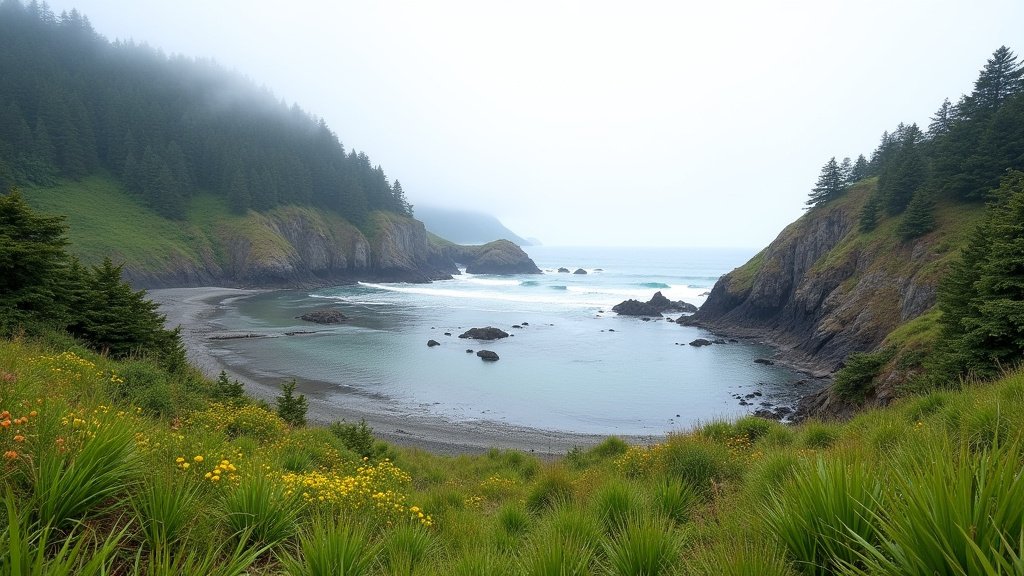
The Cascade Head UNESCO Biosphere Region stands as a defiant anomaly in the landscape of American conservation. Marking its 50th anniversary this year, the region—located on the pristine central Oregon Coast—has achieved a feat that has eluded many of its peers: it has expanded its operational footprint tenfold since 2017, a growth trajectory fueled not by federal largesse, but by a precise, community-driven reliance on local partnerships and private stewardship. While similar ecological initiatives across the United States have shuttered their doors following the effective dissolution of the US Man and the Biosphere (MAB) Program’s direct federal funding, the Cascade Head region has evolved, transforming from a protected site into a thriving regional network.
The 50-Year Legacy: From Protection to Expansion
Established in 1974, the Cascade Head Biosphere Reserve was initially one of the earliest inclusions in the global UNESCO network. For decades, the site functioned primarily as a research-focused, static preserve centered on the Salmon River Estuary and the adjacent Siuslaw National Forest. However, the 2017 strategic shift marked a watershed moment. Recognizing that ecological health could not be isolated from human interaction, organizers expanded the biosphere’s sphere of influence—and its official designated area—by ten times. This wasn’t merely a boundary change; it was a shift in philosophy. The region transitioned from a “core” conservation site to a multifaceted “region” that integrates local economies, sustainable farming, and coastal resilience.
The Financial Pivot: Beyond Federal Dependency
For decades, federal funding via the MAB program provided the financial bedrock for biosphere reserves nationwide. When that funding stream evaporated, many reserves became “paper parks”—designated in name but hollowed out in practice. Cascade Head took a different path. The nonprofit Cascade Head Biosphere Reserve organization (CHBR) was formalized to act as a buffer against institutional insolvency. By decoupling its operational budget from federal cycles, the organization secured long-term stability through a “braided funding” model. This includes partnerships with local philanthropic foundations, ecotourism revenue, and “in-kind” support from stakeholders like The Nature Conservancy (TNC), which manages substantial tracts of land within the core area. This shift has essentially “privatized” the resilience of the region, ensuring that even in the absence of government grant cycles, the monitoring, educational outreach, and conservation work continue uninterrupted.
Strategic Scaling: Defining the Tenfold Increase
The “tenfold growth” cited by observers refers to the massive expansion of the biosphere’s “Transition Area”—the zone where sustainable human development and nature interact. By incorporating the surrounding watershed and coastal communities into the biosphere’s mission, the organization moved from protecting a few thousand acres to managing a complex, integrated landscape of roughly 100,000 acres. This expansion allows the CHBR to lobby for and implement sustainability standards that impact entire county-level ecosystems rather than just isolated forest pockets. It provides a blueprint for how ecological “islands” can evolve into “landscapes,” creating connectivity corridors for wildlife that were previously segmented.
Future Outlook: Sustainability Beyond Government
As the region celebrates its golden anniversary, the focus is squarely on the next 50 years. The success of the Cascade Head model is attracting attention from other global biosphere sites struggling with fiscal precariousness. The key lesson is operational agility. By becoming an “anchor institution” for the local economy, the Biosphere Reserve has made itself too vital to fail. Local businesses, ranging from sustainable fisheries to coastal hospitality ventures, now view the UNESCO designation as a brand asset, creating a symbiotic loop where environmental health directly feeds economic vitality. Moving forward, the CHBR aims to implement advanced carbon-sequestration monitoring and blue-carbon research within the estuary, further cementing its relevance in the global climate change conversation.
FAQ: People Also Ask
What exactly is the Cascade Head UNESCO Biosphere Region?
It is a designated area on the Oregon Coast that promotes local solutions to global challenges, balancing the conservation of biological diversity with sustainable economic development. It includes the Salmon River Estuary, the Siuslaw National Forest, and surrounding communities.
Why did the federal funding cuts threaten these regions?
The US Man and the Biosphere (MAB) Program, which coordinated these sites, saw its federal support effectively zeroed out, forcing many biosphere reserves to lose the institutional structure and financial support necessary to maintain their UNESCO status and monitoring activities.
How did Cascade Head grow during a funding drought?
They pivoted from a government-dependent model to a community-led, nonprofit structure. By formalizing the Cascade Head Biosphere Reserve (CHBR) organization and building partnerships with local stakeholders, private landowners, and NGOs like The Nature Conservancy, they created a diversified, self-sustaining financial base.
Is the region open to visitors?
Yes, parts of the region are open to the public, particularly the hiking trails near the Cascade Head scenic area. However, it is a protected site, and visitors are expected to follow strict “leave no trace” protocols to maintain the ecological integrity of the biosphere.