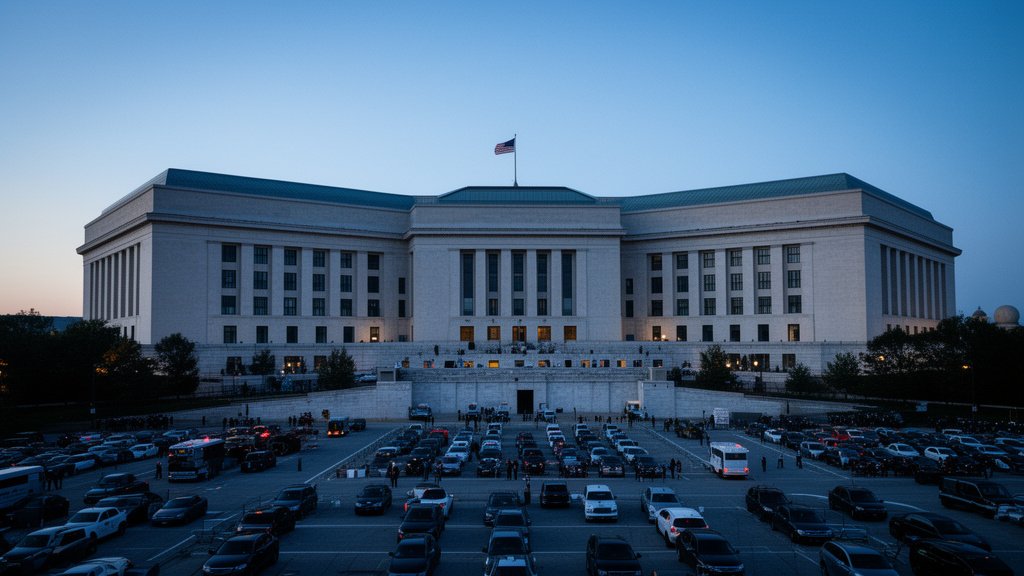
The United States military has officially paused its ongoing bombing campaign against Iranian targets for the third consecutive night, a decision stemming from urgent internal warnings regarding the health of national munitions stockpiles. Following high-level consultations between Pentagon officials and the Trump administration, the operational tempo has been curtailed to allow for an immediate audit and stabilization of critical supply chains. In a move that has surprised intelligence analysts, Tehran has reciprocated this cessation, resulting in a sudden and fragile lull in a conflict that has dominated the regional landscape for weeks.
The Munitions Supply Chain Crisis
The decision to halt offensive operations is not merely a tactical pivot but a stark acknowledgement of logistics realities. Senior defense advisors have reportedly briefed the administration on the exhaustion of specific guided-munitions inventories, which are essential for precision-strike capabilities. This depletion is the cumulative result of sustained high-intensity engagements in multiple theaters, including sustained support in Europe and the Middle East. The U.S. Munitions Industrial Base, which has faced significant production bottlenecks since 2022, is struggling to output replacements at the rate of current consumption.
Industry experts note that the ‘just-in-time’ manufacturing model for precision missiles—such as the AGM-158 JASSM and various naval-launched variants—is incompatible with prolonged, attritional warfare. Pentagon procurement officers are now facing the difficult task of balancing immediate operational needs with the necessity of maintaining a strategic reserve that ensures national security across all global theaters of operation.
Reciprocity and the Logic of De-escalation
The reciprocal halt by Iranian forces marks a potential, albeit tenuous, inflection point. Intelligence reports suggest that Iran may also be facing its own logistical and economic pressures, potentially viewing the U.S. pause as a window to reassess their own position without losing face. This “pause for pause” dynamic provides a brief diplomatic opening for back-channel communications. Whether this signifies a genuine desire for de-escalation or merely a tactical regrouping remains the central debate within the White House Situation Room.
Strategic Reassessment and Future Readiness
With the bombing campaign suspended, the Department of Defense is entering a period of critical strategic reassessment. Commanders are currently reviewing target sets and re-prioritizing the limited munitions available. This pause forces a transition from offensive air dominance to defensive posture, ensuring that available inventory is reserved for protecting U.S. naval assets and regional allies in the event of a sudden flare-up.
This event has highlighted the dangerous fragility of the current defense logistics framework. Policymakers are now under immense pressure to accelerate the revitalization of the defense-industrial base, with calls for expanded multi-year procurement contracts and increased domestic production capacity. If the U.S. is to maintain its role as a global stabilizer, the lesson from this pause is clear: logistical capacity must dictate operational strategy, not the other way around.
FAQ: People Also Ask
Q: Does this pause indicate a permanent ceasefire?
A: Not necessarily. The pause is explicitly linked to the exhaustion of munitions stockpiles. It is a tactical decision driven by resource scarcity, rather than a negotiated peace treaty. The potential for the campaign to resume remains high once logistical stability is restored.
Q: Why are munitions stockpiles so low?
A: The U.S. military has been supporting multiple global partners simultaneously while engaging in targeted strike campaigns. This sustained, high-tempo usage has outpaced the current production capacity of the domestic defense industrial base, which was not originally scaled for simultaneous, prolonged conflict in two different theaters.
Q: What does Iran’s reciprocal halt mean for the region?
A: It suggests that Iranian leadership may also be facing internal or external pressures that favor a reduction in hostilities. Both sides appear to have identified the benefit of a ‘cooling off’ period, though the long-term intent of both nations regarding regional dominance remains unchanged.
Q: How does this impact the U.S. defense industrial base going forward?
A: This event will likely serve as a catalyst for significant legislative action to increase military spending, specifically targeting the expansion of production lines for missiles, precision-guided munitions, and long-range air defense systems to prevent future resource-driven operational limits.