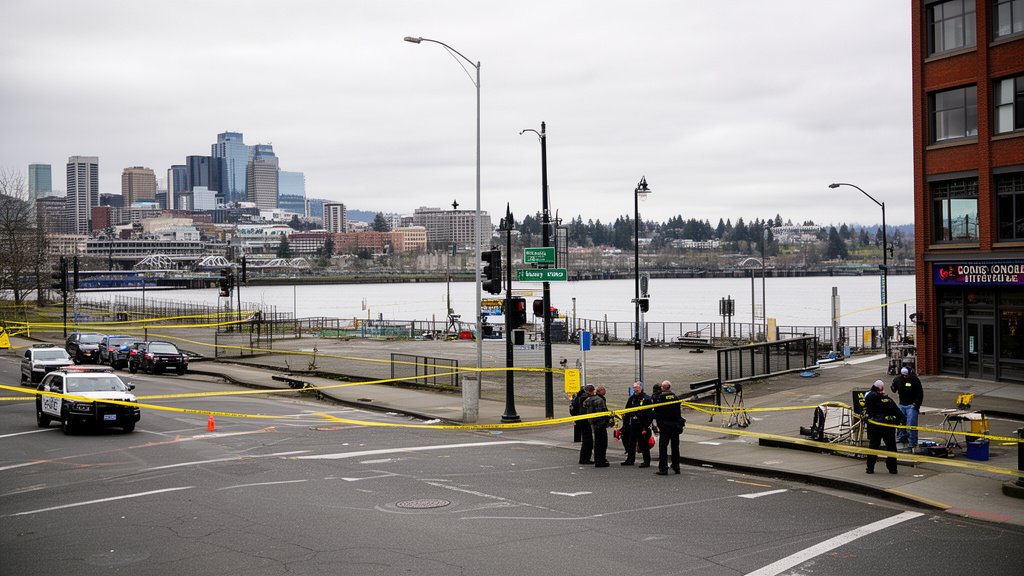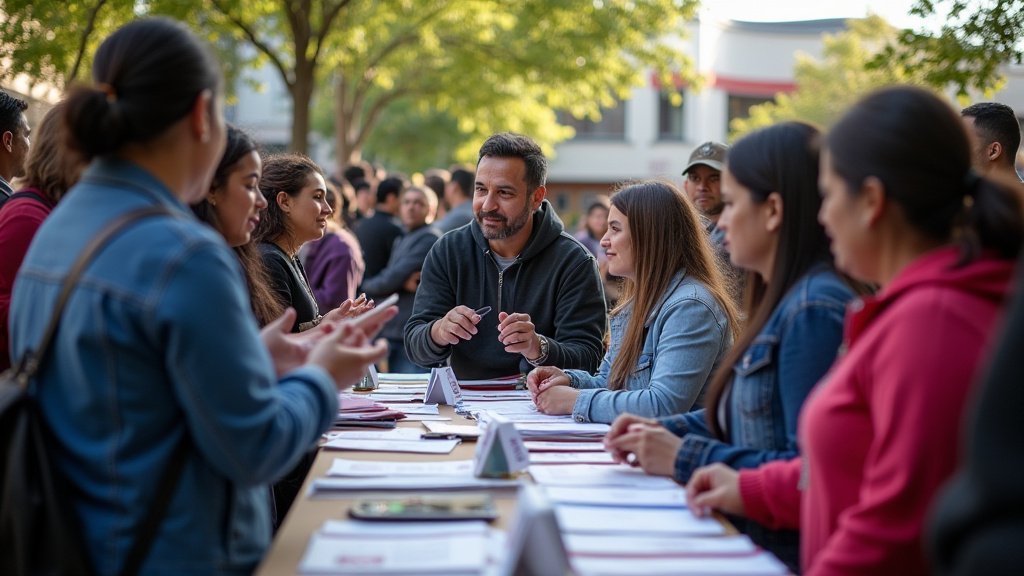
In the streets of Gresham, Oregon, a powerful convergence of political frustration and civic duty took center stage this week. A diverse group of Latino civic leaders and community members gathered for a spirited ‘No Kings’ protest, an event that served not merely as a demonstration against national judicial immunity rulings, but as a critical, boots-on-the-ground campaign to drive voter participation ahead of the November 3 election. As the shadow of immigration enforcement and reported voter intimidation looms over immigrant communities, this assembly underscored a fundamental truth: political power is exercised through the ballot, even in the face of widespread institutional anxiety.
Key Highlights
- Civic Engagement Over Apathy: The ‘No Kings’ protest in Gresham served as a catalyst for local voter registration and mobilization efforts, specifically targeting the Latino electorate.
- Combatting Intimidation: Organizers emphasized the necessity of overcoming fear regarding immigration arrests and voter intimidation tactics by asserting the constitutional right to vote.
- Bridging National and Local Issues: Participants linked the national discourse regarding presidential immunity—the core of the ‘No Kings’ slogan—to local concerns about accountability and the protection of civil rights for minority populations.
- Strategic Outreach: The protest featured bilingual messaging and community leaders who worked to demystify the voting process for first-time voters and those skeptical of government institutions.
The Urgent Call: Mobilizing the Latino Vote in Gresham
The ‘No Kings’ slogan, which has reverberated through American political discourse following the Supreme Court’s ruling on presidential immunity, took on a distinctively local and pragmatic flavor in Gresham. While the national movement focuses on the checks and balances of the highest executive office, the Gresham gathering utilized the movement as a rallying cry for local empowerment. For the Latino community in Gresham, the protest was a strategic effort to reclaim agency in an electoral environment that many perceive as increasingly hostile.
The ‘No Kings’ Narrative and Local Autonomy
The choice of the ‘No Kings’ message was intentional. Organizers used the slogan to draw a direct line between the broader conversation about limiting executive power and the necessity of limiting local political indifference. By framing the election as a way to challenge ‘kings’—or anyone acting without accountability—the protest moved beyond abstract constitutional theory into practical civic action. The narrative pushed by attendees was clear: If the community does not show up to the ballot box, they effectively cede their governance to those who do not represent their interests.
This is a critical pivot point for Oregon politics. As the Latino population in the state continues to grow, so too does the potential for this voting bloc to act as a kingmaker in local and state-wide races. The Gresham protest was a microcosm of a larger, state-wide strategy to ensure that this demographic shift translates into tangible legislative representation.
Confronting Voter Intimidation
Perhaps the most pressing topic discussed at the protest was the atmosphere of fear surrounding the electoral process. Participants spoke openly about the dual threat of immigration arrests and voter intimidation tactics. In many Latino communities, the proximity of election sites to surveillance or aggressive political monitoring can be enough to deter participation.
Local leaders at the protest addressed this head-on, distributing educational materials regarding voter rights and protections against intimidation. There is a documented, historical precedence for using fear to suppress the Latino vote; by addressing this fear in a public forum, organizers sought to neutralize its effectiveness. The message was one of resilience: that voting is not only a right but a defensive mechanism against those who would seek to silence the community’s voice.
The Demographic Shift: Power at the Ballot
To understand the gravity of the Gresham protest, one must look at the data. Latino voters in Oregon represent a rapidly expanding segment of the electorate. However, a significant gap remains between the number of eligible Latino voters and the number of actual ballots cast. This gap is the primary target for groups like the organizations present at the Gresham rally. They are not merely encouraging people to vote; they are building the infrastructure—phone banking, door-knocking, and informational workshops—to make the process as accessible as possible.
By engaging with young Latino voters who are coming of age in a polarized political climate, these organizers are working to instill a culture of civic engagement that will persist well beyond this election cycle. This effort is essential, as the issues of economic stability, educational funding, and housing—all central to the Gresham community—are directly influenced by local electoral outcomes.
Barriers to Entry: Fear vs. Participation
While enthusiasm was high at the protest, the reality on the ground is complex. Economic stressors, language barriers, and the pervasive fear of potential legal or immigration-related repercussions create a significant ‘participation tax’ for the Latino community. The ‘No Kings’ rally sought to lower this tax by providing clear information and communal support.
Yet, the challenge remains: how to maintain this momentum? The protest provided a spark, but the organizers acknowledge that the work must be consistent. They are focusing on long-term relationship building, ensuring that voters feel supported not just in the weeks leading up to November 3, but in every cycle. The protest served as a public commitment to this ongoing work, effectively transforming a moment of national protest into a sustainable local project.
Future Implications
As we look toward the upcoming elections, the effectiveness of the outreach demonstrated in Gresham will be a bellwether for similar efforts across the country. If the strategies employed here—linking national ideals to local anxieties and focusing on community-led protection—succeed in driving turnout, they will likely become the blueprint for future grassroots mobilization. The ‘No Kings’ protest may have started as a reaction to a specific judicial ruling, but in Gresham, it has evolved into something far more consequential: a foundational step in securing the political future of a vital segment of the electorate.
FAQ: People Also Ask
Q: What is the primary goal of the ‘No Kings’ movement in this context?
A: In the context of the Gresham protest, the goal was to leverage the anti-authoritarian sentiment of the ‘No Kings’ message to emphasize that no government official or institution is above the law, thereby encouraging citizens to use their vote as a form of oversight and accountability.
Q: Why are Latino voters in Gresham specifically concerned about voter intimidation?
A: Concerns stem from historical precedents and contemporary rhetoric regarding immigration enforcement. Many community members fear that the electoral process could be used as an opportunity for surveillance or intimidation, leading to a focus on providing education about voter rights and legal protections.
Q: How do grassroots organizers plan to sustain the momentum after the protest?
A: Organizers are utilizing a multi-faceted approach, including bilingual educational resources, dedicated phone-banking operations, and door-to-door mobilization efforts aimed at creating a long-term culture of civic engagement within the local Latino community.
Q: How does this protest link to the November 3 election?
A: The protest served as a direct call to action, utilizing the energy of the demonstration to register voters, distribute voting information, and combat the ‘voter apathy’ that often accompanies concerns over institutional distrust, specifically targeting the November 3 election as a crucial deadline for change.