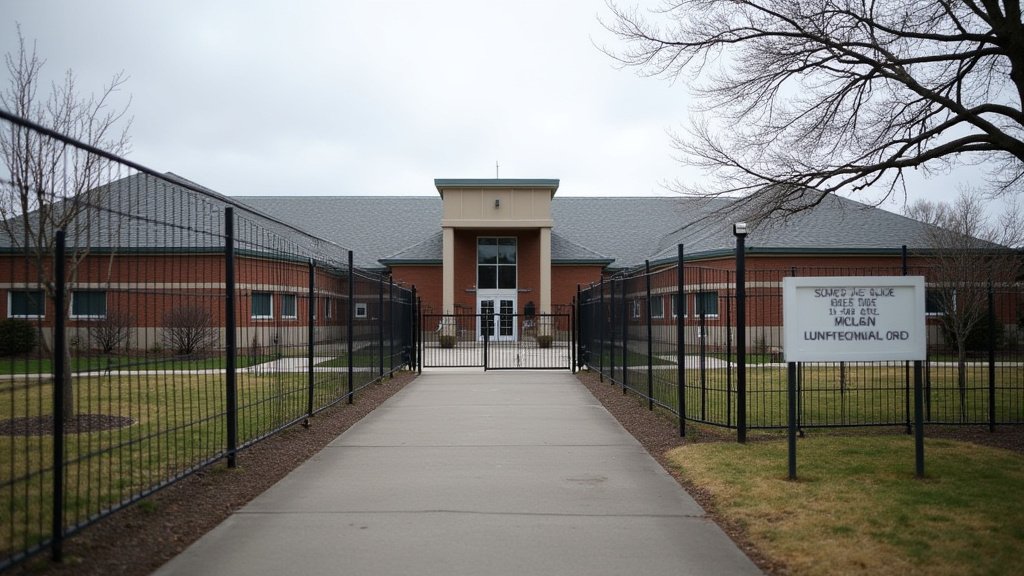
On October 15, the community of Bend, Oregon, was irrevocably altered when a 16-year-old former student bypassed security protocols to enter Silver Rail Elementary School, carrying out a targeted attack that claimed the lives of three children and a teacher. As the investigation into the tragedy deepens, the Bend Police Department and local authorities have begun to release specific, harrowing details regarding how the perpetrator, who had previously attended the institution, managed to gain unauthorized access to the campus.
Key Highlights
- The Incident: A 16-year-old former student entered Silver Rail Elementary School on October 15, resulting in the deaths of three children and one teacher.
- Security Breach: Investigators are currently focused on how the assailant bypassed established perimeter security, specifically examining if the shooter utilized knowledge of campus layout or compromised access points.
- Heroic Intervention: The escalation of the attack was cut short when an unidentified civilian hero intervened, confronting and neutralizing the shooter before additional casualties could occur.
- Ongoing Probe: The Deschutes County District Attorney is working alongside the Bend Police Department to trace the origins of the weapon and investigate any potential red flags that may have been missed prior to the event.
The Anatomy of a Security Failure
The central question plaguing the investigation—and the grieving parents of Bend—is how a 16-year-old was able to breach the Silver Rail Elementary School perimeter. Police spokespersons have confirmed that the school, like many in the district, utilizes a locked-door policy during instructional hours. However, preliminary forensic evidence suggests the shooter leveraged specific insider knowledge gained during their time as a student. Investigators are analyzing surveillance footage and badge-entry logs to determine if a vulnerable point in the school’s infrastructure was exploited or if the shooter utilized a moment of transition—such as a staff member entering or exiting—to gain access.
This incident has forced a painful re-evaluation of school safety protocols not just in Bend, but across the state of Oregon. While many institutions focus on ‘hardening’ targets, the reality of a former student attacker presents a unique challenge: the assailant already knows the rhythm of the school day, the location of security cameras, and the areas of the building where adult supervision is thinnest. Authorities are looking into whether the perpetrator had recently tested the school’s perimeter or if there were prior ‘dry runs’ that went undetected.
The Role of the Civilian Intervener
While the focus remains largely on the tragedy, the role of the civilian who intervened cannot be overstated. According to official reports, the individual—who has requested privacy as the investigation proceeds—acted with little regard for their own safety. The intervention, which occurred minutes into the incident, is credited by the Bend Police Department with preventing what could have been a significantly higher casualty count. This act of bravery highlights the unpredictability of these events and raises complex questions about the role of civilians in active shooter scenarios. Experts in crisis management are currently reviewing the incident to understand how this intervention disrupted the shooter’s pattern, providing a potential template for future emergency response training.
Tracing the Weapon and Motive
Beyond the breach itself, the Deschutes County District Attorney is tasked with the daunting responsibility of uncovering how a 16-year-old obtained the firearm used in the assault. In Oregon, strict regulations govern the purchase and possession of firearms by minors. The inquiry is currently tracking the weapon’s serial number through the National Tracing Center to determine if it was stolen from a legal owner, purchased through a private sale loophole, or acquired via an illicit market.
Furthermore, the investigation into the shooter’s motive is ongoing. Forensic psychiatrists are reviewing the suspect’s digital footprint, including social media activity, school records, and recent behavioral changes that might have served as a warning. The ‘former student’ status is a critical piece of the puzzle; investigators are interviewing former classmates and teachers to understand the trajectory that led from a student in the classroom to an assailant in the hallways. The goal is not only to seek justice for the victims but to identify systemic failures in mental health intervention programs for at-risk youth.
The Future of Silver Rail Elementary
The road to recovery for the Silver Rail community will be long. The school has remained closed as a crime scene, and the psychological impact on the surviving student body is a matter of profound concern for the district. The school board is preparing for a transition, with potential plans for a complete overhaul of physical security at the site, potentially including the installation of ballistic-resistant glass, advanced biometric entry systems, and an increased presence of school resource officers.
However, technology can only mitigate risk; it cannot solve the root cause. Educators and parents are demanding a deeper conversation about the climate of schools. This tragedy has sparked a renewed, albeit bitter, debate regarding the presence of weapons in the hands of the youth and the efficacy of current ‘threat assessment’ teams in public schools. The Silver Rail shooting will likely serve as a turning point in Oregon’s approach to educational safety, setting a precedent for how districts handle threats from within their own alumni populations. As the investigation enters its next phase, the focus will shift from the immediate ‘how’ to the systemic ‘why,’ ensuring that the deaths of those four individuals are not just a footnote in a news cycle, but a catalyst for substantive, life-saving change.
FAQ: People Also Ask
Q: What is the current status of the investigation into the Silver Rail shooting?
A: The Bend Police Department is actively processing forensic evidence and tracing the weapon’s origin. The investigation is ongoing, with a focus on determining the shooter’s motive and the specific security measures that were bypassed.
Q: Will Silver Rail Elementary School reopen?
A: While no official date has been set, the school district is currently coordinating with trauma counselors and security experts to determine when and how to return to campus, or if a site relocation will be necessary for the community’s emotional recovery.
Q: How did the civilian hero neutralize the shooter?
A: While specific tactical details are being withheld to protect the integrity of the investigation, authorities confirmed that the civilian intervened during the attack, allowing law enforcement to secure the scene upon arrival.