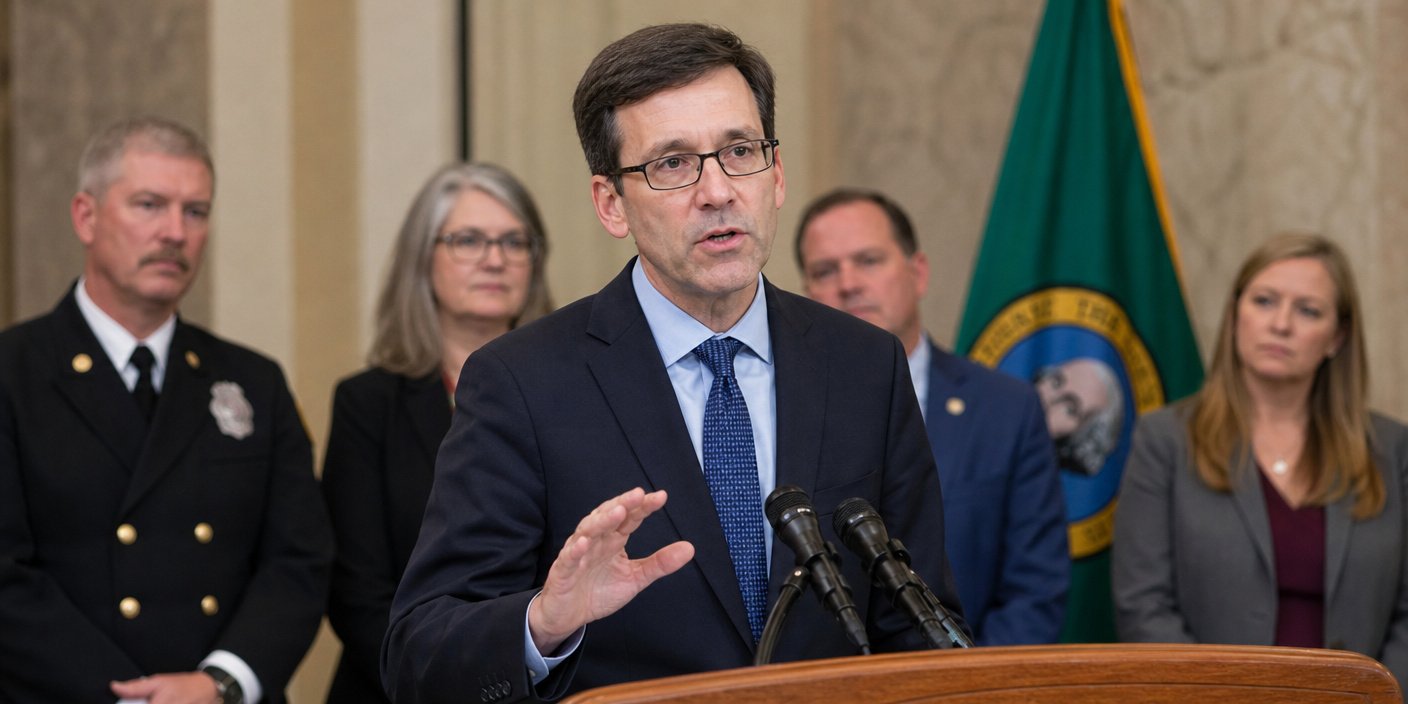
Governor Bob Ferguson has successfully secured a federal emergency declaration to bolster the response to the devastating wildfires currently consuming vast swaths of Eastern Washington. This critical federal intervention acts as a force multiplier for the state’s existing emergency management apparatus, unlocking a robust pipeline of federal resources designed to address the immediate and medium-term needs of impacted communities. By federalizing the response in the most critical zones, the Governor’s office aims to provide comprehensive support for emergency shelter, food, water, and essential search and rescue operations that are currently stretched to their limits.
Key Highlights
- Federal Emergency Status: The White House has officially granted Governor Ferguson’s request for a federal emergency declaration to combat the ongoing wildfire crisis in Eastern Washington.
- Geographic Scope: The declaration covers six primary counties: Chelan, Ferry, Okanogan, Spokane, Stevens, and Yakima.
- Tribal Inclusion: Three distinct Tribal nations are included in the federal support authorization, ensuring cross-jurisdictional cooperation and resource equity.
- Resource Allocation: Federal funds and operational support are explicitly earmarked for immediate emergency shelter, food, water, and specialized search and rescue mission costs.
Mobilizing Federal Resources: A Critical Pivot
The formalization of a federal emergency declaration is far more than a bureaucratic formality; it is a vital mechanism that shifts the financial and logistical burden of disaster response from state and local coffers to the federal level. As wildfires in Eastern Washington continue to exhibit erratic behavior due to high temperatures and unpredictable wind patterns, local resources in rural counties have faced unprecedented strain. Governor Ferguson’s successful petition to federal authorities signals an admission that the scope of this disaster has exceeded the typical capacity of state-level mitigation.
The Mechanics of the Declaration
When an event of this magnitude occurs, the primary goal of the state is to stabilize the situation before it becomes a regional catastrophe. The declaration triggers the involvement of the Federal Emergency Management Agency (FEMA) or associated federal assets. This allows for the rapid deployment of specialized equipment and financial relief that is not usually available under the state’s sole jurisdiction. For citizens on the ground, this means that the emergency shelter operations, which have been operating on a shoestring budget, will now have access to federal reimbursements and logistical support. The provision of food and clean water is prioritized, ensuring that the physical health of displaced populations remains a primary concern during the evacuation phase.
Geographic Specifics: The Eastern Washington Challenge
The counties identified in the declaration—Chelan, Ferry, Okanogan, Spokane, Stevens, and Yakima—comprise a challenging topography that spans high desert, agricultural corridors, and forested mountain foothills. Each of these regions presents unique firefighting obstacles. In Okanogan and Ferry counties, the dense timber presents a persistent fuel source, while the agricultural landscape of Yakima creates different logistical requirements for fire containment. By centralizing the emergency response under a federal banner, the state can streamline the coordination of these disparate zones, ensuring that resources are moved across county lines based on real-time fire progression rather than administrative boundaries.
Sovereign Partnership: Supporting Tribal Nations
A significant, and often overlooked, component of this federal declaration is the specific inclusion of three Tribal nations. This acknowledges the sovereign status of these nations and ensures that the federal response integrates seamlessly with their tribal emergency management programs. Cooperation between state, federal, and tribal agencies is critical in the context of wildfire mitigation, as many tribal lands are located in highly susceptible ecological zones. This coordinated effort ensures that essential aid reaches these communities without the delays often caused by complex, overlapping jurisdictional hierarchies.
Environmental and Economic Ripples
The impact of these wildfires extends well beyond the immediate threat to life and property. The secondary angle of this crisis is the profound economic disruption felt by rural communities that rely on tourism, agriculture, and timber. When evacuations are ordered and infrastructure is damaged, the immediate revenue streams for these counties vanish. Furthermore, the smoke and air quality impacts have regional economic consequences, forcing businesses to close and reducing productivity. Federal intervention helps mitigate some of this economic shock by providing the liquidity needed to restore basic infrastructure—such as power lines and transportation routes—more quickly, allowing local economies to recover faster once the immediate fire threat is neutralized.
Historical Context: A New Normal for Washington?
To understand the gravity of the current situation, one must look at the historical data. Over the past decade, Washington state has seen a dramatic increase in the frequency and intensity of wildfire seasons. This is no longer a localized issue; it is a systemic challenge that the state must grapple with annually. Historical records show that fire seasons are lengthening, with the “start” and “end” dates shifting, leaving less time for forest management and controlled burns. This federal declaration is a response to this “new normal,” where the intensity of weather-driven wildfire events often surpasses the local preparedness thresholds established in the late 20th century.
Proactive Adaptation: Future Predictions
Looking ahead, the reliance on reactive federal declarations is a temporary fix. The conversation in Olympia is increasingly shifting toward long-term adaptation. Projections suggest that if current climate patterns persist, the investment in fire-resistant infrastructure, better forest management, and modernized evacuation systems will need to increase tenfold. The future of Eastern Washington’s safety lies in proactive, rather than reactive, measures. This includes the development of “defensible space” initiatives, investments in fire-resistant housing materials, and perhaps most importantly, the expansion of grid resilience to prevent downed power lines from sparking new ignitions during high-wind events. The current declaration, while lifesaving, highlights the urgent need for a more sustainable, long-term approach to coexisting with an environment prone to fire.
FAQ: People Also Ask
Q: What does a federal emergency declaration actually provide?
A: It allows the federal government to provide financial and logistical support directly to the affected areas. This includes funding for emergency protective measures, such as mass care (shelter, water, food) and costs associated with search and rescue operations.
Q: Are there more counties at risk than the ones listed?
A: While Chelan, Ferry, Okanogan, Spokane, Stevens, and Yakima are the current focus, emergency declarations are dynamic. The Governor can request amendments to include additional counties if the fire situation escalates in other regions.
Q: How does this help the affected Tribal nations?
A: It empowers Tribal governments to coordinate directly with federal agencies, bypassing certain layers of state bureaucracy. It ensures that critical aid is tailored to the specific geographical and cultural needs of the Tribes, providing them with necessary funds for their own emergency response teams.
Q: Does this declaration provide individual financial aid to homeowners?
A: The initial declaration primarily covers public assistance—emergency support services and infrastructure protection. Individual assistance for property damage is a separate, usually more stringent, federal process that may be triggered later depending on the verified damage assessments.