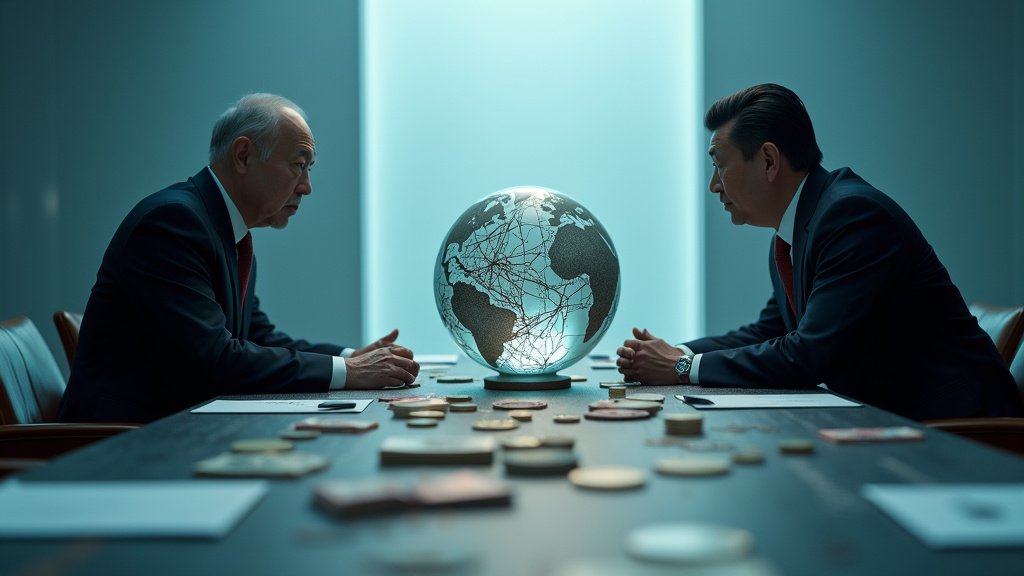
Mediators have announced what they describe as ‘progress’ in U.S.-Iran nuclear talks following a lengthy opening session aimed at reviving a stalled deal. The discussions, held in Vienna, saw delegates from Iran and the remaining parties to the Joint Comprehensive Plan of Action (JCPOA) engage in substantive dialogue, with European Union officials acting as intermediaries.
Key Highlights:
- U.S. and Iran participated in direct talks for the first time since 2017, mediated by the EU.
- Negotiators expressed cautious optimism about potential breakthroughs.
- The agenda focused on the potential for the U.S. to lift sanctions and Iran to resume nuclear activities.
- Significant gaps remain, but the resumption of talks is seen as a positive step.
Vienna Summit: A Glimmer of Hope in Nuclear Negotiations
The latest round of indirect negotiations between the United States and Iran, facilitated by the European Union in Vienna, has generated a degree of cautious optimism among diplomatic circles. After months of deadlock, the opening session marked a significant diplomatic engagement, with mediators reporting that both sides expressed a willingness to discuss the core issues preventing the revival of the 2015 Joint Comprehensive Plan of Action (JCPOA). The talks are centered on the complex interdependencies of U.S. sanctions relief and Iran’s nuclear program.
The Diplomatic Dance
European Union foreign policy chief Josep Borrell’s office announced that the opening session was ‘constructive.’ The U.S. delegation, led by Special Envoy for Iran Robert Malley, met separately with Iranian officials, with EU diplomat Enrique Mora shuttling between the two. This indirect format underscores the deep-seated mistrust but also highlights the commitment to finding a path forward. The primary objective is to restore the JCPOA, which aimed to prevent Iran from developing nuclear weapons in exchange for sanctions relief.
Sanctions and Safeguards: The Core Issues
The central sticking point remains the sequencing of actions. Iran insists on the complete and verifiable lifting of all U.S. sanctions that were reimposed after the U.S. withdrawal from the JCPOA under the Trump administration. Conversely, the U.S. seeks concrete assurances that Iran will scale back its nuclear activities, which have advanced significantly beyond the limits set by the original deal. This includes Iran’s enrichment of uranium to near-weapons-grade levels and its development of advanced centrifuges.
Historical Context and Shifting Sands
The current negotiations are taking place against a backdrop of significant geopolitical shifts. The original JCPOA, agreed upon in 2015 by Iran and the P5+1 (China, France, Germany, Russia, the UK, and the U.S.), was hailed as a landmark diplomatic achievement. However, the U.S. unilateral withdrawal in 2018 and the subsequent imposition of ‘maximum pressure’ sanctions severely damaged the agreement. The Biden administration has sought to re-engage, but the time elapsed and Iran’s advancements in its nuclear program have complicated efforts to return to the original terms.
The Road Ahead: Challenges and Opportunities
While the resumption of talks and the reported ‘progress’ are positive indicators, analysts caution against premature celebration. The inherent complexities of the JCPOA, coupled with regional tensions and domestic political considerations in both the U.S. and Iran, present formidable challenges. The current round of talks is expected to be protracted, with several working groups likely to be established to tackle specific issues such as sanctions, nuclear verification, and regional security. The success of these negotiations will hinge on the political will of both Washington and Tehran to compromise and the ability of the international community to maintain a unified stance.
FAQ: People Also Ask
What is the JCPOA?
The Joint Comprehensive Plan of Action (JCPOA), commonly known as the Iran nuclear deal, is an agreement reached in 2015 between Iran and the P5+1 countries (China, France, Germany, Russia, the United Kingdom, and the United States) plus the European Union. It aimed to limit Iran’s nuclear program in exchange for sanctions relief.
Why did the U.S. withdraw from the JCPOA?
In May 2018, then-President Donald Trump announced the U.S. withdrawal from the JCPOA, citing concerns that the deal did not sufficiently address Iran’s ballistic missile program or its regional activities, and that its ‘sunset clauses’ would eventually allow Iran to pursue nuclear weapons. The U.S. reimposed stringent sanctions on Iran.
What are the main obstacles to reviving the JCPOA?
Key obstacles include the scope and sequencing of sanctions relief for Iran and the extent of Iran’s nuclear activities, which have advanced significantly since the U.S. withdrawal. Iran also seeks guarantees that the U.S. will not withdraw from the deal again.
Who are the key mediators in the current talks?
The European Union, particularly EU foreign policy chief Josep Borrell and his deputy Enrique Mora, are playing a crucial mediating role. They facilitate indirect discussions between the U.S. and Iran.
What is the significance of ‘progress’ in these talks?
‘Progress’ in this context refers to the willingness of both the U.S. and Iran to engage in substantive discussions on the core issues, indicating a potential pathway to de-escalation and a return to the terms of the JCPOA. It signifies a diplomatic opening rather than a final agreement.