The Akawa Butte Fire, which gripped the city of Sisters for weeks and forced widespread community disruption, has been declared 100% contained as of August 6, 2026. The announcement marks the end of a protracted, high-stakes battle for local and regional fire management agencies. With the perimeter now secure, officials have officially lifted all evacuation levels, authorizing residents to return to their properties. While the immediate threat to life and infrastructure has passed, the community now turns its focus toward the complex process of recovery and mitigating lingering hazards left in the wake of the blaze.
Key Highlights
- Containment Milestone: The Akawa Butte Fire reached full containment on August 6, 2026, following a multi-week suppression effort.
- Evacuation Status: All mandatory and voluntary evacuation levels have been rescinded, allowing for full resident re-entry.
- Safety Warnings: Residents are urged to exercise extreme caution regarding hazardous trees, unstable debris, and potential flare-ups within the containment zone.
- Inter-Agency Success: Coordinated strategies between the Sisters Fire Department, Central Oregon Fire Management Service, and state assets prevented significant structural loss.
Navigating the Aftermath: Recovery and Resilience
The lifting of evacuation orders is a momentous development for the residents of Sisters, a community that has spent the last several weeks in a state of high alert. However, as the yellow caution tape is removed, fire officials are quick to emphasize that “containment” does not mean the fire is entirely “out.”
Understanding Containment Protocols
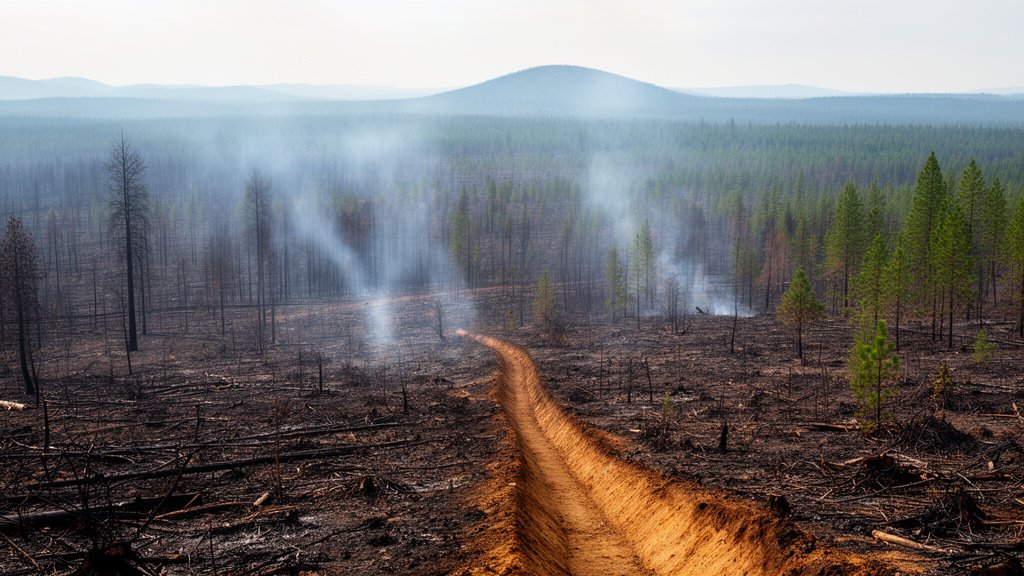
In firefighting terminology, containment refers to the completion of a control line around a fire, or a perimeter that effectively stops the fire from spreading further. For the Akawa Butte Fire, this required thousands of man-hours spent digging firelines, conducting burnout operations to eliminate fuel in the fire’s path, and aerial water drops. The Incident Command (ICS) managing the blaze confirmed that the perimeter is secure, meaning there is little to no risk of the fire expanding beyond its current footprint. However, burning embers and smoldering heavy fuels within the interior of the fire area may persist for some time, particularly in deep timber or heavy brush.
The Operational Landscape
Local authorities, including the Oregon Department of Forestry (ODF), have been instrumental in this effort. The challenge of the Akawa Butte Fire was compounded by complex topography and unpredictable wind patterns that frequently shifted the fire’s behavior. The tactical decision to prioritize structural protection in the Sisters urban interface proved successful. By establishing robust defense lines, responders ensured that the city’s critical infrastructure remained intact, preventing what could have been a catastrophic impact on the region’s housing and economic base.
Economic Impact: Tourism and Local Trade
Sisters is a vital hub for regional tourism, outdoor recreation, and local artisans. The weeks of fire suppression caused a significant, albeit necessary, pause in commercial activity. With evacuations lifted, the economic recovery begins. Local business associations are encouraging visitors to return, noting that while the fire was disruptive, the core attractions of the Sisters area remain vibrant. Economic analysts suggest that while the short-term impact was severe—characterized by lost bookings and shuttered shops—the swift containment prevented long-term structural economic damage, allowing for a faster-than-anticipated rebound for the local hospitality sector.
Ecological Recovery and Forest Health
Beyond the immediate economic concerns, there is the long-term ecological perspective. The Akawa Butte area, much like other forested regions in the Pacific Northwest, is adapted to fire; however, the intensity of recent wildfire seasons requires a more nuanced approach to forest management. Experts from the Central Oregon Fire Management Service are already drafting plans for post-fire land management. This includes the mitigation of erosion risks, particularly as the region moves toward the autumn months, and the removal of hazard trees that threaten public trails and roadways. The fire, while destructive, has also cleared out significant underbrush, which may serve as a natural reset for forest health if managed correctly through restoration efforts.
Future Preparedness: Lessons from Akawa Butte
This incident serves as a critical case study in modern wildfire preparedness. The Akawa Butte Fire demonstrated the necessity of early inter-agency communication and the effectiveness of preemptive evacuation planning. Future strategies will likely focus on increasing the density of fire-breaks near residential zones and enhancing community-wide alerts systems. Residents who have returned home are advised to review their own “defensible space” guidelines, ensuring that vegetation is cleared and home hardening measures are in place to minimize susceptibility to future events. As the region transitions out of this crisis, the emphasis remains on vigilance.
FAQ: People Also Ask
Q: What does it mean that the fire is ‘contained’ but not ‘out’?
A: Containment means a control line has been established around the fire to prevent further spread. The fire may still burn internally within the perimeter, consuming available fuel. It is officially considered ‘out’ only when all heat sources are extinguished.
Q: Are all roads in the area now open?
A: While evacuation levels are lifted, some closures remain due to lingering hazards such as falling trees or damaged infrastructure. Please check with local authorities for specific road status updates before entering forested areas.
Q: Will there be air quality concerns moving forward?
A: With the fire fully contained, the smoke output has significantly decreased. However, depending on weather patterns and interior smoldering, some intermittent smoke may still be visible. Air quality should continue to improve.
Q: Who should residents call to report new smoke?
A: If you see smoke or signs of a flare-up, do not assume it is under control. Call 911 or your local non-emergency dispatch line to report the location precisely.