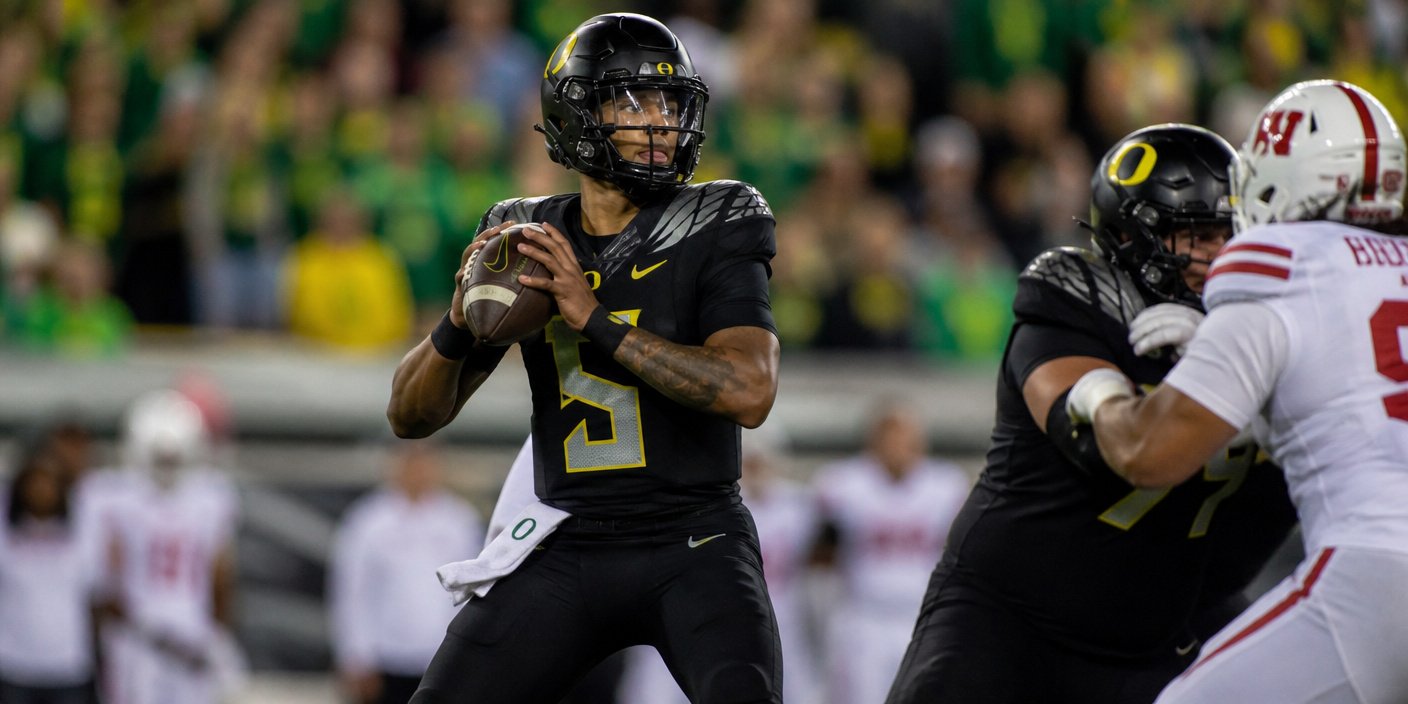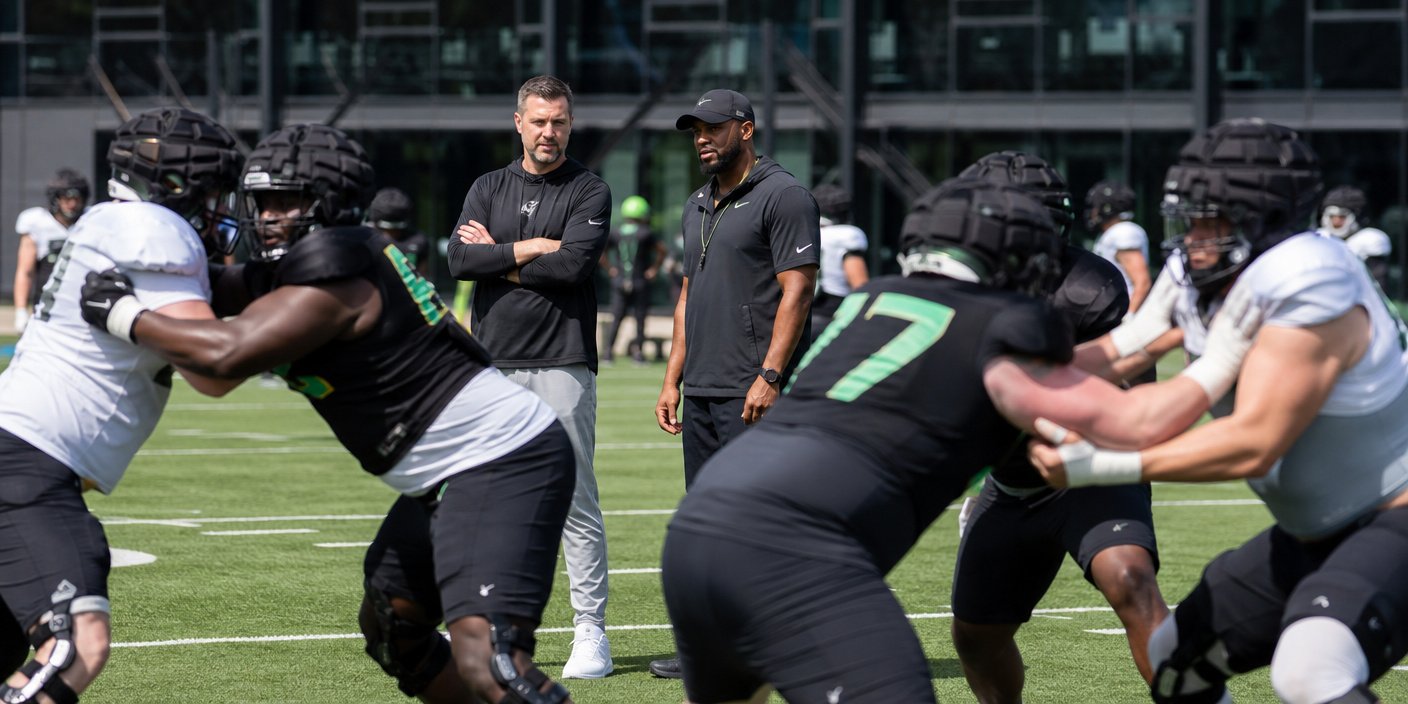
Oregon head coach Dan Lanning has formally addressed the skepticism surrounding his offensive line deployment strategy, confirming that the Ducks will continue to utilize a rotation of six to eight players in the starting mix for the 2026 season. Despite external narratives questioning the impact on unit cohesion, Lanning and offensive line coach A’lique Terry are doubling down on the belief that depth and sustained competition are critical components for navigating the rigors of a modern, expanded schedule. By prioritizing a fluid roster of linemen, the Oregon staff aims to cultivate a resilient frontline capable of maintaining elite performance levels throughout the entirety of the season.
Key Highlights
- Rotation Philosophy: Oregon plans to utilize a rotation of six to eight offensive linemen, prioritizing versatility and fatigue management over a static five-man unit.
- Chemistry vs. Competition: Lanning dismisses claims that constant rotation disrupts chemistry, arguing that high-level competition in practice creates a stronger, more unified group.
- Strategic Depth: The strategy aims to mitigate the risk of injury and ensure that multiple players have significant game experience, ready to contribute at a moment’s notice.
- Coaching Vision: A’lique Terry is instrumental in this approach, focusing on development and ensuring technical consistency across the entire positional group regardless of who is on the field.
The Calculated Gamble: Oregon’s Trench Strategy
In the era of modern collegiate football, where physical attrition defines the difference between a championship run and a season defined by “what-ifs,” Dan Lanning’s approach to the offensive line is both radical and calculated. The traditional model of offensive line play—finding the best five and riding them until exhaustion or injury—is being systematically dismantled in Eugene. Instead, Lanning is leaning into an ecosystem that thrives on depth, competition, and tactical adaptability.
Defining the 6-8 Man Rotation
The 2026 offensive line roadmap is centered on a rotation of six to eight players who will see meaningful snaps, rather than a rigid hierarchy. This isn’t merely about substituting for the sake of rest; it is a deliberate effort to build a “trenches-first” culture. By ensuring that backups and rotational starters are receiving consistent in-game repetitions, the Oregon coaching staff is effectively stress-testing their depth chart. This approach allows players like the interior linemen and the tackles to remain fresh during the high-leverage moments of the fourth quarter.
From a physiological standpoint, maintaining high-intensity performance for a full 60-minute game is demanding. By cycling personnel, Oregon can maintain a higher “miles per hour” output from their linemen. This translates to more explosive blocks, faster reactions to stunts, and a consistent push at the point of attack that can wear down opposing defensive fronts by the final whistle. It is a war of attrition that Lanning intends to win by being the team that doesn’t tire out.
The Chemistry Counter-Argument
Critics have long argued that rotating linemen disrupts the synchronization necessary for pass protection and run blocking. The “chemistry” argument posits that offensive linemen need to know the person playing next to them with extreme, unspoken intuition. Lanning, however, dismisses this notion as an outdated barrier to innovation. He posits that the modern offensive lineman must be versatile enough to communicate effectively with anyone on the roster.
Under A’lique Terry’s guidance, the practice environment is structured to ensure that no player is locked into a single pairing. “Iron sharpens iron” is not just a slogan in Eugene; it is the daily operational standard. By mixing combinations in practice, the staff ensures that the linemen develop an ability to adjust to the tendencies, strengths, and weaknesses of various teammates. Consequently, when game day rotation occurs, the transition is seamless because the communication protocols are uniform across the room, not tied to a specific five-man quartet.
The “Next Man Up” Recruiting Advantage
Beyond the immediate benefits on the field, Lanning’s rotation philosophy serves as a powerful recruiting tool. In the transfer portal and NIL era, high-level offensive line prospects are often wary of being buried on a depth chart behind an entrenched, five-man senior unit. By broadcasting a clear commitment to a six-to-eight-man rotation, Oregon offers prospective recruits a tangible pathway to playing time and development early in their collegiate careers.
This strategy prevents talent stagnation. When talented underclassmen know they are part of a rotation, their developmental trajectory accelerates. They are not merely practicing against air or scout teams; they are gaining meaningful reps in high-stakes environments. This creates a feedback loop: better development leads to a deeper, more talented roster, which in turn allows for a more aggressive rotation, further bolstering the team’s overall resilience. It is a flywheel effect that creates sustainable competitive advantage, ensuring that the 2026 Ducks are not one injury away from a season-altering disaster.
This proactive approach is a signal to the rest of the college football landscape that Oregon is prioritizing long-term durability over the short-term comfort of a single starting unit. Whether this philosophy becomes the standard for elite programs remains to be seen, but for Dan Lanning, the path forward is clear: depth is not a backup plan; it is the strategy.
FAQ: People Also Ask
Q: Why does Dan Lanning believe a 6-8 player rotation is better than a standard five-man line?
A: Lanning believes that the intensity of modern football requires fresher players to maintain high performance. A wider rotation prevents fatigue, reduces the impact of injuries, and creates a more competitive, development-focused environment.
Q: Does rotating linemen actually hurt team chemistry?
A: Lanning and coach A’lique Terry argue that chemistry is built through consistent communication protocols and high-level practice repetition, not just static lineups. By rotating in practice, players learn to work effectively with various partners, neutralizing the risk of disruption.
Q: How does this strategy help with recruiting?
A: It provides a clearer path to playing time. High-end recruits are more likely to join a program where they know they will receive game reps early in their careers rather than waiting behind an entrenched, immobile starting five.
Q: How does A’lique Terry’s coaching influence this strategy?
A: Terry focuses on technical consistency across the entire group. His coaching ensures that every player in the rotation understands the scheme and blocking assignments to a high degree, making the rotation a viable, functional aspect of the game plan.