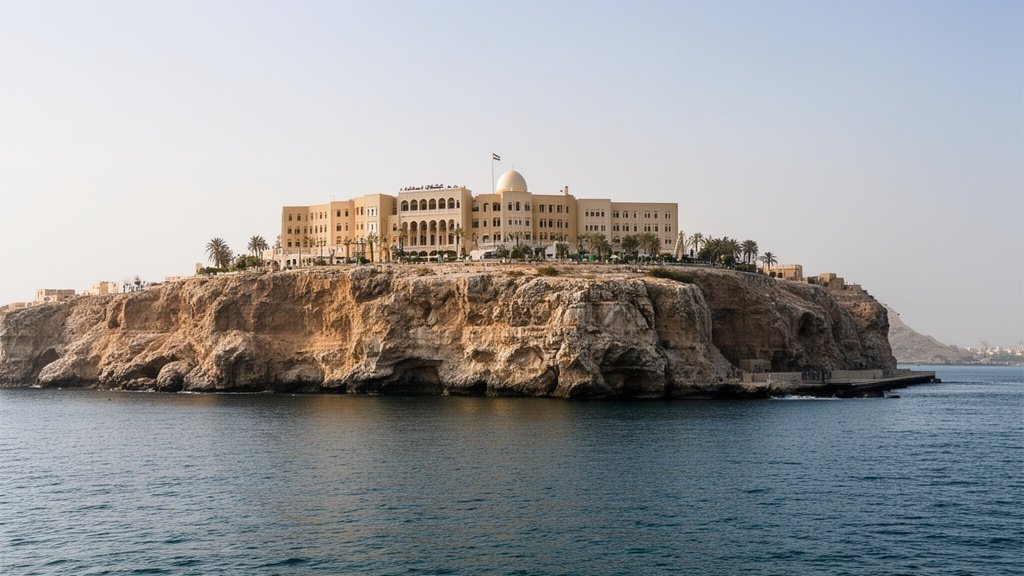
The government’s seat of power in Aden, the Al-Maashiq Presidential Palace, became the site of a deadly security breach as Houthi forces launched a sophisticated, coordinated drone and missile strike today. This tactical offensive, which resulted in five fatalities and 16 injuries, signals a volatile shift in the operational capabilities of Houthi militants and directly threatens the tenuous stability of the internationally recognized government. As smoke cleared over the Aden coastline, the implications of this strike reverberated far beyond the immediate blast radius, raising urgent questions about maritime security, air defense capabilities, and the viability of ongoing peace negotiations.
Key Highlights
- Casualty Figures: The precision strike resulted in five confirmed deaths and 16 individuals sustaining injuries of varying severity.
- Tactical Shift: The attack utilized a combined-arms approach, integrating drones with ballistic missile systems to overwhelm localized defensive measures.
- Strategic Target: By striking Al-Maashiq Presidential Palace, the Houthi forces have targeted the literal heart of the Yemeni government’s administrative and executive operations.
- Regional Tensions: This escalation threatens to unravel fragile diplomatic threads, placing renewed pressure on coalition partners and international mediators to reassess the security landscape in Southern Yemen.
The Strategic Shift: Inside the Al-Maashiq Palace Strike
The assault on the Al-Maashiq Presidential Palace is not merely an isolated act of violence; it is a clear demonstration of the tactical evolution within the Houthi military command. For years, the conflict in Yemen has been characterized by static frontlines and proxy skirmishes. However, the ability of Houthi forces to strike a high-security zone—one that serves as the official residence and workplace for the executive branch—reveals a significant upgrade in intelligence gathering and hardware deployment.
The Anatomy of the Escalation
The attack commenced in the early hours, utilizing a combination of unmanned aerial vehicles (UAVs) and short-range ballistic missiles. Security analysts indicate that the synchronization of these assets is designed to tax air defense systems, forcing them to distribute fire across multiple vectors. The Al-Maashiq Palace, geographically isolated on a rocky promontory, provides a defensible position, yet this event proves that geographical barriers are no longer sufficient deterrents against modern, drone-based aerial warfare. The penetration of such a high-value target indicates that the intelligence network supporting these strikes has become increasingly proficient at identifying critical vulnerabilities in government infrastructure.
The Geopolitical Ripple Effect
Aden, as the temporary capital, serves as the anchor for the internationally recognized government. By bringing the war directly to the gates of the presidential complex, Houthi forces are sending a dual message: first, that no location in the country is truly beyond their reach, and second, that they reject the current political status quo. This incident complicates the already precarious diplomatic atmosphere. International stakeholders, who have been pushing for a cessation of hostilities, now face a heightened reality where the government feels compelled to respond with force, potentially triggering a broader cycle of retaliation. The diplomatic community is watching closely, fearing that this strike could lead to a total collapse of informal truce agreements that have held pockets of the country together over the past year.
Modernizing the Battlefield: Drone and Missile Integration
The integration of sophisticated drone and missile systems into a single offensive package represents a ‘new normal’ in the Yemen conflict. Historically, Houthi tactics were largely decentralized. Today, the coordination required to conduct a strike of this nature—one that requires precision targeting of a specific government facility—implies access to improved targeting data. This shift demands a corresponding evolution in the defensive capabilities of the coalition-backed forces. Reliance on legacy anti-air artillery is proving insufficient; modern electronic warfare countermeasures and advanced radar detection are now essential requirements for protecting civilian and government infrastructure in Aden.
Economic and Humanitarian Consequences
The human cost of this attack—five lives lost and 16 injured—is a harrowing reminder of the war’s toll on Yemeni civilians. Beyond the immediate trauma, such attacks disrupt the flow of aid and economic activity in the Aden port. Businesses and international organizations, sensitive to security fluctuations, often scale back operations following high-profile attacks. This leaves the local population more vulnerable, as the economic engine of the capital stalls. As the government pivots toward damage control and increased security, the attention shifts away from the critical social issues—food security, healthcare access, and reconstruction—that remain the most pressing needs for the people of Yemen.
FAQ: People Also Ask
Q: What is the significance of the Al-Maashiq Presidential Palace?
A: The Al-Maashiq Presidential Palace serves as the primary seat of the internationally recognized Yemeni government in Aden. It is the administrative hub where key political decisions are made and where high-level state officials reside and work, making it a symbolic and functional target for opposition forces.
Q: How does this strike impact the broader Yemeni peace process?
A: The strike represents a significant hurdle for ongoing peace negotiations. It undermines trust between opposing parties and forces the government to prioritize security and retaliation over diplomatic discussions, potentially stalling or reversing progress made in recent ceasefires.
Q: Are there reports on the types of drones or missiles used?
A: While official reports are pending full forensic analysis, security experts have identified that the attack employed a combined-arms approach using long-range drones and tactical missiles, designed to bypass localized defensive perimeters through synchronized flight paths.