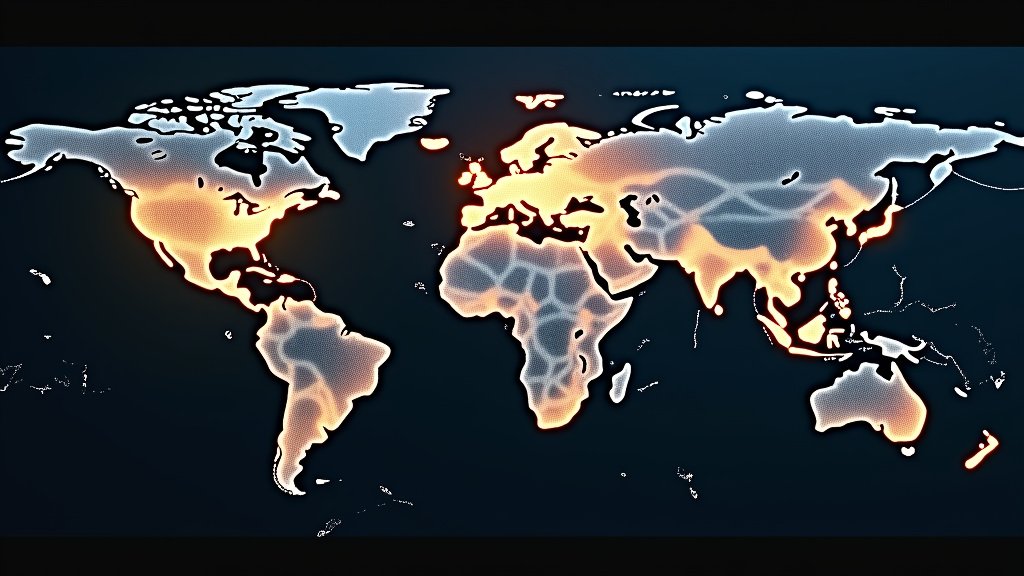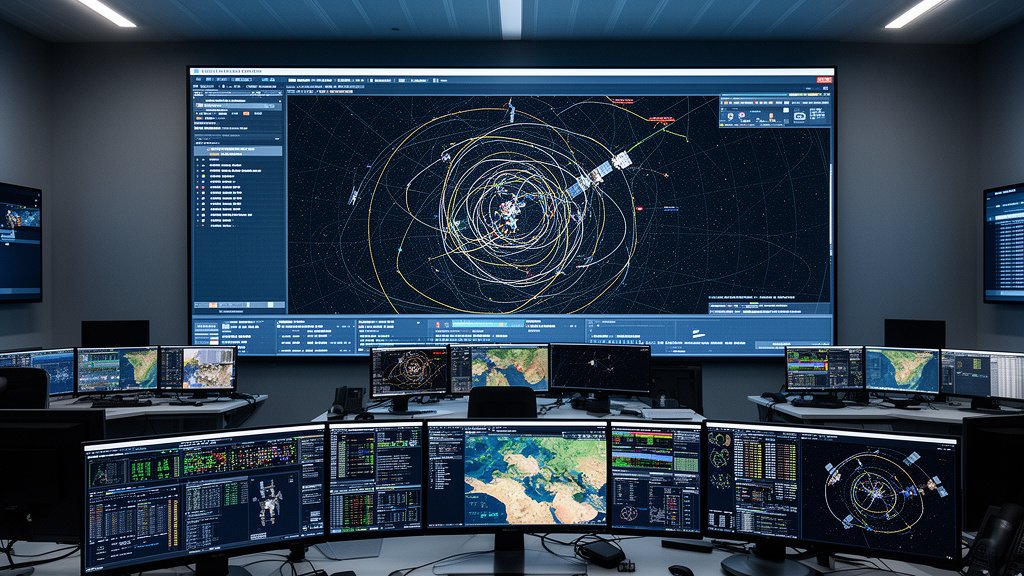
In a decisive strategic shift, the Council of the European Union has officially adopted a new decision to strengthen the EU Space Threat Response Architecture (STRA). This move marks a pivotal moment for European security, signaling the bloc’s transition from a passive approach to orbital management to an active, defense-oriented posture designed to safeguard its critical space infrastructure against increasingly hostile and irresponsible behavior in the heavens above.
Key Highlights
- Formalized Defensive Posture: The Council of the European Union has mandated a comprehensive strengthening of the STRA, moving beyond observational capabilities to active threat response.
- Central Role for SatCen: The EU Satellite Centre (SatCen) in Torrejón de Ardoz, Spain, remains the operational backbone for providing geospatial intelligence and space domain awareness.
- Protecting Key Assets: The initiative is designed to defend the integrity of the EU’s flagship space programs, including the Galileo global navigation satellite system and the Copernicus Earth observation infrastructure.
- Strategic Autonomy: This decision is a cornerstone of the EU’s broader Space Strategy for Security and Defence, aiming to reduce dependence on non-EU capabilities and ensure uninterrupted service for European citizens and states.
- Countering Emerging Threats: The architecture specifically addresses risks such as satellite jamming, blinding, anti-satellite (ASAT) weapon testing, and the proliferation of space debris caused by hostile actions.
Safeguarding the European Celestial Frontier
The Transition to a Contested Domain
For decades, space was viewed by the European Union as a shared global commons—a domain strictly for scientific exploration, weather monitoring, and economic cooperation. However, the current geopolitical landscape has forced a profound reassessment. The modern orbital environment has become increasingly crowded and, more concerningly, contested. Competitors and adversaries have demonstrated that satellites—which form the backbone of modern military communications, economic transactions, and infrastructure management—can be targeted, degraded, or destroyed.
The strengthening of the STRA is the EU’s answer to this new reality. By formalizing this architecture, the Council is ensuring that Europe has a unified, coordinated mechanism to detect, identify, and respond to threats. This is not merely an institutional update; it is an acknowledgment that space security is now inextricably linked to national and regional security on Earth. The architecture ensures that when an anomaly occurs—be it a suspicious proximity operation by an unknown vessel or a sudden loss of communication—the EU can move from monitoring to coordinated action immediately.
Intelligence and The Role of SatCen
The technical efficacy of the STRA relies heavily on the EU Satellite Centre (SatCen). Located in Spain, SatCen acts as the intelligence hub for the European Union. Its role within the enhanced STRA is to provide high-resolution, objective, and timely situational awareness. This involves fusioning data from various sources—including independent European sensors and partnerships with allied space-faring nations—to build a ‘Space Domain Awareness’ (SDA) picture.
This SDA is critical because you cannot protect what you cannot see. The STRA enhances the communication channels between member states, the European Commission, and the High Representative of the Union for Foreign Affairs and Security Policy. By creating a standardized ‘threat response’ framework, the EU ensures that when a threat is identified, the decision-making process is rapid, evidence-based, and politically unified across all 27 member states.
Reducing Dependency for Strategic Autonomy
A secondary, yet equally vital, angle to this development is the EU’s pursuit of ‘Strategic Autonomy.’ Historically, European nations often relied on the United States or other global partners to identify threats in orbit. While these partnerships remain crucial, the EU has determined that it must possess its own independent capacity to verify and respond to events in space.
This initiative protects the multibillion-euro investments made in programs like Galileo and Copernicus. These systems are not just ‘space projects’; they are essential utility providers. Galileo provides the timing signals for Europe’s banking systems and electrical grids; Copernicus provides the climate data necessary for environmental policy and disaster response. If these systems are compromised, the impact on European society would be immediate and severe. By strengthening the STRA, the Council is effectively creating a digital and physical shield around these assets, ensuring that they remain operational even in the face of cyber-attacks or kinetic interference.
Looking Ahead: Deterrence in Orbit
The ultimate goal of the strengthened STRA is deterrence. By signaling that the European Union possesses the architecture to identify the source of threats and the unity to respond to them, the EU aims to discourage ‘irresponsible behavior’ in orbit. This behavior includes activities that create long-lived space debris, which threatens the sustainability of space for all humanity, as well as more aggressive tactics like ‘co-orbital’ threats, where an adversary launches a satellite specifically designed to maneuver close to and potentially disable a European asset.
In the coming years, we can expect the STRA to evolve alongside new technologies. As AI and machine learning become integrated into satellite operations, the speed at which threats are detected and characterized will only increase. The Council’s recent decision ensures that the policy framework remains ahead of, or at least in lock-step with, these technological advancements.
FAQ: People Also Ask
What exactly does the Space Threat Response Architecture (STRA) do?
The STRA is a coordinated framework that links EU intelligence services, space agencies, and political decision-makers. It enables the identification of threats to space assets (such as jamming or collision risks) and provides a structured protocol for formulating a diplomatic or technical response to that threat.
Why is the EU doing this now?
The decision follows the realization that space has become a ‘contested domain.’ With rising geopolitical tensions and the increased frequency of ASAT (anti-satellite) testing by global powers, the EU identified a critical need for independent, reliable space situational awareness to protect its critical infrastructure.
Does this move mean the EU is militarizing space?
The EU emphasizes that this is a ‘Space Strategy for Security and Defence’ focused on resilience and protection, not offensive militarization. It is designed to safeguard the functioning of systems like Galileo and Copernicus, which are vital for both civilian and security purposes.
How does this affect EU citizens?
Most citizens do not interact with space directly, but they rely on it daily. Navigation for transportation, precise timing for banking transactions, and climate monitoring data all depend on the stability of space assets. Strengthening the STRA ensures these services remain reliable and secure against potential interference.