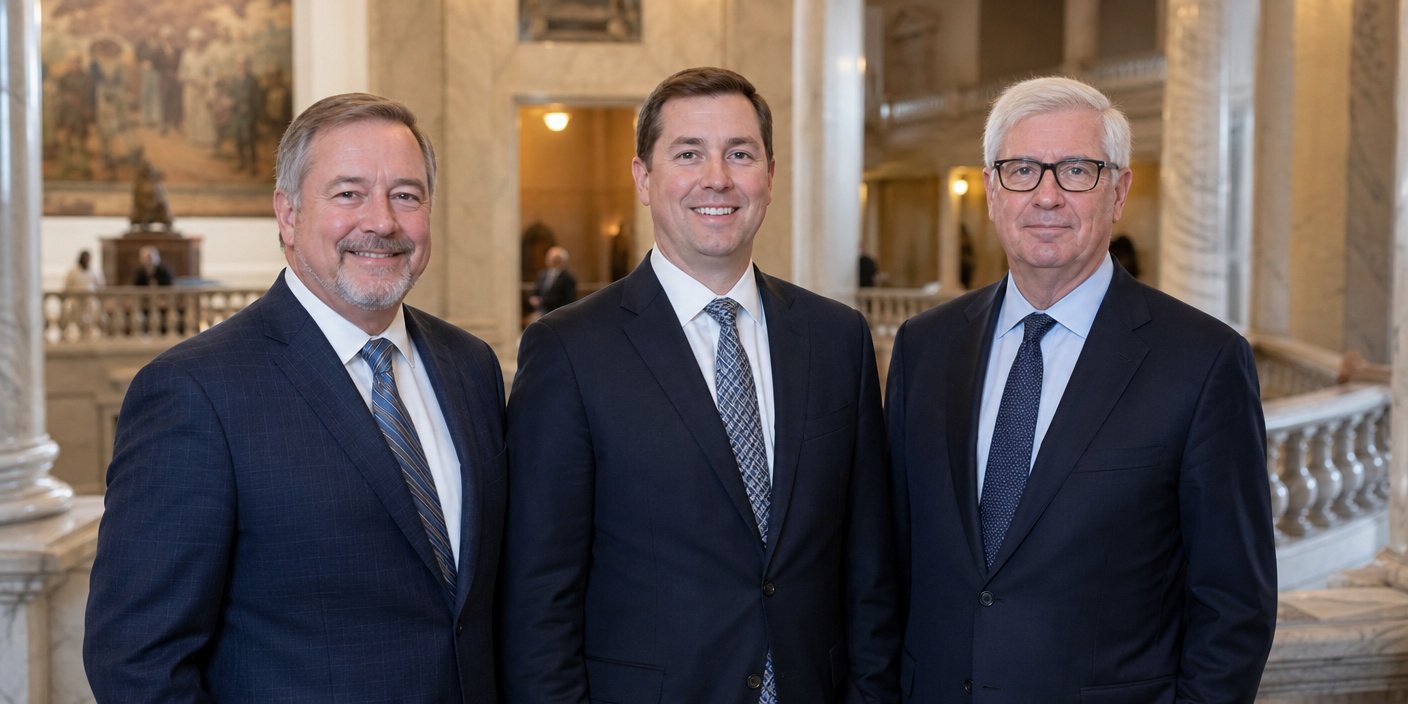
Oregon Senate Democrats have officially finalized their leadership team, ushering in a strategic transition as they prepare to wield their strong majority during the upcoming 2025 long legislative session. The party caucus, seeking to balance experienced oversight with fresh perspectives, has confirmed a reshaped lineup intended to guide the legislative agenda over the next several months. Central to the transition is the elevation of Senator Anthony Broadman, who steps into a key leadership role previously held by Senator Kayse Jama. Meanwhile, the chamber will maintain continuity at the top, with Senate President Rob Wagner reelected to lead the upper house, supported by Senator James Manning as Senate President Pro Tempore.
Key Highlights
- Leadership Transition: Senator Anthony Broadman has been elected to a leadership post, succeeding Senator Kayse Jama in the caucus structure.
- Stability at the Helm: Senate President Rob Wagner was reelected to his position, ensuring continuity for the Democratic majority.
- New Pro Tempore: Senator James Manning, representing Eugene, has been selected as the Senate President Pro Tempore.
- High-Stakes Session: The 2025 legislative session is a ‘long session,’ meaning it will span 160 days, focusing on the state budget and significant policy overhauls.
- Democratic Mandate: The caucus enters the session with a strong majority, aiming to advance key priorities including housing, transportation, and climate initiatives.
Navigating the Legislative Horizon: Strategic Shifts in the Oregon Senate
The organizational meetings held recently by the Oregon Senate Democrats signal more than just a redistribution of titles; they represent a calculated approach to the 2025 legislative cycle. By balancing the re-election of seasoned leadership with the integration of emerging figures, the caucus aims to maintain internal cohesion while addressing the demanding nature of a 160-day session. Unlike the short, 35-day sessions that focus on emergency tweaks, the long session requires the heavy lifting of budget construction and long-term infrastructure planning. This environment demands both endurance and legislative dexterity.
The Anatomy of the New Leadership Team
The decision to re-elect Senator Rob Wagner as Senate President speaks to a desire for stability. Wagner, who has navigated the chamber through recent years of intense political friction and policy debates, is viewed by his caucus as a steady hand. His retention suggests that the Democratic strategy will prioritize consistent management of the floor, a critical asset when dealing with a session that often lasts from February through June.
However, the appointment of Senator Anthony Broadman to fill the space vacated by Senator Kayse Jama is perhaps the most significant structural change. Broadman, known for his work in local government and his focus on regional economic development, brings a distinct perspective to the leadership table. His rise indicates a shift in the caucus’s tactical focus—likely leaning into issues of growth, infrastructure, and the practical implementation of statewide mandates. Meanwhile, the selection of Senator James Manning as Senate President Pro Tempore anchors the leadership team with veteran experience. Manning’s legislative history in Eugene and his work on public safety and labor issues add a layer of credibility that is expected to resonate across both urban and rural constituency lines.
Implications of the Long Session
For the Oregon Legislature, the ‘long session’ is the primary engine of state governance. It is here that the budget is set, determining funding for schools, health services, and transportation for the next two years. The Democratic majority recognizes that with a strong mandate comes the responsibility to deliver on high-profile promises. The shift in leadership is a proactive measure to ensure that administrative bottlenecks do not derail these objectives.
From an organizational standpoint, the leadership team will be tasked with managing internal caucus dynamics. Keeping a diverse group of Democrats—representing urban centers like Portland, college towns like Eugene, and varied suburban districts—aligned on sensitive topics such as land-use reform and housing density is a non-trivial challenge. The team will likely employ a ‘consensus-first’ approach, utilizing the early months of the session to build momentum before the inevitable pressure of the session’s later days sets in.
The Strategic Role of the Majority
Possessing a strong majority gives the Democrats significant leverage, but it does not remove the need for bipartisan communication. While the numerical strength is clear, the political reality of the Oregon Senate requires a degree of cooperation to avoid the parliamentary stalemates that have characterized past sessions. The leadership team’s stated goal is to ensure that the legislative process remains productive and transparent. This involves navigating the influence of the executive branch under Governor Tina Kotek, whose office often works in tandem with legislative leadership to set the tone for policy negotiations.
As the session approaches, the focus is squarely on the intersection of fiscal responsibility and social impact. The leadership’s first hurdle will be finalizing committee assignments and determining the flow of bills through the legislative process. By solidifying their leadership ranks early, the Democrats are effectively signaling that they intend to enter the 2025 session with a unified front, minimizing internal power struggles to concentrate on the legislative calendar ahead.
FAQ: People Also Ask
Why is the 2025 session considered a ‘long session’ in Oregon?
In Oregon, the state legislature alternates between short 35-day sessions (during even-numbered years) and long 160-day sessions (during odd-numbered years). The long session is critical because it is when the state budget for the upcoming two-year cycle is passed, and significant long-term policy legislation is debated.
What are the main responsibilities of the Senate President Pro Tempore?
The Senate President Pro Tempore, currently Senator James Manning, acts as the presiding officer when the Senate President is absent. This role is a key leadership position that involves managing floor debates, overseeing parliamentary procedure, and serving as a central figure in caucus decision-making.
How does Senator Anthony Broadman’s election impact the Democratic caucus?
Broadman’s election signifies a leadership pivot, bringing his specific expertise—often rooted in municipal law and local governance—to the higher level of state party administration. It suggests the Democrats are aiming to bridge the gap between state-level policy and the practical realities facing local jurisdictions.
What does a ‘strong majority’ mean for the legislative process?
A strong majority allows the Democratic Party to more easily move legislation through committees and to the floor for a vote. While they may still face procedural hurdles, a majority provides the foundational power to control the legislative agenda and set the timeline for which bills are prioritized for debate.