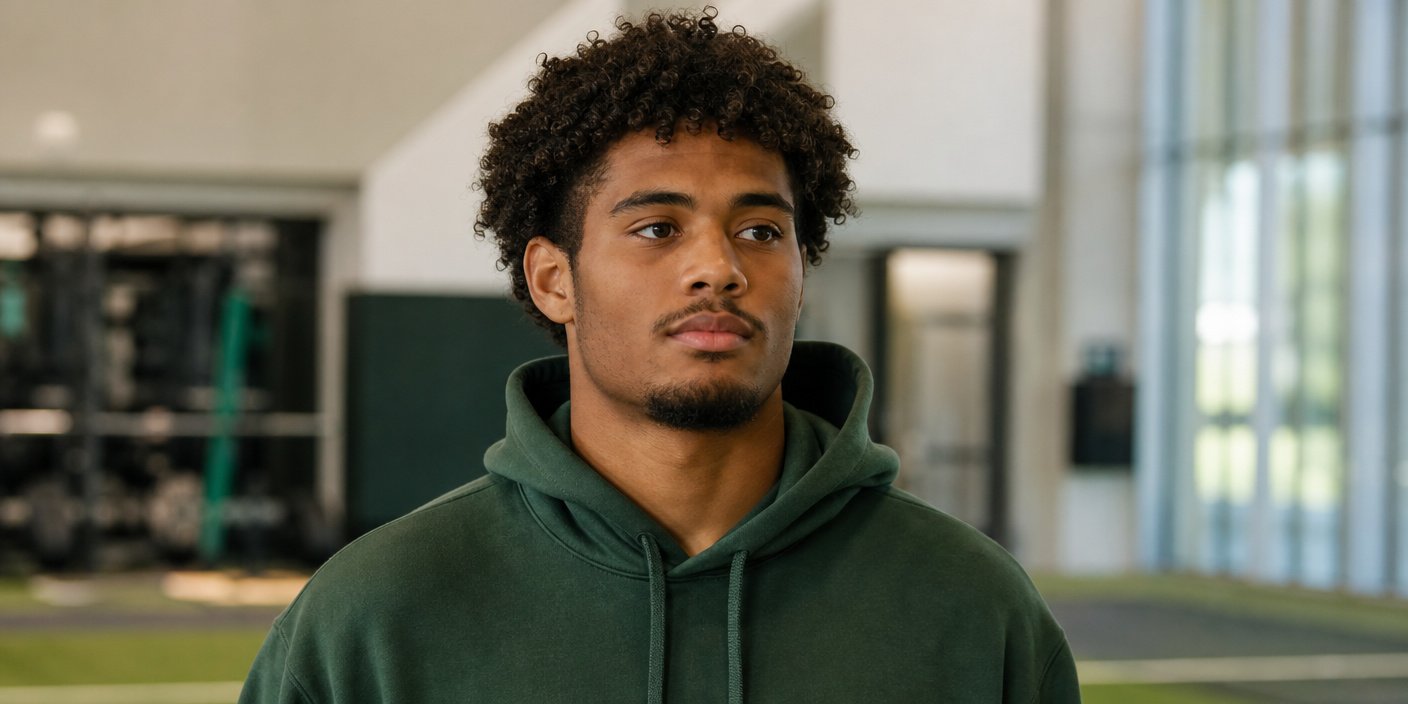
Oregon head coach Dan Lanning provided a definitive and reassuring medical update regarding quarterback Dante Moore following a frightening on-field collision during the recent matchup against the USC Trojans. Lanning confirmed that the young signal-caller underwent rigorous diagnostic evaluations, including clean MRI and CT scans, and has successfully returned to Eugene to continue his recovery and monitoring.
Key Highlights
- Clean Medical Clearance: Dante Moore received clean results from both MRI and CT scans, ruling out significant structural damage or neurological trauma.
- Safe Return: The quarterback has been transported back to Eugene, Oregon, where he remains under the watchful care of the University of Oregon’s medical staff.
- Coach’s Assurance: Dan Lanning expressed relief at the positive medical outcome, emphasizing the organization’s priority on player safety over the immediate pressures of the season.
- Protocols in Action: The swift transport to a medical facility highlights the stringent concussion and head-injury protocols currently enforced in collegiate football.
The Aftermath of the Collision at USC
The incident, which occurred during a high-stakes moment in the game against the USC Trojans, sent a shockwave through the Oregon fanbase and the collegiate football community. When a quarterback—the centerpiece of any offensive scheme—goes down after a heavy hit, the immediate concern shifts rapidly from the scoreline to the well-being of the athlete. The collision appeared severe in real-time, necessitating immediate medical attention and the subsequent hospital transport that kept spectators and teammates in a state of apprehension throughout the evening.
The Critical Role of Diagnostic Imaging
In modern college football, the transition from field-side evaluation to hospital-grade diagnostic imaging is standard, yet it remains a moment of intense scrutiny. The announcement of a “clean” MRI and CT scan is the most desirable outcome in these scenarios. Such imaging is designed to identify even the most subtle signs of intracranial bleeding, swelling, or structural fractures that might be missed during a baseline neurological exam on the sideline. For Moore, the clearance provided by these medical scans allows the team and his family to breathe a sigh of relief, knowing that while a significant impact occurred, the physiological integrity of the player remains intact.
Prioritizing Player Welfare in the Big Ten Era
As Oregon navigates the physical demands of the Big Ten conference, the intensity of play has reached new heights. Physicality is a hallmark of this level of competition, but it brings inherent risks. The swift, professional response by the Oregon medical staff to ensure Moore was immediately assessed in a clinical setting underscores a growing paradigm shift in sports medicine. The “win-at-all-costs” mentality of the past is increasingly being tempered by a “safety-first” protocol, where independent medical observers and team physicians hold absolute authority to pull a player, regardless of the game’s critical juncture.
Strategic Implications for the Oregon Depth Chart
While the medical report is the most important element, the secondary impact of this health scare touches upon Oregon’s offensive strategy. Quarterback stability is the bedrock of Dan Lanning’s offensive philosophy. With Moore navigating the recovery process, the team’s depth chart and practice rotation will inevitably shift. Coaching staffs must balance the necessity of keeping their starter sharp while ensuring that backup options are adequately prepared should the situation demand a change. This incident serves as a stark reminder of how fragile a season’s trajectory can be, influenced not just by talent, but by the physical resilience of the roster.
The Psychological Aspect of Return-to-Play
Beyond the physical healing, there is the oft-overlooked psychological component of returning to the gridiron after a “scary” hit. Athletes must regain their spatial confidence and “pocket presence”—the ability to focus on downfield targets despite the looming threat of defensive pressure. Coaches and sports psychologists work in tandem to ensure that when a player returns, they are not “gun-shy.” Dante Moore’s successful return to Eugene is the first step in this multifaceted recovery process, moving from medical clearance to mental readiness.
FAQ: People Also Ask
Q: What does a ‘clean MRI and CT scan’ mean for a football player?
A: It means that radiologists examined the brain and surrounding structures and found no evidence of hemorrhaging, fractures, or significant soft tissue damage, which is a major positive indicator for recovery.
Q: Will Dante Moore play in the next game?
A: Following standard concussion and head injury protocols, players must go through a graduated “return-to-play” progression. Medical clearance is the first step, followed by non-contact and then full-contact practice participation before a return to competitive play.
Q: How does the University of Oregon handle player injuries during away games?
A: Large athletic programs like Oregon have dedicated medical logistics teams that coordinate with local hospitals and level-one trauma centers in the host city to ensure that players receive immediate, professional care equivalent to what they would receive in Eugene.
Q: Does a ‘clean’ scan guarantee there is no concussion?
A: Not necessarily. A concussion is a functional brain injury that often does not show up on structural imaging like MRI or CT scans, which are primarily used to rule out more severe, life-threatening injuries like bleeding or skull fractures. A player can have a clean scan and still be diagnosed with a concussion based on symptoms.