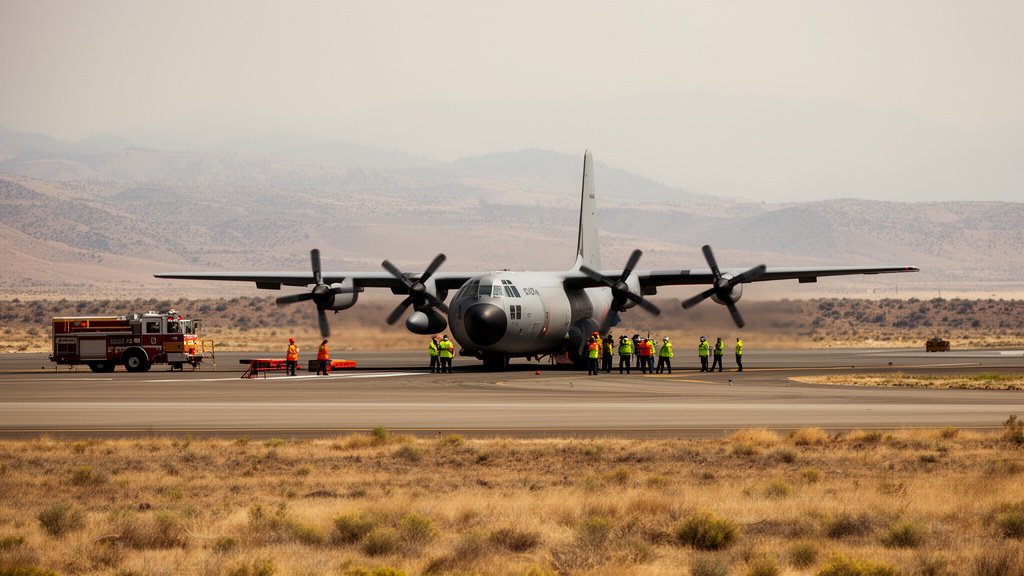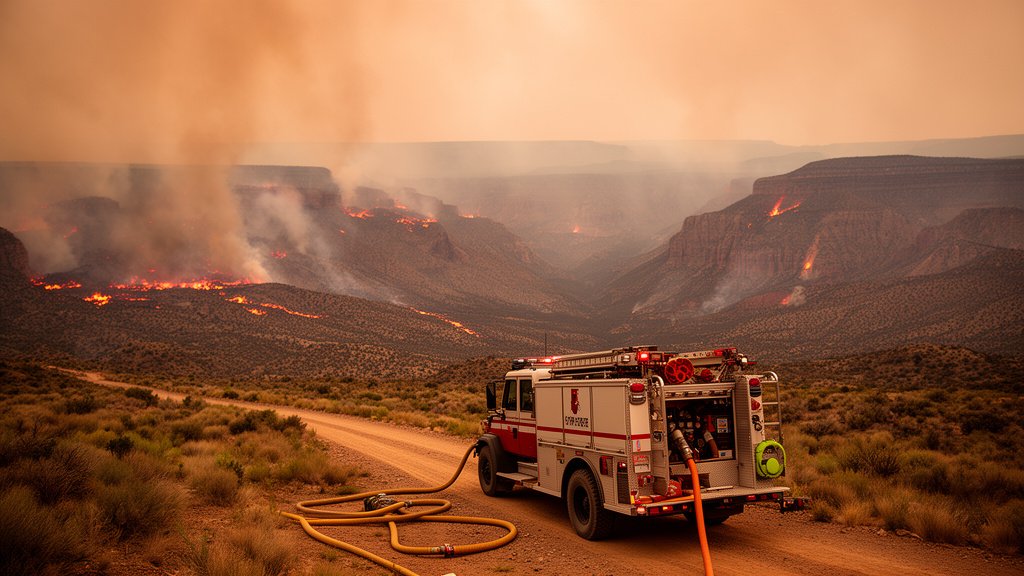
Official reports on Sunday, August 9, 2026, confirm that the Big Grass Fire has expanded to 513,437 acres, maintaining a containment level of 39%. As the fire continues its aggressive track, fire management agencies have shifted resources to secure the infrastructure corridors situated near the Owyhee River, which remains the primary focus of defensive operations. Residents and stakeholders are invited to a formal community briefing this evening to receive updates on containment progress and evacuation protocols.
Key Highlights
- Total Burn Area: 513,437 acres have been impacted by the fire as of Sunday morning.
- Containment Status: Incident commanders report 39% containment, with progress hindered by challenging, rugged terrain.
- Strategic Priority: All suppression efforts are currently centered on shielding vital infrastructure located along the Owyhee River corridor.
- Community Update: A mandatory community meeting is scheduled for this evening to provide clarity for local residents regarding ongoing safety measures and future operational plans.
The Strategic Defense of the Owyhee River
The ongoing battle against the Big Grass Fire has entered a critical phase, as the blaze approaches the ecologically and economically significant Owyhee River corridor. The Interagency Incident Management Team (IIMT) has designated this region as a “top-priority zone,” necessitating an immediate reallocation of aerial and ground resources. The terrain, characterized by deep canyons and unpredictable wind currents, continues to challenge the containment efforts of local and federal firefighters.
Tactical Suppression and Containment Challenges
Managing a fire of this magnitude requires a multi-layered tactical approach. The 39% containment figure represents a hard-fought achievement for ground crews who have been working in 24-hour shifts to establish fire lines. However, the sheer scale of the 513,437-acre footprint means that containment lines are under constant threat from spot fires and embers carried by wind across the landscape. The Bureau of Land Management (BLM) has confirmed that the primary strategy remains “containment via defensible space,” meaning crews are prioritizing the creation of fuel breaks around high-value targets, including critical infrastructure and power transmission lines that run parallel to the river.
Environmental and Economic Fallout
The environmental toll of the Big Grass Fire is already significant. Beyond the immediate destruction of rangeland, the impact on the Owyhee River ecosystem, known for its distinct biodiversity and recreational value, is a major concern. Economically, the fire threatens not only local ranching operations but also the long-term viability of the area’s outdoor tourism sector. With the fire having already consumed vast tracts of land, agricultural stakeholders are beginning to express alarm over the potential for winter forage shortages, as the loss of grazing land may disrupt regional livestock production cycles for multiple seasons.
Climate Patterns and Future Predictions
Looking toward the remainder of the 2026 fire season, the National Interagency Fire Center (NIFC) has indicated that the region remains in an extreme fire weather state. The combination of prolonged drought, low fuel moisture, and erratic convective weather patterns has created a “perfect storm” scenario. Meteorological models suggest that without a shift in the regional jet stream—which could bring higher humidity and lower temperatures—the fire will likely continue to expand its perimeter over the coming weeks. The current focus on the Owyhee River is not just a defensive measure for today; it is a long-term strategy designed to prevent the fire from jumping to the other side of the river, which would open up thousands of acres of currently untouched land to the blaze.
Community Response and Safety Protocols
For residents in the immediate vicinity, the anxiety is palpable. The scheduled community meeting tonight is intended to serve as a vital communications hub. Officials from the IIMT and local emergency management are expected to outline specific evacuation triggers, provide maps of the current fire perimeter, and clarify the allocation of firefighting assets. Residents are urged to monitor official channels for updates on air quality and potential road closures, particularly those routes crossing the Owyhee River bridge systems. As the situation remains fluid, public compliance with safety directives is essential to ensuring that emergency personnel can maintain the mobility required to combat the fire effectively.
FAQ: People Also Ask
Q: What is the current containment percentage of the Big Grass Fire?
A: As of Sunday, August 9, 2026, the Big Grass Fire is 39% contained.
Q: Why is the Owyhee River area the current priority?
A: The Owyhee River corridor contains vital infrastructure that, if compromised, would cause long-term disruptions to power and communication services, making its protection a strategic necessity for the IIMT.
Q: How many acres have been affected by the fire so far?
A: The total burn area is currently documented at 513,437 acres.
Q: Will there be further opportunities for residents to get information?
A: Yes, a community meeting is scheduled for this evening. Updates will also be posted through local emergency management social media channels and the official incident website.