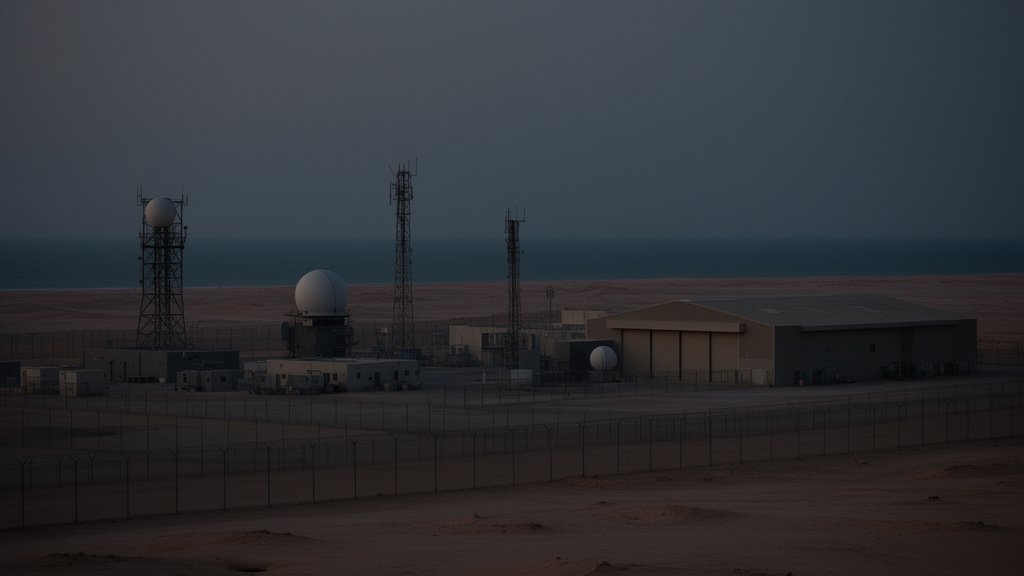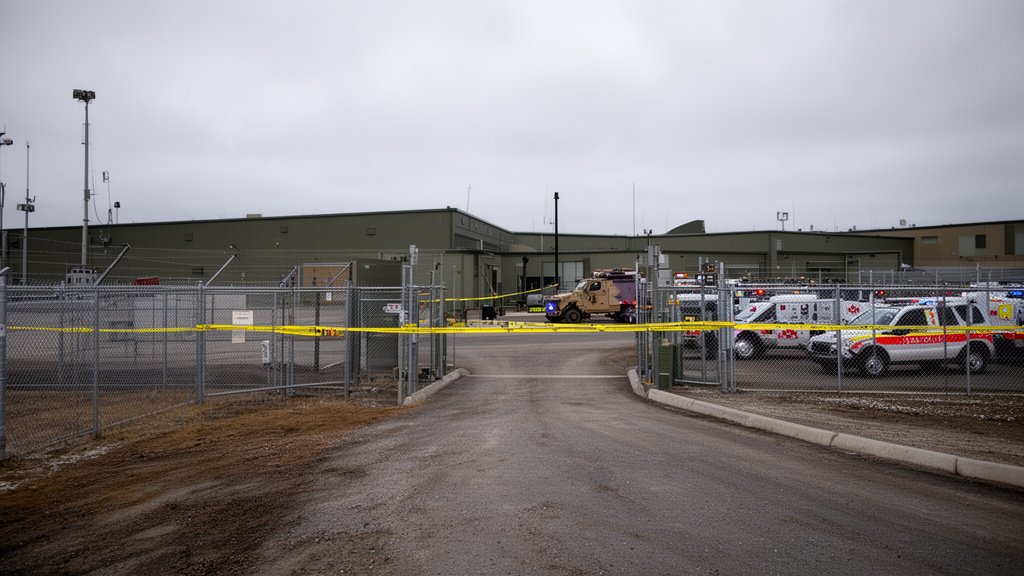
A catastrophic explosion and subsequent fire at Canadian Forces Base (CFB) Wainwright in Alberta has resulted in the tragic loss of seven lives and left dozens of personnel injured, sending shockwaves through the national defense community. The incident, which occurred during a high-intensity training window, has necessitated a massive, multi-agency emergency response to secure the site, treat the wounded, and begin the difficult process of determining the cause of the disaster.
- Seven Fatalities Confirmed: Military officials have verified seven deaths directly linked to the blast and fire.
- Mass Casualty Response: Dozens of personnel are currently being treated for varying degrees of injury at medical facilities across the region.
- Base Lockdown: CFB Wainwright remains under strict security protocols as investigators and hazardous material teams assess the stability of the training grounds.
Anatomy of a Disaster: The CFB Wainwright Tragedy
The explosion at CFB Wainwright—one of Canada’s most critical training facilities—marks one of the most significant peacetime tragedies in recent Canadian military history. While the specific nature of the ordnance or equipment involved remains part of an ongoing investigation, the scale of the blast was substantial enough to trigger immediate provincial-level mutual aid responses. CFB Wainwright serves as a primary hub for collective training for the Canadian Armed Forces (CAF), and the facility is designed to support complex, live-fire exercises. However, the concentration of personnel and high-energy materials during training maneuvers presents inherent risks that the Department of National Defence (DND) works tirelessly to mitigate.
The Logistics of the Emergency Response
The immediate aftermath of the explosion saw the rapid activation of the base’s internal emergency operations center. Given the location of CFB Wainwright in a rural area of central Alberta, the logistical challenge of triaging and transporting dozens of injured personnel was immense. Military medical teams were bolstered by local emergency services from the surrounding Wainwright area, who coordinated with the Royal Canadian Air Force to facilitate air ambulance transfers for the most critically injured. The speed of the initial response is credited with preventing a higher casualty count, though the situation remains fluid as medical professionals continue to manage complex trauma cases.
The Strategic Role of CFB Wainwright
To understand the gravity of this event, one must consider the scope of operations at CFB Wainwright. It is more than a barracks; it is a sprawling tactical training center where thousands of soldiers conduct annual exercises. It hosts everything from urban warfare simulations to armored vehicle maneuvering and live-fire artillery practice. The infrastructure is heavily fortified, and safety protocols are among the most stringent in the country. The fact that an incident of this magnitude occurred suggests a failure in a high-security environment that will prompt an exhaustive review of all current protocols regarding munitions handling, storage, and training safety. The Department of National Defence has signaled that an independent board of inquiry will likely be convened to scrutinize every decision leading up to the disaster.
Understanding the Human and Operational Toll
Beyond the immediate physical destruction, the emotional and psychological toll on the military community is profound. For the families of the seven individuals lost, the grief is compounded by the suddenness of the event. Simultaneously, the Canadian Armed Forces must now grapple with the operational disruption. Major training exercises have been indefinitely suspended at the base, potentially impacting deployment readiness for upcoming international missions. The ripple effect of this suspension will be felt in garrison commands across the country, as the military reallocates resources to manage the aftermath and begins the sensitive task of notifying families and providing support to the affected units. This event is not merely a tragedy for the individuals involved; it is a blow to the operational fabric of the Canadian military’s primary training engine.
Investigative Procedures and Future Safeguards
The investigation into the cause of the fire and explosion is now the primary priority for military police and safety engineers. Because CFB Wainwright deals with hazardous materials, the investigation will be forensic in nature, analyzing blast debris, video logs, and communication transcripts to reconstruct the moments leading up to the explosion. Investigators are specifically looking for evidence of equipment malfunction, procedural oversight, or external environmental factors that may have compromised safety. The findings from this inquiry will be pivotal. Not only will they provide answers to the families and the public, but they will dictate future policy changes. Historically, such tragic events in military history have led to a complete overhaul of how explosive ordnance is handled during training, meaning the lessons learned here will likely dictate safety protocols for years to come.
FAQ: People Also Ask
Q: What is the current status of CFB Wainwright?
A: The base is currently operating under restricted access. While critical functions continue, all training exercises have been suspended to allow for the ongoing investigation and to prioritize the recovery and support of personnel.
Q: Are there plans for an independent investigation?
A: Yes, the Department of National Defence is expected to launch an independent Board of Inquiry. This is standard protocol for major incidents involving significant loss of life and property to ensure transparency and accountability.
Q: How is the public being kept informed?
A: The CAF and DND are holding daily press briefings. Official updates are being released through the Government of Canada’s defense media portal, which is the only authorized source for confirmed casualty numbers and operational status updates.