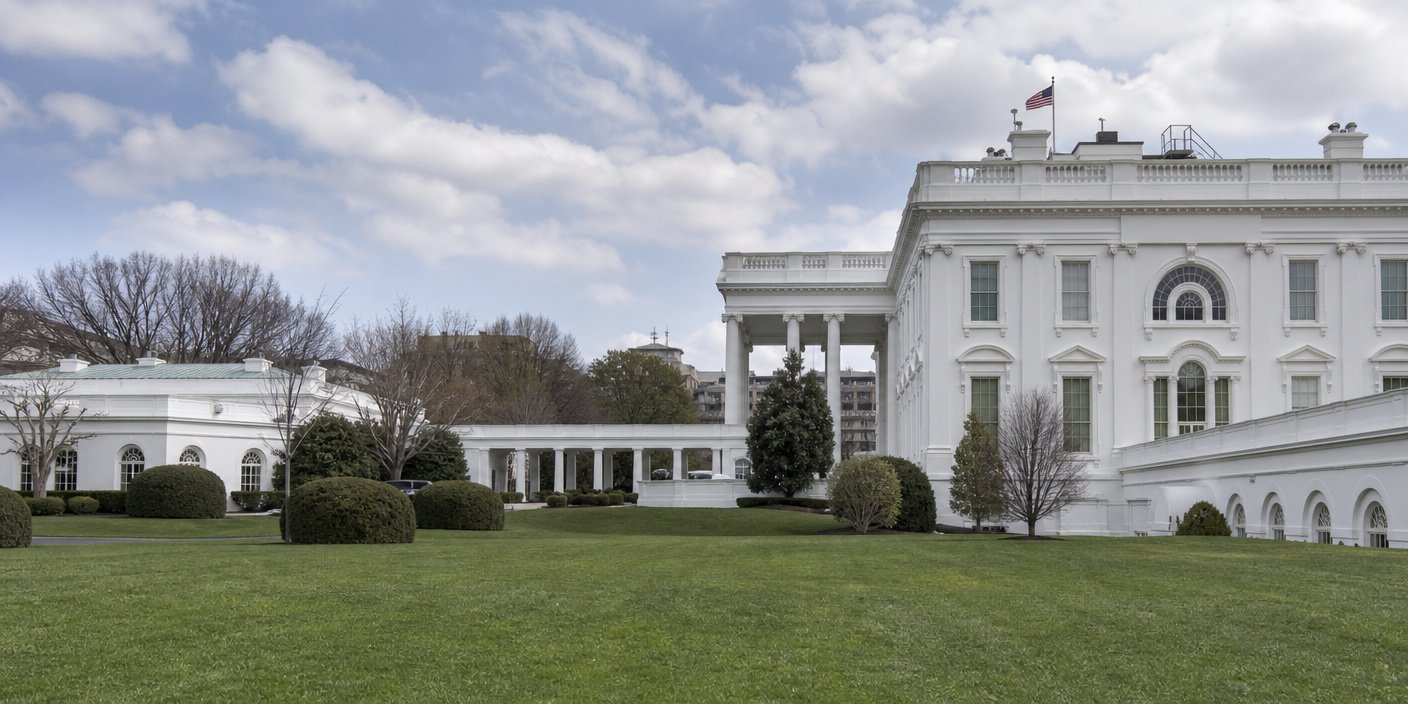
President Donald Trump has officially petitioned the United States Supreme Court to stay an injunction issued by a lower federal court, effectively halting a controversial $400 million construction project at the White House. The administration’s emergency filing centers on the contention that the project, which includes plans for a new ballroom and visitor center, is a matter of urgent security and executive necessity. Conversely, the lower court’s ruling maintains that the project, which involves substantial alterations to the executive grounds, requires explicit Congressional authorization that the White House has yet to secure.
Key Highlights
- Legal Escalation: The Trump administration has petitioned the Supreme Court to bypass a lower court injunction to resume construction on a $400 million renovation project.
- Scope of Construction: The project entails replacing the existing tennis pavilion with a more substantial facility designed to function as a visitor center and entertainment space, often referred to in planning documents as the ballroom addition.
- The Authorization Conflict: A primary sticking point is the interpretation of Congressional oversight; the White House argues it operates under executive authority, while the judiciary has signaled that such extensive federal spending requires legislative appropriation.
- Security Rationale: The administration’s legal team has emphasized that the design changes are vital for securing the White House complex against modern threats, arguing that the lower court’s interference hampers presidential safety measures.
The Legal Deadlock: Executive Power vs. Congressional Oversight
The central tension in this legal battle lies at the intersection of executive privilege and the power of the purse. At the heart of the dispute is the administration’s plan to overhaul the White House grounds, a project with an estimated price tag of $400 million. While the administration contends that the work is a matter of national security—arguing that the current infrastructure is outdated and vulnerable—the judiciary has repeatedly scrutinized the funding and planning processes used to initiate the work.
Challenges Under the National Environmental Policy Act (NEPA)
Beyond the budget disputes, the project has faced hurdles related to regulatory compliance. Legal challenges were brought forth suggesting that the administration bypassed standard procedures mandated by the National Environmental Policy Act (NEPA). Critics and environmental groups argued that such a large-scale project requires environmental impact statements and public review processes, which they allege were circumvented in the rush to break ground. The injunction, which the administration now seeks to overturn, was based on these procedural failures, essentially freezing the work until the proper legal channels are navigated.
The Role of the White House Historical Association
Funding for these projects has historically involved a complex mix of public funds and private donations funneled through the White House Historical Association. However, the scope of this particular project pushed the boundaries of what these entities could finance without direct Congressional intervention. The administration’s reliance on these mechanisms has been criticized as an attempt to evade the Legislative Branch’s constitutional role in approving federal spending, particularly when that spending fundamentally alters a landmark historic site.
Historical Context and Architectural Implications
White House renovations are never merely structural; they are deeply political. Throughout American history, the executive mansion has served as a canvas for presidential legacies. From the Truman reconstruction to the modernization of the East Wing, every alteration carries the weight of historical scrutiny. The current controversy over the ballroom and visitor center is, in many ways, an extension of this legacy-building effort.
Modernizing the Executive Complex
The administration argued that the existing tennis pavilion, which was significantly renovated during the Trump presidency, did not meet the long-term needs of the White House complex. The plan envisioned a robust, multi-use facility capable of hosting state events, which would alleviate the pressure on the crowded State Floor and modernize visitor intake procedures. Architects associated with the project noted that modern security requirements make it nearly impossible to host large-scale events in older parts of the mansion without extensive structural reinforcement.
The Future of Presidential Projects
The outcome of this Supreme Court petition will likely set a precedent for how future administrations approach large-scale renovations to federal property. If the Supreme Court grants the stay, it could signal a significant shift toward broader executive authority in federal project management. Conversely, if the court upholds the injunction, it will serve as a strong reaffirmation of the requirement for Congressional oversight in all significant federal expenditures, regardless of the security justification cited by the White House.
FAQ: People Also Ask
Why was the ballroom construction halted by the courts?
The project was halted due to a lower court injunction that found the administration had likely bypassed necessary legal requirements, specifically related to the National Environmental Policy Act (NEPA) and the constitutional requirement for Congressional authorization regarding the funding and scope of the federal project.
What is the specific legal mechanism used by the administration?
The administration filed an emergency application to the Supreme Court seeking a ‘stay’ of the lower court’s injunction. A stay would effectively pause the court’s order, allowing construction to resume while the legal battle continues in higher courts.
Did Congress approve the $400 million project?
No. This is a primary point of the legal contention. The administration argued that they could proceed through alternative funding streams and executive discretion, while the courts have consistently found that a project of this magnitude requires specific Congressional appropriation and legislative approval.
What are the main entities involved in this dispute?
The primary entities involved include the Trump administration (as the petitioner), the U.S. District Court (which issued the injunction), the National Park Service (often involved in grounds management), and the White House Historical Association (often a funding partner in such endeavors).