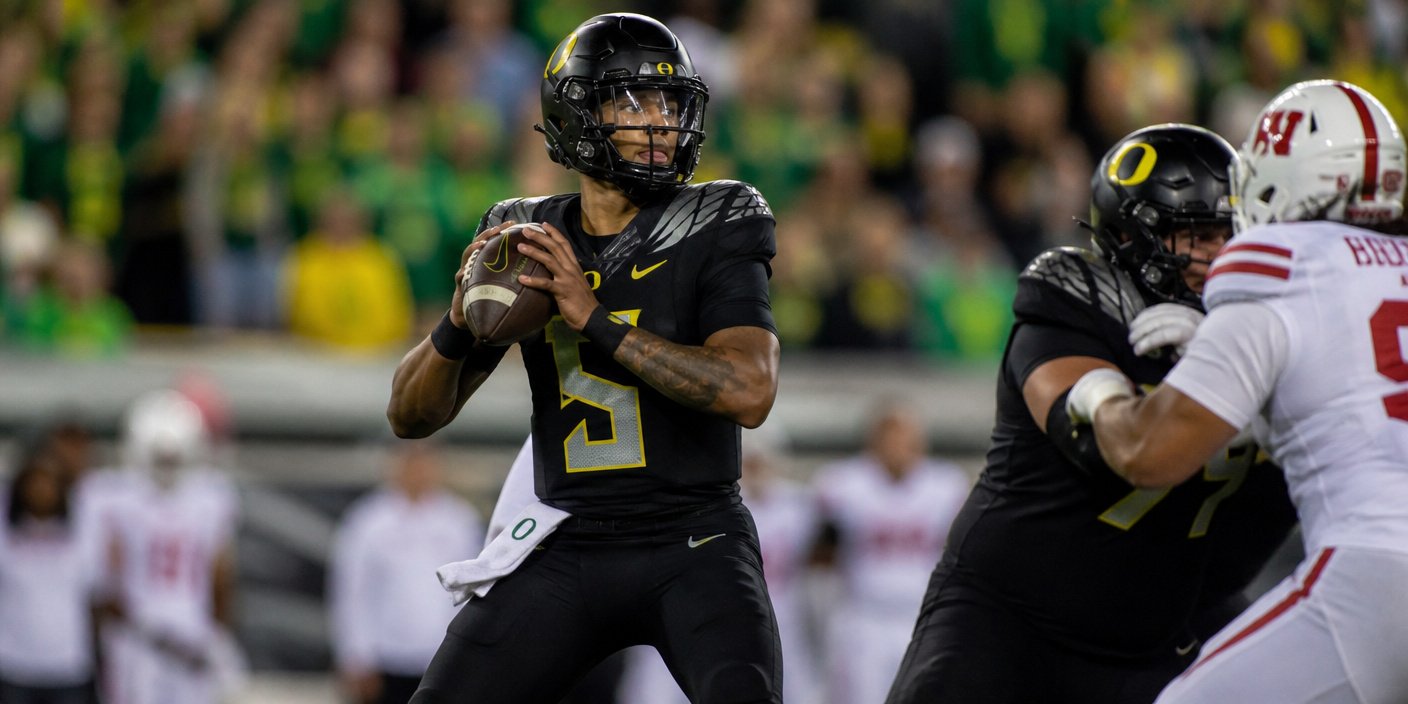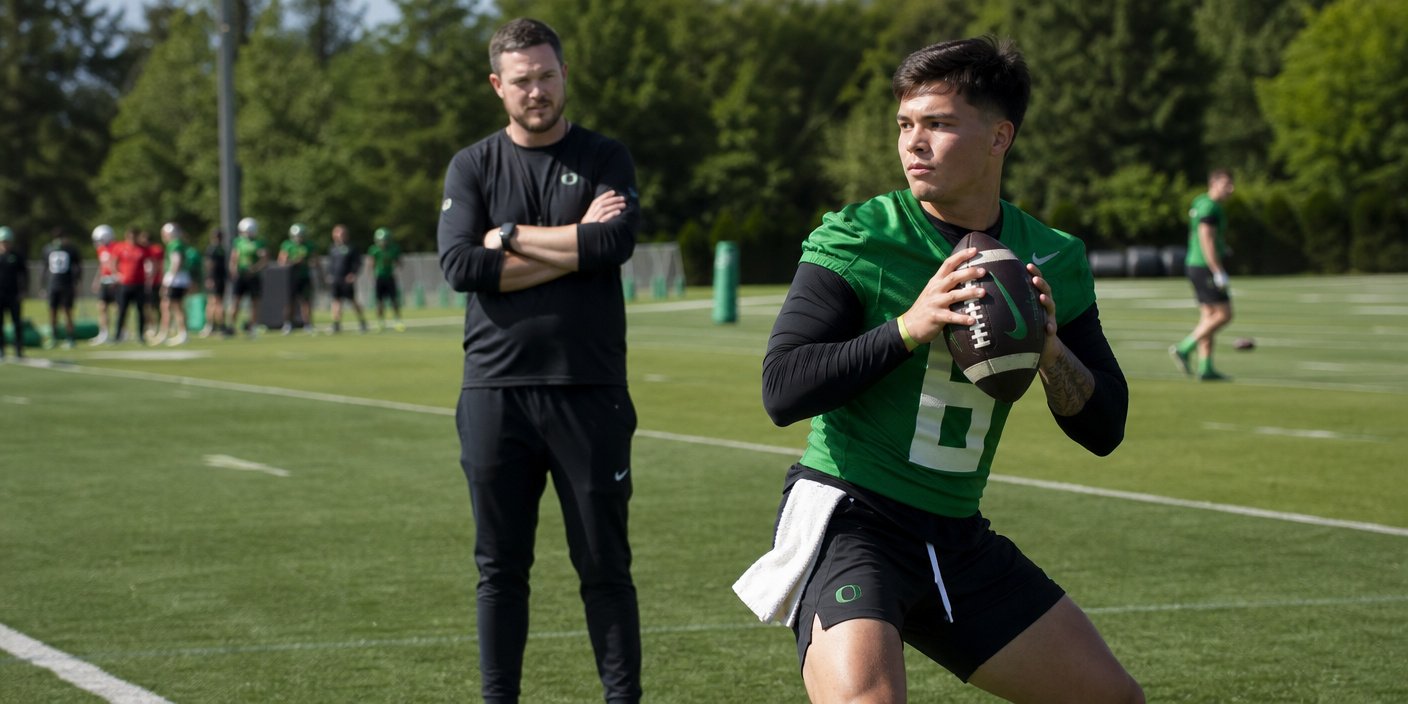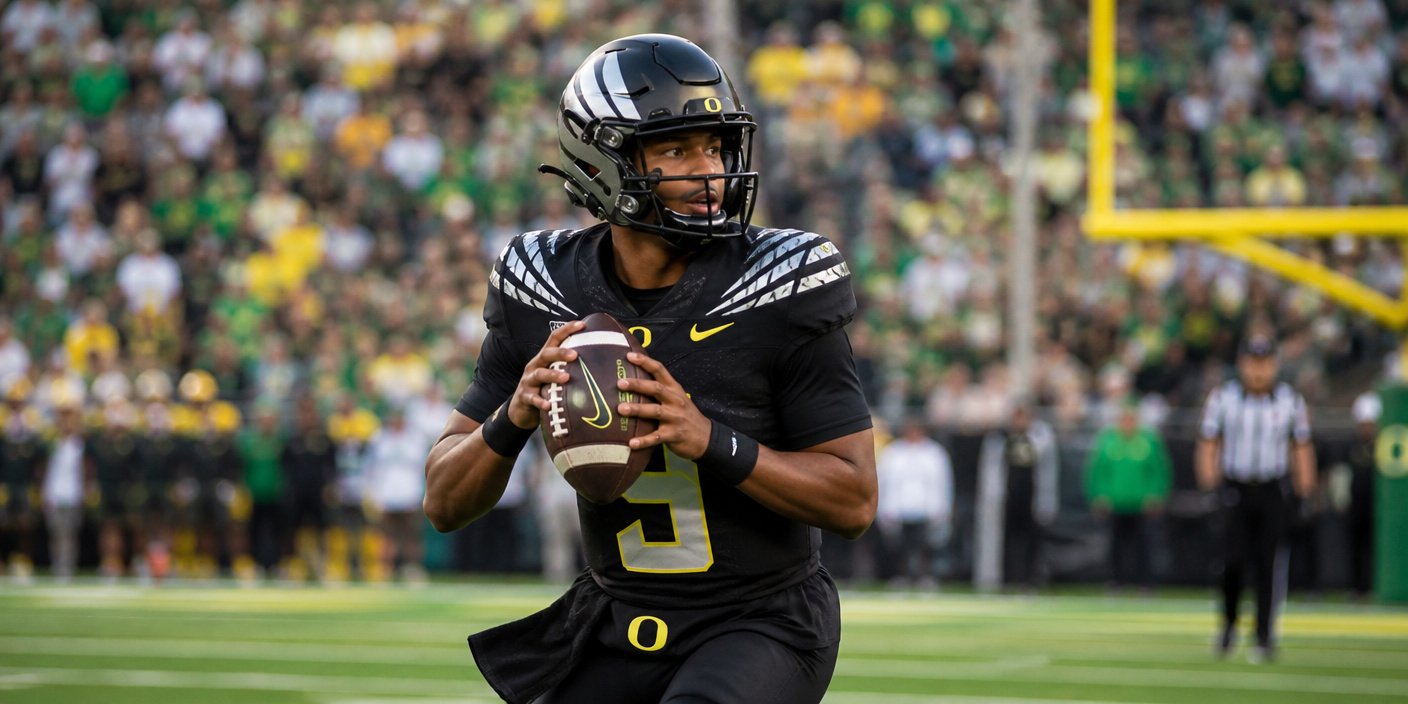
Oregon quarterback Dante Moore has been officially diagnosed with a concussion following a forceful collision during the highly anticipated matchup against the University of Southern California (USC). The incident, which occurred during a critical drive in the game, has sent shockwaves through the conference, resulting in a swift and significant disciplinary action from USC’s athletic department: the formal suspension of the player responsible for the hit, identified as Stephens.
Key Highlights
- Medical Update: Dante Moore is currently undergoing mandated NCAA concussion protocol, sidelining him indefinitely as he prioritizes recovery.
- Disciplinary Action: The USC athletic department confirmed the suspension of Stephens, citing the unnecessary nature of the contact during the game.
- Team Impact: Oregon faces a critical transition in its quarterback depth chart while managing the absence of their starter.
- Safety Scrutiny: The incident has reignited discussions regarding athlete safety standards and the efficacy of officiating in managing dangerous plays in collegiate football.
Fallout from the Gridiron: Discipline and Recovery
The landscape of the college football season shifted dramatically this weekend following the injury to Oregon’s standout quarterback, Dante Moore. During a high-stakes possession in the game against USC, Moore took a hit that resulted in an immediate medical evaluation and subsequent concussion diagnosis. The severity of the impact, and the context in which it occurred, prompted an immediate review of the game film by university officials and league authorities.
The Anatomy of the Incident
In modern college football, quarterback protection remains a point of emphasis for both the NCAA and conference officiating crews. The hit delivered by Stephens—now the subject of a formal suspension—was flagged not only for its impact but for its timing and execution. For programs like Oregon, the quarterback is the offensive engine; losing a player of Moore’s caliber to a contact injury is a significant blow. The medical team’s diagnosis of a concussion forces a mandatory departure from play, meaning Moore will be unavailable until he passes all stages of the return-to-play concussion protocol. This includes cognitive exertion testing, light aerobic exercise, and full-contact participation clearance by independent medical professionals.
The Weight of Suspension
USC’s decision to suspend Stephens serves as a clear acknowledgment of the team’s commitment to maintaining competitive standards. Athletic departments rarely suspend their own players unless the evidence is stark. By taking this action, USC is attempting to preempt further league-level investigations and signal to the broader NCAA community that reckless play will not be tolerated. This suspension creates a ripple effect, changing the defensive rotation for USC and placing additional pressure on the remaining squad members to uphold the program’s reputation.
Strategic Shifts for Oregon
With Moore sidelined, the focus now shifts to Oregon’s coaching staff. How they adapt their play-calling and personnel management in the coming weeks will be a testament to their overall depth. Transitioning to a backup quarterback mid-season is a daunting task, requiring a shift in offensive rhythm and potentially forcing a more conservative approach until the signal-caller can return to the field. Analysts are already pointing to this as a defining moment for Oregon’s resilience.
Addressing the Safety Gap
Beyond the individual teams, this incident highlights the ongoing tension between aggressive defensive play and the necessity of player protection. The NCAA has moved increasingly toward stricter oversight, yet plays of this nature continue to occur. This episode provides a case study for future officiating training and may lead to changes in how “targeting” and “late-hit” penalties are adjudicated during live play. The long-term implications for players like Moore are substantial, as repeated concussion issues can end careers prematurely. Consequently, the insistence on robust protocols is not just a regulatory requirement—it is a moral imperative for collegiate programs.
FAQ: People Also Ask
Q: What is the current status of Dante Moore’s recovery?
A: Moore is currently in the mandatory NCAA concussion protocol. The timeline for his return is determined entirely by medical professionals, and he will remain sidelined until he is fully cleared through the staged return-to-play process.
Q: Why did USC decide to suspend Stephens?
A: USC’s athletic department issued the suspension due to the nature of the hit delivered on Moore. The school deemed the action as violating their standards for sportsmanship and safe play, acting proactively before any potential league-mandated disciplinary measures were finalized.
Q: How does this suspension impact the rest of the season for both teams?
A: Oregon must now navigate their offensive strategy without their primary quarterback, necessitating a pivot to their depth chart. USC must adjust their defensive rotations to account for the absence of Stephens, while also managing the internal and public relations impact of the disciplinary action taken against one of their own players.