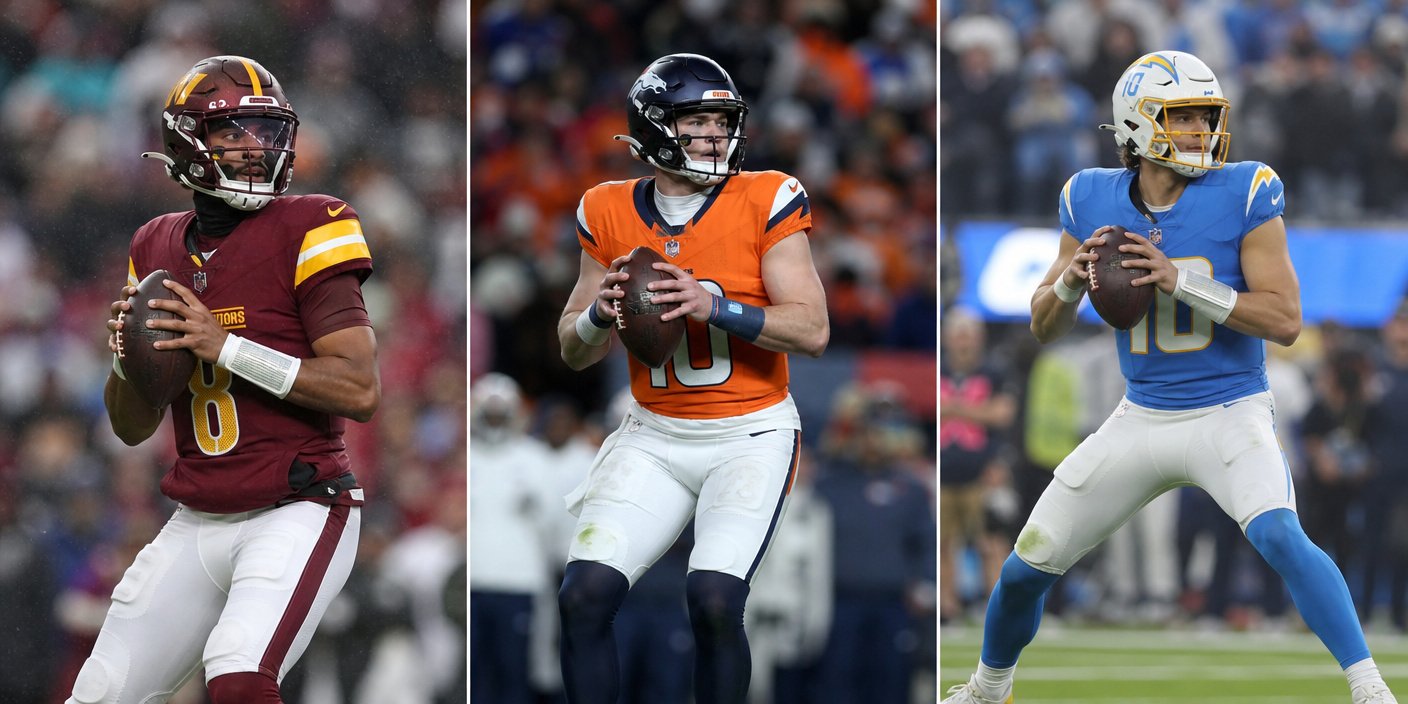
Week 4 of the NFL season delivered a harsh reminder of the volatility inherent in the professional ranks, particularly for the pipeline of former University of Oregon quarterbacks currently navigating the league. While the ‘Oregon Duck’ brand has long been associated with high-octane offensive production and adaptability, the performances of Marcus Mariota, Bo Nix, and Justin Herbert this past weekend underscored the immense physical and strategic demands of the NFL. From injury setbacks to offensive stalls, the three signal-callers faced a collective reckoning that has pundits and fans alike questioning the immediate trajectory of their respective seasons.
Key Highlights
- Marcus Mariota’s Injury Setback: The Washington Commanders backup suffered an apparent knee injury during a difficult 30-13 loss to the Indianapolis Colts, raising immediate concerns about his availability and durability.
- Bo Nix’s Offensive Struggles: The Denver Broncos quarterback faced a challenging week, highlighting the growing pains inherent in transitioning from collegiate systems to NFL-level defensive complexity.
- Justin Herbert’s Physical Toll: The Los Angeles Chargers leader continues to battle through team challenges and physical limitations, with Week 4 providing yet another hurdle in his career arc.
- The ‘Duck’ Pipeline Under Review: The simultaneous setbacks have invited wider scrutiny regarding how former Oregon quarterbacks are acclimating to the specific pressures of the professional game.
A Weekend of Adversity for Oregon’s NFL Signal-Callers
Week 4 of the NFL season will likely be remembered by Oregon faithful as a ‘weekend of adversity.’ When three of the most prominent alumni from the University of Oregon quarterback factory faced the media and the league’s defenses simultaneously, the results were far from the highlight-reel moments that characterized their collegiate tenures. The stark contrast between the collegiate expectations placed on these players and the cold reality of NFL scoreboards creates a fascinating, albeit difficult, narrative arc that experts are now dissecting.
The Marcus Mariota Situation: An Injury Compound
For Marcus Mariota, the most alarming development of Week 4 was not merely the lopsided 30-13 scoreline in favor of the Indianapolis Colts, but the physical status of the quarterback himself. Entering the game with high hopes of stabilizing the offense, Mariota’s exit due to an apparent knee injury serves as a reminder of the fragility of the position in the modern NFL. Injuries are the great equalizer in professional football, often rendering schemes and talent acquisition strategies moot in a single play.
Medical reports regarding Mariota are being watched closely. The nature of knee injuries in quarterbacks—especially those who rely on mobility—is critical. If the ligament damage is anything more than minor, it complicates the Commanders’ rotation strategy. For a player like Mariota, who has spent his career fighting to maintain a roster spot and prove his efficacy as a starter, this setback feels particularly ill-timed. It challenges the organization’s depth chart and forces a conversation about the necessity of increased protection schemes versus the player’s natural instinct to scramble.
Bo Nix and the Steep Learning Curve
Bo Nix, currently navigating the waters in Denver, has been on a rollercoaster trajectory. Week 4 proved to be a particularly steep part of that climb. The transition from the Pac-12 to the AFC is not merely a change in geography; it is a fundamental shift in defensive architecture, speed, and the mental processing required before the ball is snapped. Nix’s struggles mirror those of many rookies and early-career starters who find that the windows to throw into at the NFL level are significantly tighter than those they exploited in college.
Analysts have noted that Nix’s current hurdles are primarily processing-based. He is seeing defensive coverages that disguise looks far more effectively than anything he encountered at the collegiate level. The Broncos’ offensive staff is now tasked with simplifying the reads without handcuffing the playmaker who was drafted to change their fortunes. It is a delicate balance, and Week 4 showed that when that balance is disrupted, the result is often stagnant drives and mounting pressure.
Justin Herbert: Carrying the Weight
Justin Herbert’s situation with the Los Angeles Chargers is perhaps the most scrutinized of the trio, if only because of the immense expectations placed upon him as a franchise cornerstone. Week 4 was not an outlier in his career, but rather a continuation of the theme of ‘hero ball’ that has defined his tenure thus far. Dealing with team-wide injuries and a changing offensive identity, Herbert is often asked to do too much. When the offensive line fails to hold, or the receiving corps struggles with separation, the burden falls entirely on Herbert’s shoulders.
Physically, Herbert has been managing various ailments throughout the season. Watching him navigate the pocket against a high-tier defense is to watch a player who is constantly calculating the risk of taking a hit versus the necessity of extending the play. The concern for the Chargers organization is twofold: the immediate need to secure wins to stay competitive in the AFC West, and the long-term imperative to ensure their most valuable asset is not compromised by a lack of infrastructure around him.
Secondary Angles: Examining the Pipeline
Beyond the individual performances of Mariota, Nix, and Herbert, there are broader implications for the ‘Oregon quarterback’ archetype in the NFL. First, we must look at the historical context: Oregon has produced several high-profile QBs, but the transition to the NFL has been notoriously uneven. Does the Oregon system prepare players for the complexity of the professional game, or does it mask deficiencies that NFL defenses eventually exploit?
Second, the economic and team-building impact is significant. Organizations invest tens of millions in these players. When three of them face struggles in the same week, it impacts front-office job security and coaching staff longevity. Third, there is the ‘durability’ question. Modern offenses are increasingly reliant on dual-threat capabilities, but this increases the exposure of the quarterback to contact. The events of Week 4 suggest that the league may be nearing a tipping point where traditional pocket presence—protected by a robust offensive line—is still, ultimately, the only sustainable way to build a championship contender.
FAQ: People Also Ask
How severe is the knee injury for Marcus Mariota?
Initial reports suggest an ‘apparent’ knee injury, but the medical staff is currently conducting evaluations. The team is expected to release an official status update mid-week, which will determine his eligibility for Week 5.
Are Bo Nix’s struggles common for rookie quarterbacks?
Yes. Many quarterbacks experience a ‘mid-season slump’ as defensive coordinators gather enough film to identify tendencies and start running complex, simulated pressures that are rare in collegiate football.
Is Justin Herbert’s physical condition affecting the Chargers’ play-calling?
It is a significant factor. Coaching staffs are often forced to use ‘quick game’ concepts and max-protection schemes to compensate for an injured quarterback, which limits the explosive play-calling that fans are accustomed to seeing from Herbert.
What do these losses mean for the broader reputation of Oregon quarterbacks?
It is a recurring talking point in NFL scouting circles. While Oregon consistently produces elite athletes, scouts are increasingly looking for ‘system-independent’ processors—players who can succeed regardless of the offensive scheme, which remains the primary benchmark for NFL longevity.