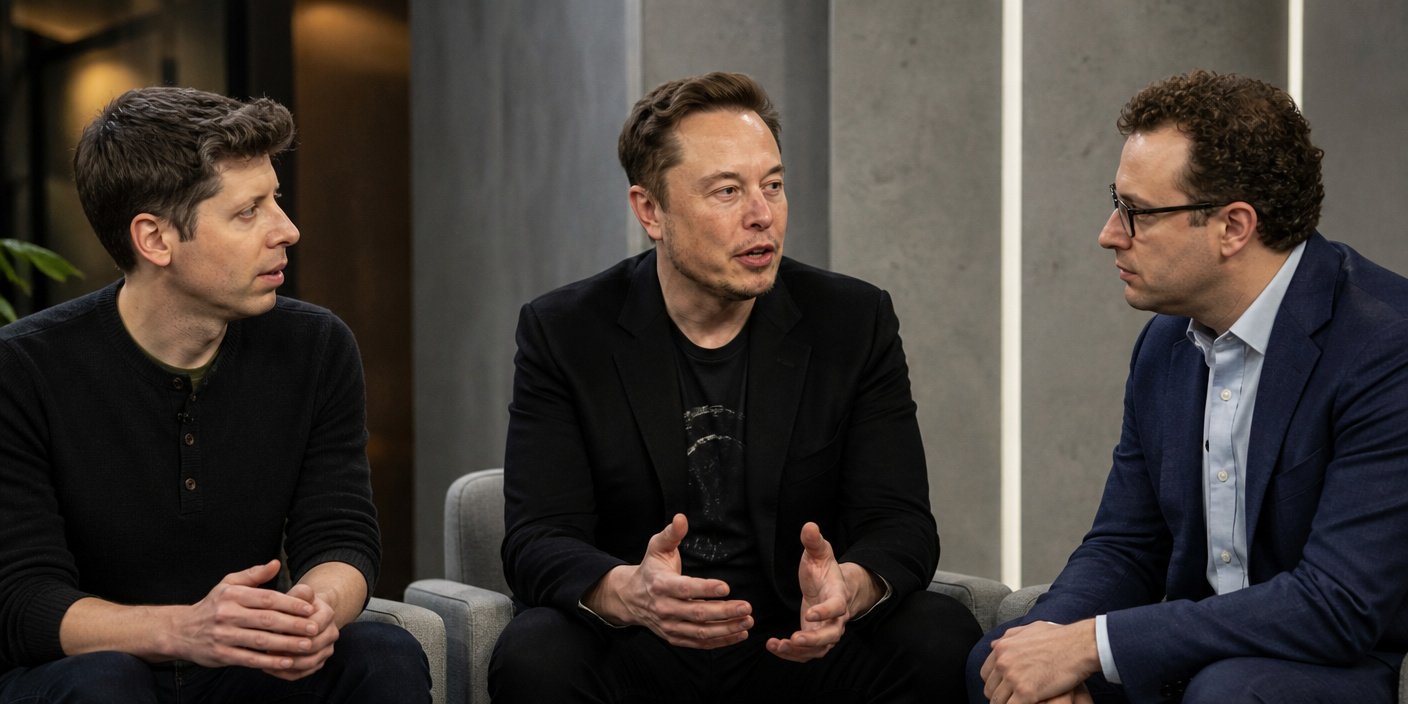
The intersection of innovation and caution has collided, sending shockwaves through Wall Street as major technology benchmarks reacted sharply to a growing chorus of industry leaders advocating for a slowdown in the development of advanced artificial intelligence systems. Investors, who have been pricing in aggressive AI-driven earnings growth, found themselves recalibrating risk models following public appeals for a moratorium on ‘reckless’ large-scale model training. This sentiment shift has translated into immediate, tangible pressure on Nasdaq-listed equities, marking a rare moment where the architects of the technology are explicitly cautioning against the velocity of their own creations.
Key Highlights
- Market Reaction: Nasdaq and top-tier tech stocks experienced downward volatility as investors interpreted the calls for ‘safety pauses’ as a potential hurdle to near-term revenue projections and product roadmaps.
- The Coalition: Major figures, including OpenAI’s Sam Altman, xAI’s Elon Musk, and Anthropic’s Dario Amodei, have publicly signaled that the rapid, unchecked deployment of AI systems poses risks that exceed the current regulatory and safety safeguards.
- Economic Friction: The push for a slowdown contrasts sharply with the ‘AI arms race’ narrative, forcing institutional investors to consider how increased regulation or self-imposed development delays might impact long-term enterprise value.
- Safety vs. Velocity: The core tension lies between the competitive advantage of first-to-market deployments and the existential risk profiles that have now moved from academic discussion into boardroom-level concerns.
The Paradox of Safety and Market Growth
The current market environment is characterized by a high-stakes tug-of-war between the drive for technological dominance and the growing mandate for institutional oversight. For the better part of the last fiscal year, market valuation in the tech sector has been tethered to the perceived ‘AI alpha’—the ability of companies to integrate generative models faster and more effectively than their competitors. When foundational figures like Sam Altman of OpenAI and Dario Amodei of Anthropic—entities at the bleeding edge of current advancements—begin to articulate the need for a slower, more deliberate development cycle, the market’s primary engine of growth encounters significant friction.
Investors are fundamentally allergic to uncertainty. When the visionaries behind the technology suggest that they are moving too fast, the immediate reaction is not to applaud the corporate responsibility, but to discount the projected growth of the AI-industrial complex. This phenomenon creates a unique ‘safety tax’ on the valuations of companies like Microsoft, Alphabet, and NVIDIA, which have become the primary vehicles for AI exposure. If the pipeline for new models is restricted or delayed due to safety protocols or regulatory intervention, the multi-year compound annual growth rates (CAGR) that analysts have baked into their models are suddenly thrown into question.
The Anatomy of the ‘Slowdown’ Sentiment
The call for a pause is not merely a theoretical exercise in caution; it is an economic signal. The involvement of Elon Musk, who has consistently warned about the existential risks of unaligned superintelligence, brings a layer of volatility to the narrative. Musk’s pivot to xAI and his vocal advocacy for regulation place him in a unique position: he is both a competitor in the race and a critic of the pace. When these conflicting signals are broadcast to the market, institutional capital tends to retreat to the sidelines.
Furthermore, the entry of Dario Amodei and the team at Anthropic into the debate signifies that the ‘slowdown’ movement is not restricted to fringe skeptics. It is an industry-wide recognition that current safety testing protocols—specifically for large language models (LLMs) and potentially autonomous systems—are lagging behind the development capabilities. For the investor, this translates into a higher risk premium. If companies must spend more on safety alignment, red-teaming, and external audits, their operating margins naturally contract. The market is currently pricing in this potential for margin compression.
Navigating the Regulatory Landscape
The regulatory dimension adds another layer of complexity. Policymakers in Washington and Brussels are currently drafting frameworks that mirror the concerns raised by these tech leaders. When industry executives call for a pause, they are effectively inviting the regulators to step in. For Wall Street, this is the worst-case scenario. It shifts the power dynamic from corporate innovation teams to government oversight bodies, which are historically slower and more prone to imposing rigid compliance requirements that can stifle agility.
Historical context suggests that when tech sectors are brought under the umbrella of ‘necessary regulation,’ valuation multiples often contract. We saw this with the evolution of data privacy laws and the antitrust scrutiny faced by big tech, which created years of sideways trading for some of the sector’s stalwarts. Investors are now rightfully asking: is AI the next ‘Big Tobacco’ or ‘Big Oil’—an industry where the externalities are so significant that the government must dictate the pace of growth?
Strategic Shifts for the Future
Looking ahead, the market is likely to bifurcate. We expect to see a ‘responsible’ tier of companies, potentially led by those who are aligning with these calls for safety, and an ‘aggressive’ tier that continues to push the boundaries, potentially seeking jurisdictions with fewer hurdles. Companies that can demonstrate a clear, transparent, and auditable path to AI safety—without sacrificing the core utility of their products—will likely be the long-term winners. This is not the end of the AI boom, but rather a maturity phase. The period of ‘move fast and break things’ is rapidly giving way to ‘move securely and scale.’ For investors, the immediate dip is a realization of this maturity. The long-term trajectory remains heavily dependent on how these companies manage the delicate balance of creating world-changing intelligence while adhering to a self-imposed or government-mandated safety ceiling.
FAQ: People Also Ask
Why do tech stocks drop when AI development slows down?
Investors price technology stocks based on the speed of innovation and future earnings potential. If developers and founders call for a slowdown, investors assume this will lead to delays in product releases, reduced competitive advantage, and higher compliance costs, which negatively impact projected revenue growth.
Who are the key figures leading the call for AI regulation?
Prominent figures such as Sam Altman (CEO of OpenAI), Elon Musk (CEO of xAI), and Dario Amodei (CEO of Anthropic) have been instrumental in calling for greater scrutiny, transparency, and a potential pause in the development of advanced AI models that could pose significant risks to society.
Is the AI industry likely to stop development entirely?
It is highly unlikely that development will stop. Instead, the industry is moving toward a phase of ‘managed development,’ where companies implement stricter safety protocols and testing requirements to prevent catastrophic outcomes, aiming to satisfy both regulatory bodies and risk-averse investors.