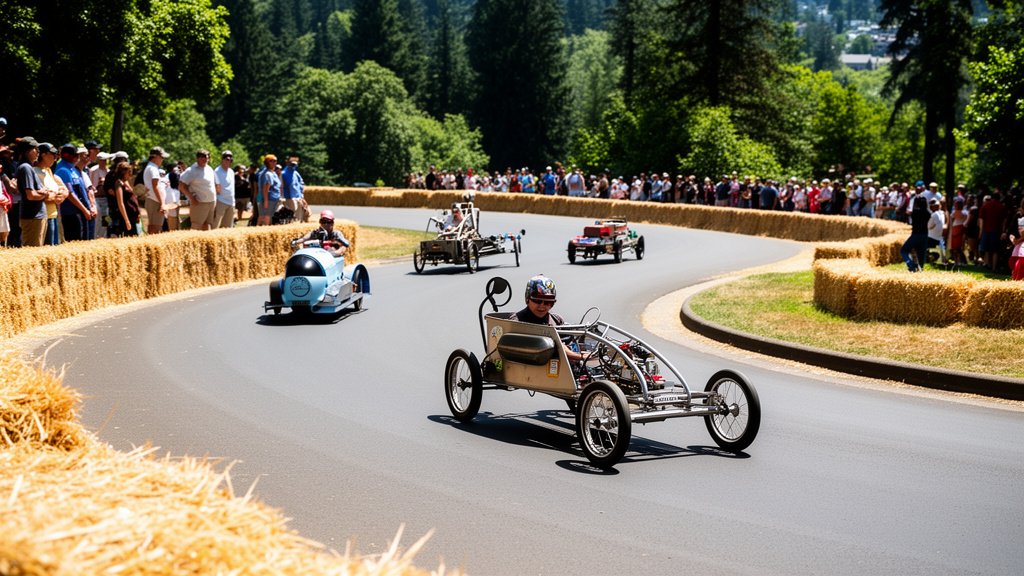
On August 15, 2026, the quiet, tree-lined paths of Portland’s Mt. Tabor Park were transformed into a high-octane, gravity-defying circuit for the 27th annual Portland Adult Soapbox Derby. As 42 teams lined up at the top of the extinct volcano, the air was thick with the scent of burning brake pads and the palpable energy of amateur engineering brilliance. This year’s event once again proved that Portland’s penchant for the eccentric remains one of its most defining cultural signatures, drawing thousands of spectators to witness the spectacle of homemade, motorless vehicles hurtling toward the finish line.
Key Highlights
- Record of Ingenuity: 42 distinct teams participated, showcasing homemade, gravity-powered vehicles built from scrap metal, reclaimed wood, and experimental mechanical designs.
- Geological Stakes: The race course utilizes the unique topography of Mt. Tabor, an extinct volcanic cinder cone, requiring precise handling to navigate its treacherous, winding curves.
- Long-standing Tradition: Marking its 27th year, the event has evolved from a grassroots experiment into a cornerstone of Portland’s summer cultural calendar.
- Precision & Safety: Despite the chaotic appearance, the derby is governed by strict regulations requiring functional steering and effective braking systems for all entrants.
Engineering the Impossible: The Science of Gravity Racing
The Portland Adult Soapbox Derby is not merely a race; it is a profound testament to the power of human ingenuity under strict technical constraints. By stripping away motors, fuels, and electronic assists, the competition forces participants to return to the fundamental laws of physics: gravity, mass, and aerodynamics.
The Anatomy of a Derby Vehicle
Building a vehicle for the Mt. Tabor course requires a sophisticated understanding of mechanical engineering. Teams often spend months sourcing materials. The chassis must be lightweight enough to gain momentum but robust enough to withstand the violent vibrations of the uneven asphalt. Many of the 42 teams that competed this year utilized sophisticated suspension geometries, often hidden beneath elaborate, whimsical bodies that transformed the racers into moving pieces of art. From aerodynamic tear-drop shapes to absurd, couch-based configurations, the variety of the fleet underscores the creative freedom afforded to the participants.
Gravity as the Engine
Without a propulsion system, gravity becomes the sole source of energy. This creates a fascinating technical challenge: how to minimize friction? Teams employ precision bearings, high-pressure tires with low rolling resistance, and streamlined profiles to maximize velocity. The race is a lesson in power-to-weight ratios, where every kilogram shaved off the vehicle’s weight significantly impacts the potential kinetic energy on the steeper sections of the park’s volcanic descent.
The Mt. Tabor Course: A Geological Challenge
Racing down an extinct volcano presents unique challenges that differentiate this event from standard downhill races. Mt. Tabor is not just a hill; it is a geologic feature with distinct asphalt characteristics and varying grades that can spell disaster for the unprepared.
Navigating the Volcanic Slopes
The track is notoriously technical. As vehicles exit the start gate, they are greeted by a steep incline that tests initial acceleration. However, the true challenge lies in the series of tight, cambered turns that hug the mountainside. Pilots must demonstrate expert steering control, as excessive speed entering a turn without sufficient traction can lead to catastrophic understeer. For the spectators, this is the most exciting section—the “crash zone”—where the intersection of poor engineering and hubris often results in spectacular, albeit safe, mechanical failures.
Environmental Impact and Stewardship
Hosting a high-impact event on a public volcanic site requires meticulous planning. The organizers of the derby work in close coordination with Portland Parks & Recreation to ensure that the ecological integrity of Mt. Tabor is maintained. The race is a “leave no trace” event, with teams responsible for the immediate cleanup of any debris or mechanical remnants left behind. This stewardship is vital, as it allows the derby to return to the heart of the city year after year.
The Culture of the Derby: More Than Just Speed
While the velocity is the primary draw, the Portland Adult Soapbox Derby is fundamentally about the community. It represents a unique “Portlandian” ethos where DIY culture, civic pride, and a healthy dose of irreverence collide.
The Social Fabric of the Teams
Many of the 42 teams are comprised of local businesses, groups of friends, and neighborhood collectives. The competition fosters a strong sense of camaraderie. While they compete for the podium, the pits are characterized by shared tools, borrowed parts, and collaborative repairs. It is not uncommon to see a team helping a rival fix a steering linkage minutes before their heat, embodying the spirit of the event over the ego of the win.
Economic and Community Impact
Events like the Soapbox Derby serve as a vital stimulus for local pride. They draw thousands of spectators to the Mt. Tabor neighborhood, providing a significant boost to local vendors and businesses. Furthermore, it serves as a generational touchpoint. Many attendees who grew up watching the race are now, 27 years later, building their own vehicles, creating a cyclical tradition that reinforces the city’s identity as a hub for creativity and hands-on production.
FAQ: People Also Ask
Q: How do teams qualify to race in the Portland Adult Soapbox Derby?
A: Teams must submit their vehicle designs for technical inspection. All cars are strictly non-motorized and must pass a rigorous safety inspection, which includes testing steering responsiveness and the ability of the braking system to stop the vehicle from speed.
Q: Is there prize money for the winners?
A: The primary reward is prestige and the “Golden Soapbox” trophy. While some categories offer minor sponsor prizes, the majority of the participants race for the honor of being the fastest or for having the most creative design.
Q: How do they handle the crashes?
A: Safety is the top priority. The course is lined with hay bales and impact-absorbing materials, and emergency medical personnel are stationed at multiple points along the track to handle any accidents immediately.
Q: Can anyone enter a soapbox car?
A: Registration is usually opened months in advance and fills up extremely quickly due to high demand. Teams are vetted to ensure they have the structural capacity to safely handle the Mt. Tabor course.