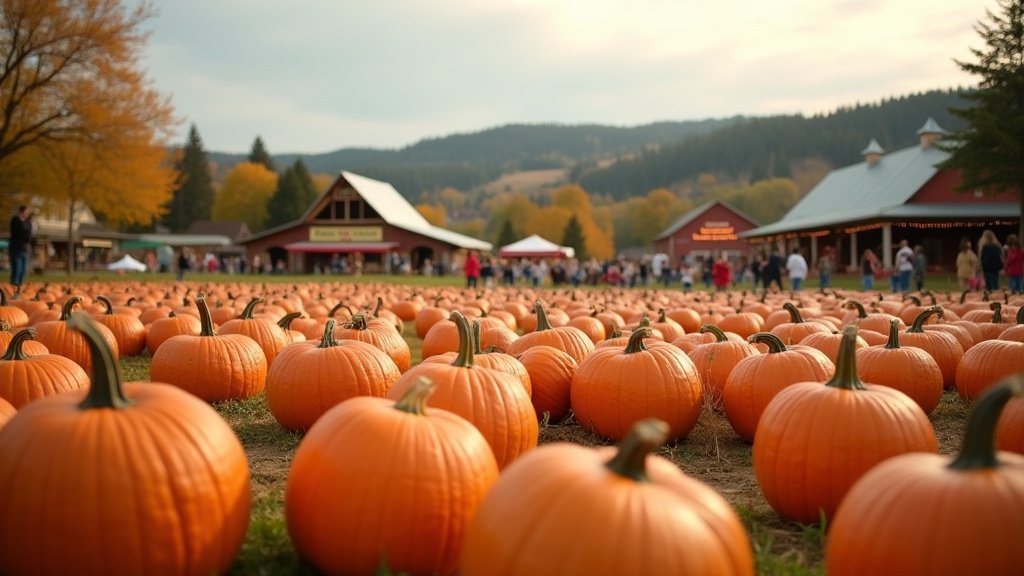
The 2026 autumn season has officially arrived in the Willamette Valley, marked by the grand opening of one of the Pacific Northwest’s most iconic seasonal destinations: Bauman’s Harvest Festival. Doors opened to the public on September 19, 2026, in Gervais, Oregon, signaling the start of a weeks-long celebration of agriculture, community, and seasonal heritage. As the crisp air settles over the valley, the farm has once again transformed into a sprawling playground, offering a comprehensive lineup of over 30 family-oriented activities that draw thousands of visitors from across the state.
Key Highlights
- Opening Date: The festival officially commenced operations on September 19, 2026, in Gervais, Oregon.
- Scope: The festival features more than 30 distinct activities, ranging from traditional harvest experiences to modern recreational attractions.
- Signature Culinary Draw: Bauman’s is widely celebrated for its freshly made cider donuts, a staple of the Oregon harvest experience.
- Agricultural Focus: The event emphasizes the region’s rich soil and the importance of supporting local Willamette Valley agriculture.
The Anatomy of an Oregon Harvest Tradition
The Bauman’s Harvest Festival is more than just a place to pick a gourd; it is a meticulously managed ecosystem of agritourism that reflects the broader agricultural values of Oregon’s Willamette Valley. The farm, which has deep roots in local history, has evolved its business model to balance high-yield production with high-engagement public experiences. By integrating the educational aspects of farming with high-energy entertainment, the festival has secured its status as a cornerstone of the regional economy during the fall quarter.
The Shift Toward Experiential Agritourism
In the last decade, the agricultural sector in the Pacific Northwest has seen a distinct pivot. Farms are no longer just wholesale suppliers; they are now destinations. Bauman’s Harvest Festival represents the vanguard of this shift. By offering over 30 activities—including complex corn mazes, massive slide structures, and interactive petting zoos—the farm provides a multi-sensory experience that connects urban and suburban families with the land. This transition is not merely cosmetic; it is an economic necessity that allows local family farms to remain competitive against global supply chains. By charging admission for the festival, the farm generates the necessary capital to sustain year-round operations, while simultaneously educating the public about the cycle of food production.
The Science of the ‘Perfect’ Pumpkin
Visitors to the 2026 festival are not just walking through fields; they are interacting with high-quality, nutrient-dense agriculture. The soil of the Willamette Valley is world-renowned for its fertility, and Bauman’s utilizes advanced farming techniques to ensure their pumpkin crop is both aesthetic and durable. The “U-Pick” aspect of the festival is a calculated engagement strategy. It allows the farm to bypass the traditional distribution layer, reducing “food miles” to “foot miles.” For the consumer, this translates to fresher produce that retains its integrity significantly longer than store-bought equivalents, which are often harvested weeks in advance to accommodate shipping logistics.
A Culinary Institution: Beyond the Patch
No discussion of the Bauman’s experience is complete without mentioning the culinary component, specifically the farm’s signature cider donuts. These items have achieved something of a cult status in Oregon. The production line for these donuts is a finely tuned operation, designed to meet the high volume of peak weekend crowds. The smell of cinnamon and apple cider is strategically used to create an immersive, nostalgic environment. This sensory branding is a powerful tool in retaining repeat customers, turning a one-time visit into an annual, multi-generational ritual.
Navigating the 2026 Experience: Logistics and Tips
For those planning to visit the festival this season, success lies in understanding the logistical nuances of a high-traffic agritourism destination.
1. Timing is Critical: Weekdays generally offer a slower, more deliberate experience, allowing for unrestricted access to the 30+ activities. Weekends, while energetic and festive, require strategic planning regarding parking and peak queue times.
2. The ‘Bauman’s Ecosystem’: The site is divided into distinct zones: the quiet production fields, the high-energy activity center, and the food service hub. Navigating these zones efficiently is key to maximizing the value of a day pass.
3. Educational Opportunities: Parents are encouraged to leverage the informational signage throughout the fields, which details the specific pumpkin varieties grown on-site. This adds a layer of agricultural literacy to the recreational outing.
As the festival progresses through the autumn months, the focus remains on sustaining this high level of engagement without compromising the environmental integrity of the land. It is a delicate balance of hospitality and husbandry, and one that Bauman’s Farm & Garden continues to refine each year.
FAQ: People Also Ask
Q: What are the primary dates for the 2026 Bauman’s Harvest Festival?
A: The festival opened on September 19, 2026. Guests are advised to check the official Bauman’s website for specific closing dates, as these are dependent on crop yield and weather conditions.
Q: Is there an admission fee for the festival?
A: Yes, the festival operates on a ticketing model to manage capacity and maintain the quality of the 30+ activities provided on-site. It is recommended to purchase tickets online in advance to avoid gate delays.
Q: Are the activities suitable for all ages?
A: The 30+ activities are curated to offer something for every age group, ranging from toddler-friendly play areas to more challenging corn mazes and athletic-style obstacles for older children and adults.
Q: Where exactly is the festival located?
A: The festival takes place at Bauman’s Farm & Garden in Gervais, Oregon, situated in the heart of the Willamette Valley, a region known for its high-quality soil and diverse agricultural output.