
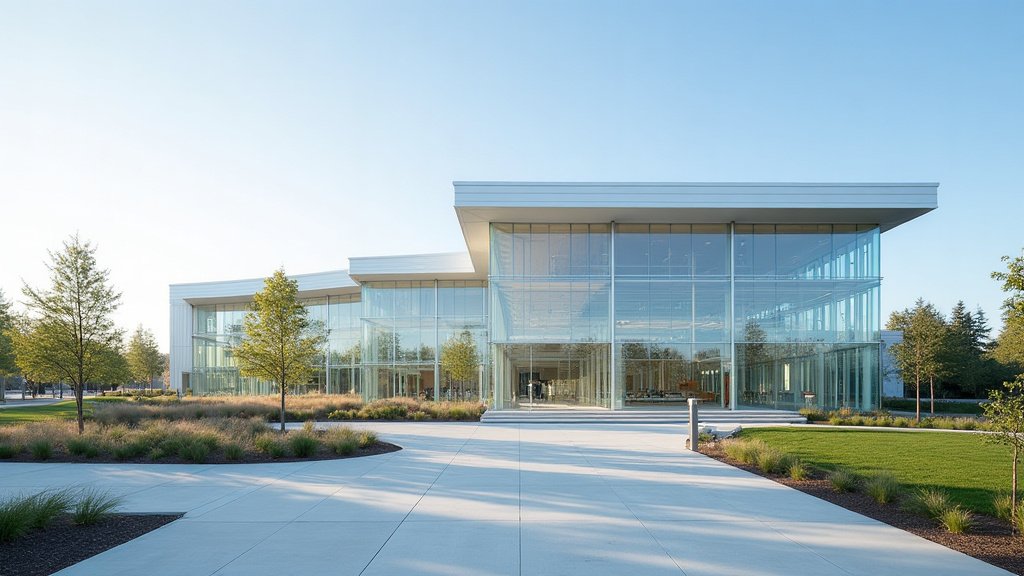
At the Philip H. Knight Campus in Beaverton, Oregon, Nike, Inc. has officially set the stage for its next era of growth, unveiling a comprehensive new strategic roadmap titled “Full Stride Ahead.” This pivotal Investor Day announcement marks a distinct shift in the company’s corporate philosophy, moving away from past digital-heavy silos toward a re-energized commitment to athlete-centric innovation and deep-rooted community connection. As the company positions itself for the end of the decade, the leadership team outlined a rigorous 2031 financial framework that balances aggressive revenue expansion with disciplined operational efficiency, targeting $5 billion in incremental revenue growth and operating margins in the 12-14% range. This event signifies a long-term recalibration of Nike’s global market dominance strategies.
- Strategic Pivot: The launch of “Full Stride Ahead,” a strategy emphasizing deeper, localized connections with athletes.
- Revenue Milestone: A clear target of $5 billion in incremental revenue growth by 2031.
- Operational Health: Commitment to achieving and sustaining operating margins between 12-14%.
- Event Location: Hosted at the Philip H. Knight Campus in Beaverton, Oregon, symbolizing a return to the company’s R&D roots.
- Core Philosophy: A renewed focus on the “athlete first” mentality as the engine for long-term shareholder value.
The Architecture of Momentum: Defining ‘Full Stride Ahead’
Reclaiming the Athlete Connection
The primary ethos driving “Full Stride Ahead” is the restoration of the intimate link between Nike and the competitive athlete. In recent years, industry analysts have noted a perceived disconnect between Nike’s massive digital retail ecosystem and the tangible, grassroots sporting communities that traditionally fueled the brand’s global status. By centering the 2031 strategy on athlete connection, Nike is signaling a pivot back to its foundational strength: authentic product innovation born from human performance data. This is not merely a marketing campaign; it is a structural reorganization of how Nike interacts with consumers, prioritizing experiential retail and specialized performance products over generic e-commerce volume.
The 2031 Financial Framework
Financially, the 2031 framework is designed to provide a predictable, sustainable growth trajectory. The goal of $5 billion in incremental revenue is calculated based on anticipated gains in market share across high-performance categories. The targeted 12-14% operating margin reflects an intent to manage overheads more efficiently, particularly in supply chain logistics and inventory management. By focusing on margin expansion alongside revenue growth, Nike is attempting to assuage investor concerns regarding previous periods of high promotional activity and margin erosion. The leadership team emphasized that this margin expansion will be supported by a leaner, more agile inventory model that allows for more frequent, smaller-batch releases—a strategy aimed at maintaining high-margin full-price selling.
The Role of the Knight Campus in Future R&D
The selection of the Philip H. Knight Campus as the venue for this announcement was highly symbolic. As the nexus of Nike’s advanced R&D, the campus represents the company’s commitment to “science-led” design. The “Full Stride Ahead” plan relies heavily on the output of this facility to deliver disruptive product technologies in the running, basketball, and football categories. By showcasing the location, Nike is reinforcing the narrative that its future growth is tied directly to physical technological advancement—material science, biomechanics, and sustainable manufacturing—rather than just marketing prowess.
Secondary Angles: Contextualizing the Pivot
1. The Competitive Landscape and Market Share
Nike’s pivot occurs against a backdrop of increasing competition from smaller, specialized players who have successfully carved out niches in the running and lifestyle markets. “Full Stride Ahead” is a direct response to this fragmentation. By doubling down on the athlete-consumer journey, Nike is attempting to build “moats” around its key product categories. The efficacy of this strategy will be measured by whether the company can regain the top-of-mind awareness that once made it the undisputed default for elite sports performance.
2. Economic Headwinds and Consumer Discretionary Spending
The 12-14% operating margin target is particularly ambitious given the volatile nature of global consumer discretionary spending. Economic pressures, ranging from inflationary costs in raw materials to shifting retail patterns in key international markets, present significant hurdles. The “Full Stride Ahead” plan includes a heavy emphasis on digital efficiency to offset these costs, suggesting that Nike is betting on AI-driven demand forecasting and automated supply chain optimizations to protect its bottom line, even if macroeconomic conditions remain challenging.
3. Future Predictions: The ‘Experience’ Era
Looking toward 2031, we can predict that Nike will move closer to a “hybrid-physical” model. The strategy implies that while e-commerce remains vital, the conversion will increasingly happen through high-touch, athlete-led environments. Future predictions suggest a decline in standalone, generic retail spaces in favor of “experience hubs”—locations that serve as training centers, community gathering spots, and product testing sites. This evolution of the “retail footprint” will likely be the most visible manifestation of the new strategy for the average consumer.
FAQ: People Also Ask
Q: What is the main goal of Nike’s ‘Full Stride Ahead’ strategy?
A: The primary goal is to deepen the connection between Nike and athletes, driving long-term growth and restoring brand authenticity, with a specific financial target of $5 billion in incremental revenue by 2031.
Q: Why was the Philip H. Knight Campus chosen for the Investor Day?
A: The location serves as the hub of Nike’s research and development. Hosting the event there emphasized the company’s pivot back to product-led innovation and science as the primary drivers of future growth.
Q: What are the target operating margins for the 2031 framework?
A: Nike has set a target for operating margins to reach between 12-14% by 2031, aiming for higher profitability through disciplined inventory management and supply chain efficiency.
Q: Does ‘Full Stride Ahead’ signal a change in Nike’s digital strategy?
A: Yes, while digital remains a component, the new strategy shifts away from a “digital-first” silo approach toward a more balanced model that prioritizes experiential, athlete-centered interactions over pure e-commerce volume.


