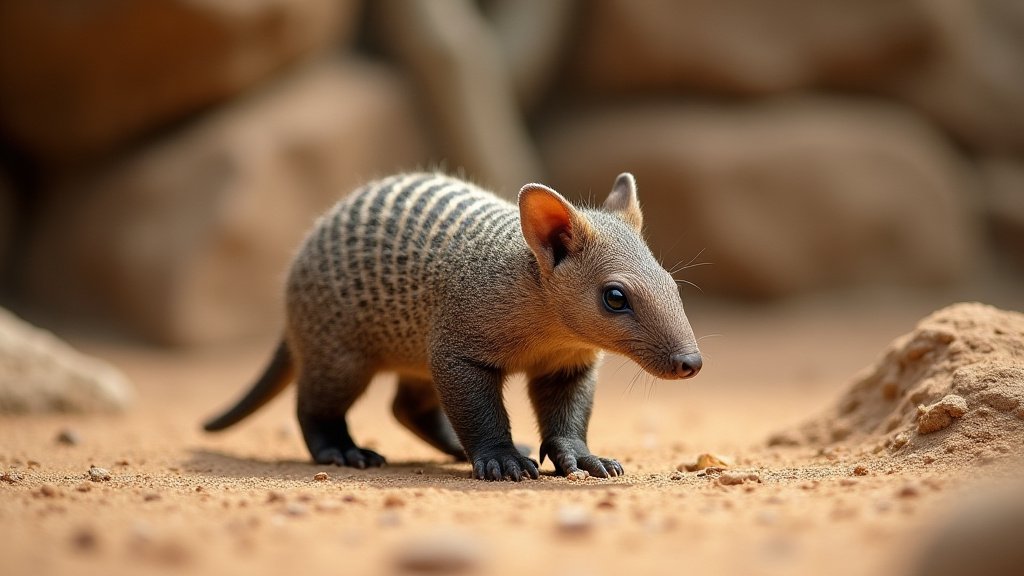
The Oregon Zoo has officially introduced the newest, smallest member of its animal family: a Southern three-banded armadillo named Rook. Born this past October to parents Max and Toby, this pup represents more than just a charming addition to the facility; it highlights the critical conservation efforts managed by the Association of Zoos and Aquariums (AZA). As a species that faces increasing pressure in the wild, the birth of Rook is a significant event for both the Oregon Zoo and the broader network of institutions dedicated to preserving biological diversity through managed breeding programs.
Key Highlights
- New Addition: Rook, a Southern three-banded armadillo pup, was born in October at the Oregon Zoo.
- Parentage: The pup was born to parents Max and Toby, both established residents of the Oregon Zoo.
- Conservation Impact: The birth is a success for the Species Survival Plan (SSP), a program designed to maintain a healthy and genetically diverse population of threatened species.
- Species Profile: The Southern three-banded armadillo (Tolypeutes matacus) is one of the few species of armadillo capable of rolling into a complete, protective ball.
Safeguarding the Future: The Significance of Rook’s Arrival
The birth of any animal in a zoological setting serves as a microcosm of larger conservation themes. In the case of Rook, the Southern three-banded armadillo, the event is a calculated success story within the framework of the Association of Zoos and Aquariums (AZA) Species Survival Plan (SSP). Unlike general animal welfare, where the focus is solely on the health of individual animals, the SSP is a rigorous scientific program that manages the breeding of specific species to prevent extinction and maintain genetic viability in human care.
Biology and Ecology of the Three-Banded Armadillo
To appreciate the significance of Rook, one must first look at the unique biological nature of the Southern three-banded armadillo. Native to the dry regions of South America—specifically the Gran Chaco, a region spanning parts of Argentina, Paraguay, Bolivia, and Brazil—these creatures have evolved specialized defenses that separate them from their North American cousins, the nine-banded armadillo. The most distinct of these is their ability to roll into a near-perfect ball to protect their soft underbelly from predators.
This defensive mechanism, while effective against natural predators like maned wolves or jaguars, has not protected them from the anthropogenic pressures of habitat loss, agricultural expansion, and hunting. They are generally insectivorous, using their keen sense of smell to locate ants and termites, which they dig up with powerful, specialized claws. By observing Rook as he grows, zookeepers and veterinary staff are collecting invaluable data on the developmental milestones of this species, which contributes to the global body of knowledge regarding their care and behavioral ecology.
The Role of Managed Breeding in Modern Zoos
At the Oregon Zoo, the birth of Rook was not left to chance. It is the result of careful demographic management. The SSP coordinators at the AZA track the lineage of every Southern three-banded armadillo in accredited facilities across the country. They make pairing recommendations based on genetics, age, and compatibility to ensure that the population remains diverse and robust. Max and Toby were identified as a genetically valuable match, and their success in rearing Rook underscores the facility’s expertise in reproductive care.
This level of precision is the cornerstone of modern zoological science. By maintaining a healthy ‘ark’ population within zoos, researchers create a safety net for wild populations. If the status of the Southern three-banded armadillo were to deteriorate further in the wild, the data and individuals maintained by accredited zoos provide the best hope for potential reintroduction efforts or, at the very least, a persistent, healthy population that can educate the public about the need for environmental protection.
Animal Husbandry: Nurturing a New Life
Behind the scenes, the birth of a pup like Rook requires an immense amount of preparation and ongoing vigilance. The Oregon Zoo’s dedicated keeper staff had to monitor Max and Toby closely, preparing the appropriate enclosure substrate and temperature controls essential for the health of a newborn armadillo.
Armadillos are precocial, meaning the young are relatively mature and mobile from birth. However, the first few weeks are critical for bonding and nursing. Keepers utilize ‘hands-off’ observation techniques to minimize stress on the parents, relying on remote cameras and behavioral monitoring. This approach allows the animal to behave as naturally as possible, which is essential for the healthy psychological development of the pup. Providing an environment that mimics the dry, arid conditions of the Gran Chaco is a specialized horticultural and engineering task, ensuring that humidity, temperature, and dietary needs—including access to varied insect proteins—are met perfectly.
Educational Outreach and the Zoo’s Legacy
Beyond the scientific and conservation metrics, the presence of Rook serves an essential role in local education. When visitors engage with the story of Rook and his parents, they are invited to learn about the biodiversity of South American ecosystems.
People are naturally drawn to the armadillo’s unique morphology and defensive ‘ball’ behavior, making them excellent ‘ambassador animals.’ By connecting on an emotional level with an individual like Rook, visitors are more likely to support broader environmental initiatives. The Oregon Zoo has long understood that the path to global conservation begins with the local connection—one visitor, one child, and one curiosity at a time. Rook is now a part of that legacy, serving as a living classroom in the heart of the Pacific Northwest.
FAQ: People Also Ask
1. Are Southern three-banded armadillos endangered?
While not currently classified as ‘Endangered’ by the IUCN, they are listed as ‘Near Threatened.’ Their populations are declining primarily due to habitat destruction caused by agriculture and cattle ranching in the Gran Chaco region.
2. Do all armadillos roll into a ball?
No. The Southern three-banded armadillo and the Brazilian three-banded armadillo are the only two species capable of rolling into a complete, impenetrable ball. Most other armadillo species, including the common nine-banded armadillo found in the U.S., cannot do this.
3. What does the Oregon Zoo feed its armadillos?
In human care, their diet is carefully formulated to mimic their natural intake of insects. This usually includes a mix of high-protein insectivore pellets, mealworms, crickets, and occasionally other small invertebrates to encourage natural foraging behaviors.
4. How long do Southern three-banded armadillos live?
In a managed zoo environment, where they receive regular veterinary care and a consistent diet, they can live into their mid-teens or early 20s.
5. Can visitors see Rook at the Oregon Zoo?
Yes, visitors can see the armadillo family at the Oregon Zoo, though the zoo recommends checking their daily schedule and animal status updates on their website, as sensitive, young animals may occasionally be given privacy in off-exhibit dens to ensure their comfort and development.