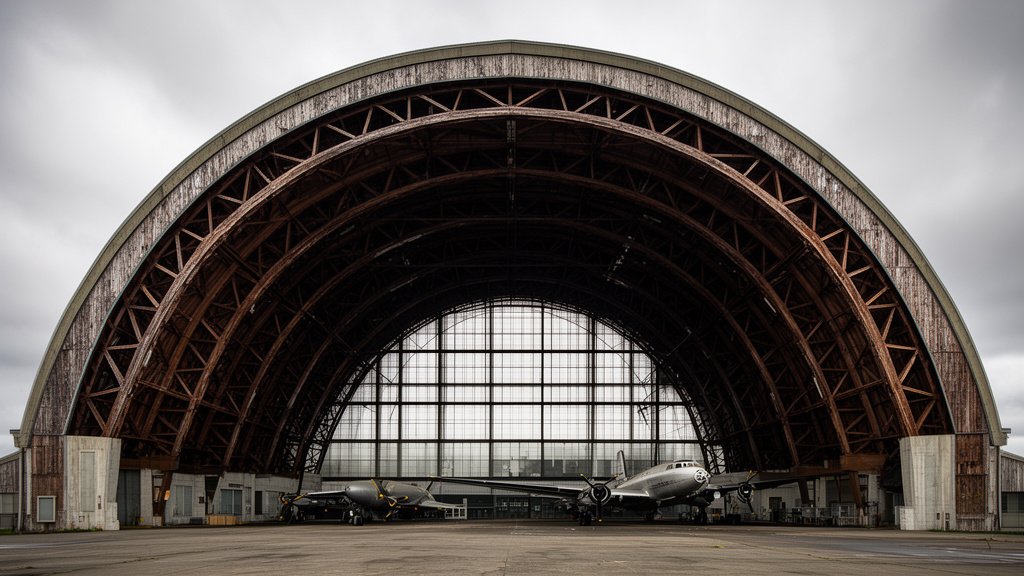
The Tillamook Air Museum, a cornerstone of Oregon’s aviation heritage, has officially entered a new era of stewardship. Following a strategic $1 acquisition deal, the institution—housed within the monumental Hangar B—has launched a comprehensive restoration program aimed at preserving its architectural significance and expanding its public outreach. This nominal financial transaction represents a monumental shift in governance, transitioning the facility into a sustainable, non-profit-led model designed to protect the integrity of one of the world’s most impressive wooden structures.
Key Highlights
- Strategic Acquisition: The museum was secured for a $1 sale price, a strategic move to transfer ownership to a dedicated non-profit entity ensuring operational continuity.
- Hangar B Preservation: The restoration effort focuses specifically on the maintenance of Hangar B, the largest clear-span wooden structure of its kind in the world.
- Operational Revitalization: The new management has prioritized long-term structural health, aiming to stabilize the facility for future generations of aviation enthusiasts.
- Economic Catalyst: As a premier attraction in Tillamook, the museum’s stabilization serves as a vital anchor for regional tourism in the Pacific Northwest.
The Restoration of an Aviation Icon: Securing Hangar B
The survival of the Tillamook Air Museum is not merely a story of real estate acquisition; it is a story of architectural and historical preservation. By securing the site through a $1 purchase agreement, the new operational leadership has cleared the path to prioritize capital improvements over debt servicing. This financial agility is paramount, given the unique challenges of maintaining Hangar B, a structure that demands specialized, ongoing care due to its massive wooden framework.
The $1 Catalyst: A Model for Non-Profit Stability
In the world of cultural heritage management, a $1 sale is rarely about the cash value of the property and everything about the long-term commitment to a mission. By acquiring the facility for a nominal fee, the Tillamook Air Museum non-profit organization essentially offloaded the structural liabilities from the previous owners, allowing the museum board to pivot funds directly into maintenance and restoration. This model is becoming increasingly common for historic, large-scale public attractions that require significant upkeep but possess immense historical value. This capital shift ensures that every dollar raised through admissions, events, and donations is now earmarked for the ‘boots-on-the-ground’ restoration work rather than asset acquisition costs.
Anatomy of Hangar B: An Architectural Marvel
To understand the magnitude of the restoration, one must look at the structure itself. Hangar B is not just an exhibit hall; it is an artifact of World War II engineering. Built in 1942, the hangar spans over seven acres and stands over 190 feet tall. It was constructed to house K-Class blimps, which were crucial for coastal patrolling and anti-submarine warfare. The wooden trusses, which seem to stretch toward the heavens, represent a triumph of wartime engineering, constructed when steel was in short supply. Restoring such a structure requires specialized knowledge of massive-scale timber construction, moisture control, and the preservation of historic fasteners that have held the building together for over eight decades. The current restoration initiative is a technical undertaking, requiring engineers who understand the behavior of aging Douglas fir timbers under the weight of the Oregon coast’s notorious weather cycles.
The Roadmap for Restoration: Challenges and Opportunities
The restoration process is multi-phased. The immediate priority is structural envelope integrity—sealing the massive structure against the elements while maintaining its breathability. Future phases will involve the upgrading of interior climate controls and the restoration of the curated aircraft collection housed within. This is a delicate balance; the museum must maintain its function as an active, engaging attraction while simultaneously operating as a living monument to military history. The restoration plan includes the modernization of lighting and gallery spaces to create a more immersive experience for visitors, ensuring that the history of the K-Class blimps remains accessible to a new generation.
Secondary Angles: Exploring the Wider Impact
1. The Economic Ripple Effect: As Tillamook continues to develop its tourism sector, the air museum acts as a ‘anchor tenant’ for the local economy. A revitalized museum drives foot traffic to surrounding businesses, hotels, and restaurants. The restoration is expected to yield a positive economic multiplier effect, potentially increasing annual visitor numbers by 10-15% as the site becomes more modernized and interactive.
2. Historical Context of the Pacific Northwest: The museum preserves a crucial link to Oregon’s role in the Pacific theater of WWII. Exploring this history offers a deeper understanding of coastal defense systems and the rapid industrialization of the state during the early 1940s.
3. Future Sustainability: By moving to a non-profit ownership structure, the museum is now better positioned to apply for federal and state preservation grants. The ‘restoration’ is not just physical; it is an institutional restructuring that makes the organization eligible for new streams of historical funding, further cementing its place in the American cultural landscape.
FAQ: People Also Ask
Q: Why was the Tillamook Air Museum sold for only $1?
A: The $1 sale price was a strategic asset transfer mechanism. It allowed the non-profit museum organization to acquire the facility from the previous owner, ensuring that future revenues can be dedicated entirely to the critical, expensive restoration of the historic Hangar B rather than paying off a large capital debt.
Q: What is so special about Hangar B?
A: Hangar B is recognized as the largest clear-span wooden structure in the world. It was built in 1942 as a blimp hangar for the U.S. Navy and serves as a vital piece of WWII military history, showcasing the ingenious engineering used when steel was in short supply.
Q: What does the restoration process involve?
A: The current restoration focuses on structural integrity, weather sealing, and modernizing climate controls. It is a technical, long-term project designed to preserve the integrity of the massive wooden trusses while making the facility more accessible and engaging for museum visitors.
Q: How does this impact visitors to the museum?
A: Visitors can expect a more stable, well-maintained, and eventually updated experience. While construction phases may affect certain exhibit areas, the long-term goal is to enhance the visitor experience and expand the depth of the historical storytelling within the hangar.