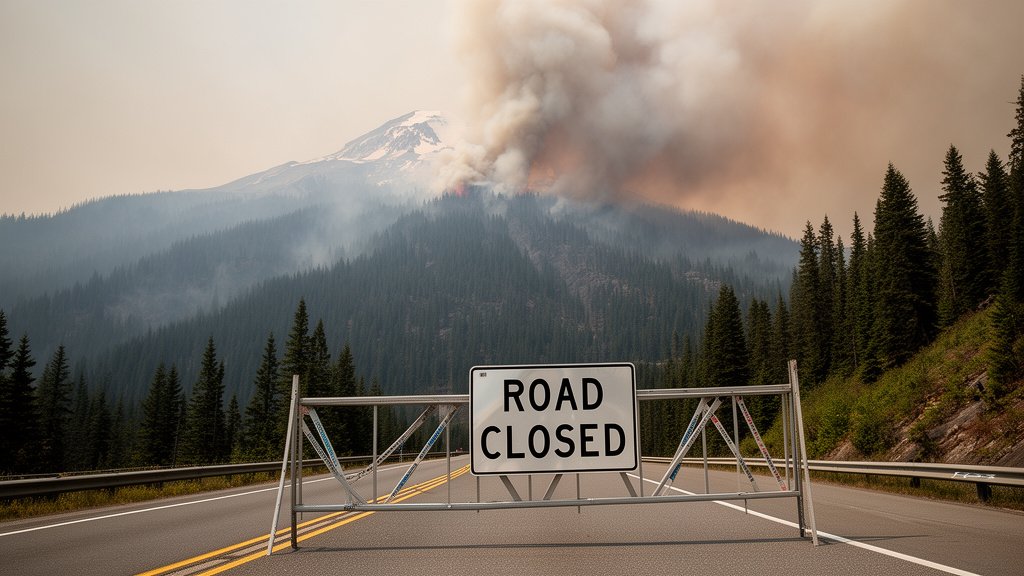
The situation surrounding the recent fire outbreak near the Mount Hood area has deteriorated rapidly, forcing local authorities to issue immediate, mandatory evacuation orders for residents and visitors in both Wasco and Clackamas counties. The fire, which has exhibited aggressive growth in the last 24 hours, has compromised critical infrastructure and pushed local emergency response teams to their operational limits. As of this morning, Oregon Highway 35 remains closed indefinitely, acting as a major bottleneck for traffic and emergency logistics in the region. Additionally, Mt. Hood Meadows has confirmed the immediate suspension of all summer operations, citing safety concerns for both staff and patrons. This incident marks a significant escalation in the regional wildfire threat, requiring a coordinated response from both county sheriff departments and state forestry management agencies.
Key Highlights
- Mandatory Evacuations: Residents in designated zones across Wasco and Clackamas counties are under immediate “Go Now” orders.
- Infrastructure Failure: Oregon Highway 35 is shut down indefinitely; travelers are warned to avoid the area to allow emergency access.
- Operational Halt: Mt. Hood Meadows has suspended all recreational summer operations effective immediately.
- Emergency Coordination: The U.S. Forest Service and local sheriff offices are managing the perimeter and containment efforts.
Crisis in the Cascades: Analyzing the Evacuation and Infrastructure Fallout
The escalation of wildfire activity near the Mount Hood National Forest presents a complex operational challenge for the Pacific Northwest. The fire’s rapid expansion has not only displaced residents but has severed a critical lifeline for regional transport. Oregon Highway 35 serves as a primary north-south artery; its indefinite closure forces significant detours, increasing travel times for logistics, emergency services, and the few summer tourists still in the area. The decision to close this route was not made lightly by the Oregon Department of Transportation (ODOT), but with the fire encroaching on the roadway, it became a necessary step to protect public safety.
The Economic Ripple Effect of Resort Shutdowns
Mt. Hood Meadows is not merely a ski resort; it is a vital economic anchor for the surrounding communities. By suspending summer operations, the resort is facing a significant financial hit, impacting not just its own revenue but also the hospitality businesses in nearby Government Camp and other settlements that rely heavily on the resort’s traffic. Seasonal workers and small business owners in the vicinity are now facing an abrupt end to their income stream. This disruption highlights the volatility of tourism in an era where wildfire seasons are increasingly unpredictable and severe.
Geographical Complexity and Fire Management
The terrain around Mount Hood—characterized by dense conifer forests, steep canyons, and variable winds—makes fire suppression exceptionally difficult. As the fire moves through these canyons, “chimney effects” can cause it to accelerate, leading to the rapid growth that caught many by surprise. Emergency managers are currently utilizing a mix of aerial and ground suppression tactics, but containment remains elusive. The coordination between the Wasco County Sheriff’s Office and the Clackamas County Sheriff’s Office is critical, as the fire crosses jurisdictional lines, complicating communication and resource allocation.
Climate Patterns and Long-Term Implications
This incident is symptomatic of broader trends across the American West. Earlier, hotter, and drier springs are extending the fire season, creating a “tinderbox” environment earlier in the calendar year. While residents in the Pacific Northwest have historically felt insulated from the worst of the wildfire trends seen in California, this event serves as a stark reminder that no area is immune. The question for local policymakers is no longer just about suppression, but about adaptation: how to fortify infrastructure and residential zones in an environment that is becoming inherently more hostile to development.
Emergency Logistics and Public Safety Protocols
For those affected, the priority remains the “Go Now” status. Emergency officials are urging individuals to adhere strictly to evacuation routes and to avoid attempting to “wait out” the fire in protected structures. Communication remains the most important tool for survival; residents are advised to monitor the official channels provided by the Clackamas County and Wasco County sheriff departments. As the situation evolves, the primary concern for the U.S. Forest Service will be the preservation of life followed by the protection of critical infrastructure, including communication towers and power lines that traverse the Mt. Hood National Forest.
FAQ: People Also Ask
Q: When will Oregon Highway 35 reopen?
A: Currently, there is no estimated time for reopening. The closure is indefinite as the fire remains active and poses a direct threat to the roadway and surrounding infrastructure. Updates will be provided by the Oregon Department of Transportation once it is deemed safe.
Q: What should I do if I am in an evacuation zone?
A: If you are in a designated “Go Now” zone, evacuate immediately via the pre-identified primary routes. Do not gather personal belongings if it delays your exit. Monitor official alerts from the Wasco or Clackamas County Sheriff’s Offices for real-time safety instructions.
Q: Is Mt. Hood Meadows permanently closed?
A: No, operations are currently suspended for the summer season due to the wildfire emergency. The resort management has stated this is a temporary safety measure. Visitors should check the official Mt. Hood Meadows website for future status updates once the fire risk subsides.
Q: How can I track the progress of the fire?
A: Official wildfire mapping services such as InciWeb or the local emergency management portals provide the most accurate, real-time data regarding fire perimeter growth and containment percentages.