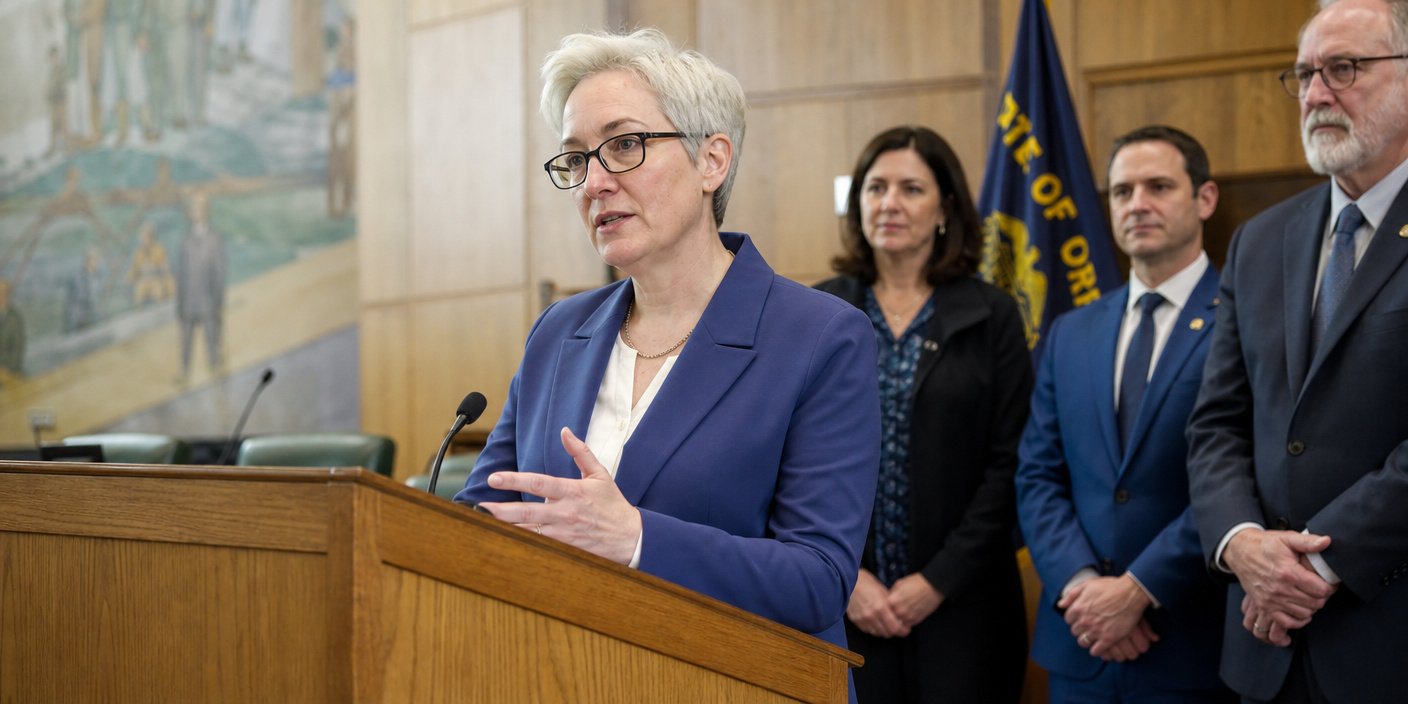
Gov. Tina Kotek’s Data Center Advisory Committee has reached a significant inflection point in its nine-month tenure. The committee, tasked with untangling the complex web of energy consumption, tax incentives, and land-use planning associated with Oregon’s booming digital infrastructure, has released its preliminary report. Rather than unveiling a suite of immediate regulatory changes, the committee has formally adjusted its mandate, shifting focus toward synthesizing a vast collection of public and stakeholder input. Consequently, any finalized policy recommendations have been deferred until after the November election, leaving the state’s data center strategy in a state of suspended animation.
Key Highlights
- Mandate Pivot: The Data Center Advisory Committee has shifted its primary objective from immediate policy drafting to synthesizing factual findings and public feedback.
- Post-Election Timeline: Formal policy recommendations are officially delayed until after the November election cycle, removing immediate legislative pressure.
- Energy Grid Tensions: The core conflict remains the struggle to balance massive, AI-driven electricity demands from facilities like those operated by Amazon Web Services (AWS) and Google with the constraints of the regional power grid.
- Public Input Focus: The next phase of the committee’s work emphasizes gathering community perspectives to inform future state-level guidance.
Navigating the Infrastructure Crossroads
The Data Center Advisory Committee (DCAC) was established by Governor Kotek to address the growing friction between Oregon’s established status as a hub for hyperscale data centers—particularly in the Silicon Forest near Hillsboro and the Columbia Basin—and the reality of a straining power grid. For months, the committee has been engaged in a rigorous fact-finding mission, attempting to quantify exactly how much energy these data centers consume and, more importantly, how that consumption impacts residential utility rates and the state’s decarbonization goals.
The Shift in Strategy
By adjusting its mandate, the DCAC is acknowledging that a “one-size-fits-all” regulatory approach is insufficient. The committee members, who include representatives from the Oregon Department of Energy (ODOE), utility providers, and local government officials, have found that the data center landscape is evolving faster than the state’s current policy framework can handle. The shift toward “synthesizing findings” is a strategic move to build a more comprehensive evidentiary record. By soliciting public input, the administration aims to create a buffer against the intense lobbying efforts that typically characterize legislative sessions involving high-tech infrastructure.
The Energy and Economic Paradox
The economic reality for Oregon is stark. Data centers provide lucrative tax revenue and job creation, but they are incredibly resource-intensive. Industry giants like Amazon, Google, and Meta have transformed the landscape of cities such as The Dalles and Boardman. However, the energy demand required to run generative AI models and cloud storage has triggered alarm among residential rate-payers and environmental advocates. These groups fear that by prioritizing the energy needs of server farms, utilities may be forced to rely on dirtier energy sources or implement rate hikes for the average consumer. The DCAC’s preliminary report highlights this tension, though it stops short of prescribing a remedy, leaving the hard decisions for the next legislative cycle.
Why the November Election Matters
Timing is rarely coincidental in state politics. By pushing the finalization of recommendations past the November election, Governor Kotek’s administration avoids the political volatility that accompanies major infrastructure regulation. Policy changes regarding tax exemptions for data centers are historically contentious. A “wait-and-see” approach allows the administration to maintain support from the tech sector while simultaneously appearing responsive to community concerns regarding grid stability. It effectively clears the legislative docket for the current term, allowing candidates to run without being forced to take a definitive, potentially polarizing stance on the future of Oregon’s data center tax incentives.
What Lies Ahead
The delay does not mean the work stops. Throughout the remainder of the year, the DCAC will hold additional public hearings and engage in technical deep-dives with utility providers like Portland General Electric and Pacific Power. The primary goal for this “synthesis phase” is to establish a unified data set that all parties—tech companies, grid operators, and local citizens—can agree upon. If the committee can achieve this, the resulting policy recommendations in 2025 will be based on a shared reality, rather than the competing narratives that have defined the debate for the past nine months. The challenge, however, will be ensuring that this synthesis leads to action rather than becoming a permanent bureaucratic placeholder.
FAQ: People Also Ask
Q: Why was the Data Center Advisory Committee created?
A: The committee was formed to address the growing concerns regarding the energy consumption, land-use impacts, and economic benefits of data centers in Oregon, ensuring the state remains competitive while protecting grid reliability and residential utility rates.
Q: Will the committee make policy changes before the end of 2024?
A: No. The committee has officially delayed final policy recommendations until after the November election, opting to spend the interim period synthesizing public input and technical data.
Q: What is the main conflict regarding data centers in Oregon?
A: The primary conflict is the competition for energy. As hyperscale data centers expand to support AI and cloud computing, their massive electricity demands compete with residential and commercial energy needs, raising concerns about grid strain and rate increases.
Q: Who is represented on the Data Center Advisory Committee?
A: The committee includes a diverse group of stakeholders, including officials from the Oregon Department of Energy, utility provider representatives, local economic development leaders, and members of the environmental advocacy community.