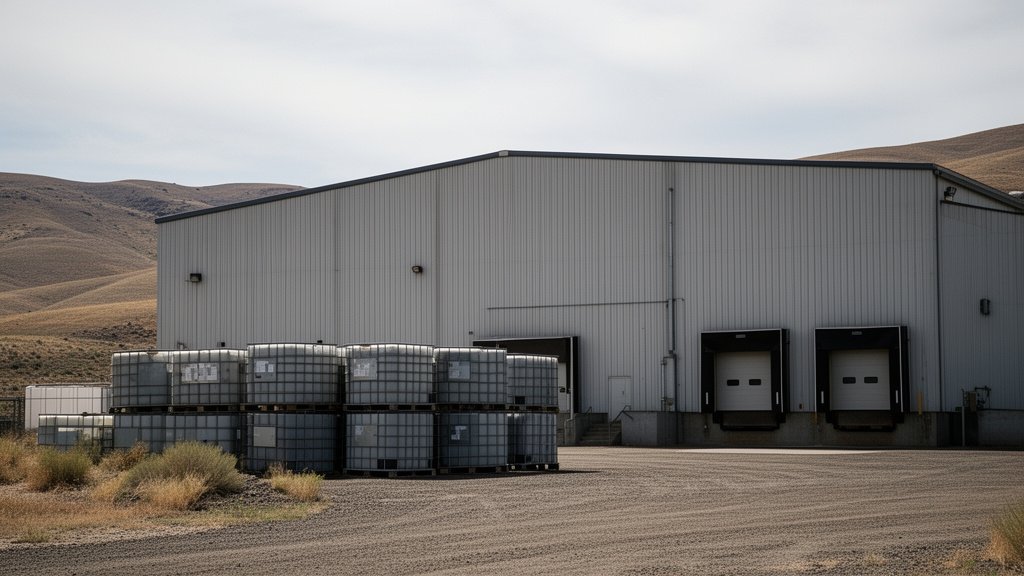
Oregon’s burgeoning hemp industry is staring down an existential crisis as federal lawmakers move to tighten restrictions on hemp-derived products. Business owners across the state are reporting plans to shutter operations in anticipation of a sweeping legislative change to the 2018 Farm Bill, which would effectively reclassify many popular hemp-derived cannabinoids as controlled substances, forcing a massive volume of current inventory off the market. As the legislative clock ticks, the future of a sector that once promised a green economic revolution looks increasingly bleak.
Key Highlights
- The Legislative Pivot: Proposed amendments to the Farm Bill seek to redefine “hemp” to exclude any product containing psychoactive cannabinoids, directly targeting the so-called “hemp loophole.”
- Economic Impact: Oregon, a leader in hemp production and processing, faces the potential loss of hundreds of small businesses, impacting thousands of jobs and millions in annual tax revenue.
- Regulatory Crisis: Business owners are already liquidating stock and pausing expansion plans, citing the unpredictability of federal enforcement and the potential for immediate product seizures.
The Looming End of the Hemp Loophole
The crisis stems from a divergence between the 2018 Farm Bill’s intent—which legalized industrial hemp—and the modern reality of the “psychoactive hemp” market. When Congress passed the Agriculture Improvement Act of 2018, it famously defined hemp as any cannabis plant containing 0.3% or less of Delta-9 THC by dry weight. At the time, the focus was largely on industrial textiles, oils, and CBD.
However, in the years that followed, the industry rapidly innovated, leveraging chemical processes to isolate and convert CBD into other potent cannabinoids like Delta-8 THC, THCa, and HHC. These products, often sold in gas stations and smoke shops across the nation, exist in a legal grey area. For many, these products provide a psychoactive experience functionally indistinguishable from marijuana, but without the stringent regulatory oversight or taxation of state-regulated cannabis dispensaries.
Federal lawmakers, pressured by state regulators and traditional cannabis operators who argue this “loophole” creates an unfair and unsafe market, have introduced amendments to the 2024 Farm Bill. These amendments are specifically designed to strip away the legal protection of these hemp-derived synthetics. For Oregon businesses that pivoted their business models to accommodate these products, the bill represents an immediate, existential threat.
Oregon’s Position in the Crosshairs
Oregon has long positioned itself as the agricultural epicenter of the American cannabis and hemp industry. Following the 2018 legalization, the state saw a boom in boutique hemp farming, extraction facilities, and distribution centers. Today, that infrastructure is highly vulnerable.
“We are not just looking at a dip in sales; we are looking at the forced liquidation of our entire inventory,” says one Portland-based hemp processor who requested anonymity due to the sensitivity of pending legal shifts. “The federal language being proposed doesn’t just regulate us; it effectively defines us out of existence. If these amendments pass, everything we have built—from our farm contracts to our manufacturing lines—becomes a federal liability overnight.”
The impact is cascading through the supply chain. Farming operations that converted acreage to hemp are struggling to find buyers for harvests that may soon be illegal to process or transport across state lines. In the high-desert regions of Oregon, where hemp crops were viewed as a viable alternative to traditional commodity crops, the uncertainty is already causing a drop in land lease inquiries and investment capital.
The Battle Over Synthetic Cannabinoids
The central tension is the definition of “synthetic.” Proponents of the stricter federal legislation, including various House Agriculture Committee members, argue that hemp-derived products that are synthesized in a lab to create high potency are not “hemp” in the spirit of the law. They contend that the lack of FDA oversight on these products poses significant consumer safety risks.
Conversely, the Hemp Industry Association and other trade groups argue that this crackdown will not only destroy a burgeoning economy but will also drive consumers back into the unregulated black market. They contend that sensible, state-level regulation is a better path than a federal “sledgehammer” approach that erases a legitimate, if rapidly evolving, market segment.
Economic Projections and Future Outlook
Economists tracking the sector suggest that if the current draft of the Farm Bill moves forward without modification, the contraction could be swift and severe. Unlike other industries that might have time to pivot, the legal shift here would trigger an immediate violation of the Controlled Substances Act for non-compliant inventory.
1. Capital Flight: Investors are already pulling back from hemp-tech and extraction startups, viewing the regulatory environment as “toxic” in the short term.
2. Job Losses: Small-scale processing facilities, which are labor-intensive, are the first in line for closures, potentially leading to job losses in rural Oregon.
3. Inventory Destruction: Businesses are reporting that they are already preparing for a total loss scenario, where shelf-stable goods must be destroyed rather than sold, representing a total loss of the capital invested in production and R&D.
The industry is now in a frantic race to lobby for “grandfathering” clauses or more granular regulatory frameworks that would separate industrial hemp from minor cannabinoids, but optimism is waning. For Oregon, a state that helped pioneer modern cannabis liberalization, this federal turn marks a painful and ironic return to deep legal uncertainty.
FAQ: People Also Ask
Q: What is the specific ‘loophole’ in the Farm Bill?
A: The loophole refers to the 2018 Farm Bill’s definition of hemp based solely on Delta-9 THC content. This allowed products containing other cannabinoids (like Delta-8 or THCa) to be sold legally, even if they produce psychoactive effects, as they technically classify as “hemp.”
Q: Will CBD oil still be legal if this law passes?
A: The proposed legislation aims to target synthetic and high-potency intoxicating cannabinoids. While the language is complex, most proponents of the bill claim they are not aiming to ban legitimate, non-intoxicating CBD products, though the exact regulatory implementation remains a point of significant concern for manufacturers.
Q: How soon could this legislation take effect?
A: The Farm Bill is currently under debate in Congress. If the amendments are included in the final reconciled version of the bill and signed into law by the President, the implementation could begin as early as the next fiscal cycle, potentially creating a very short window for businesses to adjust.
Q: Is this only affecting Oregon?
A: No, this is a federal issue. However, Oregon is disproportionately affected because it houses a higher concentration of hemp extraction and processing facilities compared to states that never fully embraced the hemp market.