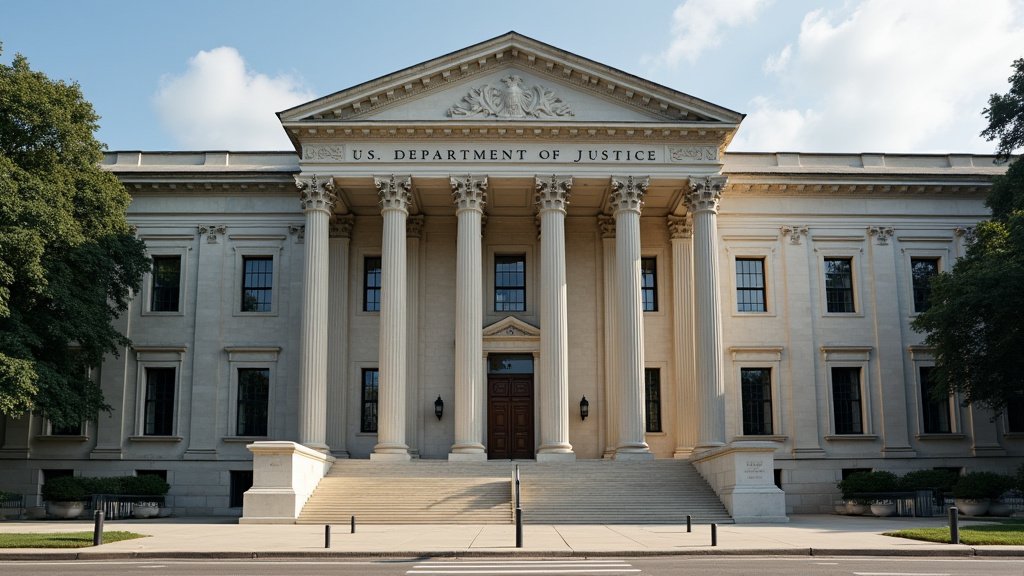
The U.S. Department of Justice (DOJ) has formally initiated litigation against the cities of Portland, Oregon, and St. Paul, Minnesota, challenging the legality of local ordinances aimed at regulating federal law enforcement officers. This legal confrontation centers on the extent to which municipal governments can impose restrictions on federal agents operating within their jurisdictions, effectively testing the boundaries of the Supremacy Clause of the U.S. Constitution and the doctrine of intergovernmental immunity.
The Core Legal Argument: Supremacy and Immunity
At the heart of the DOJ’s lawsuit is the argument that federal law enforcement operations must remain insulated from state and local interference. The federal government asserts that ordinances passed by the city councils in Portland and St. Paul—which include requirements for federal agents to display specific identification and restrictions on the use of certain crowd control measures—create an impermissible obstacle to the execution of federal duties.
Legal counsel for the federal government invokes the Supremacy Clause (Article VI, Clause 2 of the Constitution), which establishes that the Constitution and federal laws take precedence over state and local laws. Furthermore, the DOJ relies on the doctrine of intergovernmental immunity, a long-standing legal principle that shields the federal government from state regulations that directly interfere with its ability to carry out constitutional mandates. The DOJ contends that by dictating how federal agents must operate—or by limiting their tactical options—these cities are attempting to exercise control over federal instrumentalities, which the Constitution forbids.
Contextualizing the Conflict: The 2020 Protests
The origin of this friction lies in the intense civil unrest that gripped American cities, particularly Portland and St. Paul, throughout 2020. In the aftermath of the murder of George Floyd, federal authorities were deployed to protect federal property—including courthouses and other government buildings—amidst massive protests. These deployments sparked significant controversy, as local officials, activists, and community leaders accused federal agents of using excessive force, operating without clear identification, and bypassing local law enforcement norms.
In response, the city councils of Portland and St. Paul passed emergency ordinances. These policies were designed to enforce transparency and limit the tactics federal agents could employ within city limits. Proponents of these ordinances argued that local governments have a primary responsibility to protect their citizens and that federal agents should be held to the same standards of accountability as municipal police departments. The DOJ, however, views these local policies not as safety measures, but as political obstructions that threaten the operational integrity of the federal government.
Municipal Pushback: The Role of Local Autonomy
Portland and St. Paul have mounted a robust defense, framing the issue as one of local accountability. City attorneys argue that the ordinances do not prevent federal agents from doing their jobs; rather, they ensure that when agents act within city limits, they do so in a way that respects local civil rights and community standards.
Critics of the DOJ’s lawsuit suggest that this litigation is a tactical assertion of power intended to discourage other municipalities from attempting to regulate federal activity in the future. From the perspective of the cities, this is not just about the specific language of the ordinances, but about the right of a city to regulate conduct occurring within its geographic boundaries. The tension underscores a fundamental debate in American governance: where does the federal government’s broad power to maintain order end, and where does local police power begin?
Implications for Federal-Local Relations
This legal battle serves as a bellwether for the future of federal-local cooperation. If the courts rule in favor of the DOJ, it will effectively reinforce the notion that federal law enforcement has a ‘blank check’ to operate within cities, largely unburdened by local administrative requirements. This could create a long-term chilling effect on municipal efforts to regulate policing, particularly during periods of civil unrest or political instability. Conversely, a ruling in favor of the cities could establish a new framework for ‘cooperative federalism,’ where federal agents are expected to integrate more seamlessly with local standards of conduct and transparency.
The Precedent Problem: A Dangerous Slippery Slope?
A critical secondary angle involves the broader legal precedent being set. Legal scholars note that if local governments are allowed to impose regulatory burdens on federal agents, it could potentially hinder the federal government’s ability to respond to national crises, such as threats to critical infrastructure or interstate terrorism. However, the opposing view holds that if the federal government is allowed to bypass local laws whenever it deems necessary, it could pave the way for federal overreach, enabling agents to operate with effectively zero oversight or accountability to the communities they are allegedly serving.
Long-term Political Consequences
Beyond the courtroom, this lawsuit carries significant political weight. By targeting Portland and St. Paul, the DOJ is signaling a firm stance on the autonomy of federal agencies. For the residents of these cities, the litigation is viewed as an affront to local democratic control. This clash is likely to resonate in future elections and influence public sentiment regarding federal authority, potentially accelerating movements to further limit federal law enforcement activity in municipal affairs. As the litigation moves through the court system, it will continue to highlight the deep divides in how the American public, local leadership, and federal authorities perceive the nature of security in an increasingly polarized nation.
FAQ: People Also Ask
What is the Supremacy Clause?
The Supremacy Clause is found in Article VI, Clause 2 of the U.S. Constitution. It establishes that the Constitution, federal laws made pursuant to it, and treaties are the ‘supreme Law of the Land,’ meaning they take precedence over any conflicting state or local laws.
Why is the DOJ suing these specific cities?
The DOJ is suing Portland and St. Paul because both cities enacted specific local ordinances that the federal government claims interfere with the operational protocols and constitutional mandates of federal law enforcement agents, particularly during protest scenarios.
What is the doctrine of intergovernmental immunity?
Intergovernmental immunity is a constitutional principle derived from the Supremacy Clause. It protects the federal government from state or local regulations that seek to control or burden federal operations, ensuring that the federal government can function without being subject to the diverse and potentially conflicting laws of state and local jurisdictions.
Do federal agents have to follow local city ordinances?
Generally, under the doctrine of intergovernmental immunity, federal agents are not required to follow local ordinances that would impede their federal duties. The current litigation is designed to test this principle specifically regarding the ordinances passed in Portland and St. Paul.