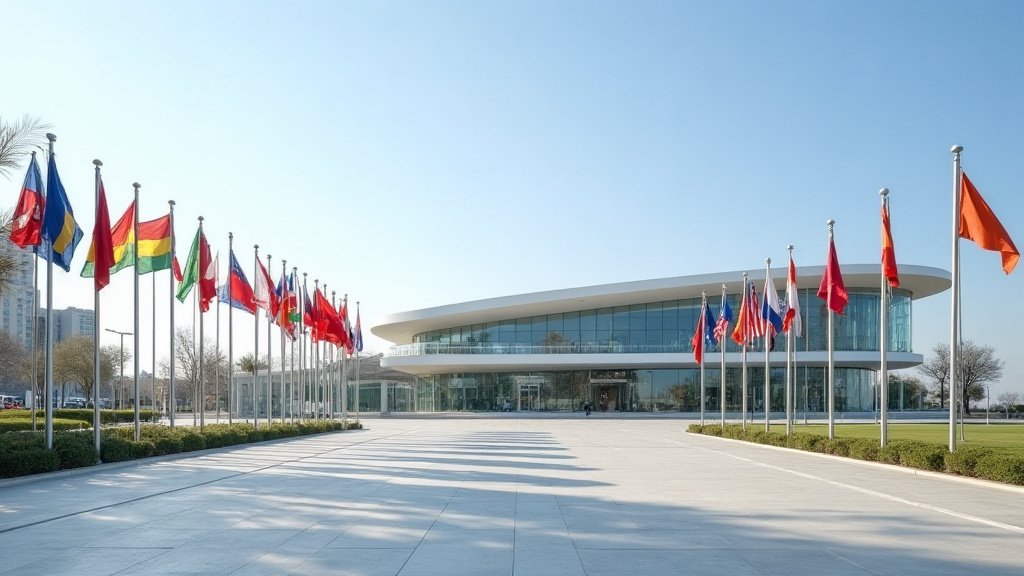
The COP31 climate summit in Antalya, Turkey, concluded without a final agreement after two days of intense, unscheduled overtime negotiations failed to resolve systemic disagreements over the inclusion of fossil fuel phase-out language. This diplomatic stalemate marks a pivotal moment for international climate policy, leaving global climate commitments in a state of suspended uncertainty. The European Union and a coalition of ambitious climate-aligned nations firmly refused to sign an agreement that did not explicitly mandate a transition away from fossil fuels, effectively blocking the adoption of the final text and highlighting a growing rift between major global economic blocs.
Key Highlights
- Diplomatic Deadlock: The summit closed without a final, binding accord after negotiations collapsed despite two days of overtime sessions.
- The Sticking Point: A fundamental disagreement persisted regarding the specific language surrounding the “phase-out” versus the “transition away” from fossil fuels.
- European Union Stance: The EU and allied nations successfully blocked an agreement they deemed insufficient, insisting that without a clear phase-out commitment, the document lacked necessary ambition.
- Global Consequences: The lack of a final agreement creates immediate, widespread uncertainty for carbon market stability, national climate action plans, and the geopolitical path toward COP32.
The Anatomy of the Antalya Diplomatic Breakdown
The failure to produce an overarching agreement at COP31 is not merely a bureaucratic stall; it represents the culmination of years of escalating friction within the UN framework regarding the precise terminology of energy transition. For the better part of a decade, international climate summits have struggled to balance the urgent need to decarbonize with the economic realities of fossil-fuel-dependent nations. In Antalya, this tension reached a breaking point.
The Language Gap
At the heart of the deadlock was the distinction between “phasing out” fossil fuels and “transitioning away” from them. While the latter has been accepted in previous agreements as a softer, more flexible term, the EU delegation arrived in Antalya with a clear mandate from their member states: a phase-out commitment was non-negotiable. Analysts suggest that the refusal of several major oil-producing nations to accept this language left the EU with no choice but to withhold its signature. By demanding stronger, more legally binding terminology, the bloc effectively exercised its veto power, preventing the adoption of a “weakened” document that critics argued would have done little to move the needle on global warming.
Geopolitical Rifts and Energy Security
The deadlock reflects a deeper, underlying anxiety about energy security. For developing nations, and even some established economies, an immediate or rapid phase-out of fossil fuels represents a threat to energy stability and economic growth. The negotiations in Antalya highlighted how the climate transition is inextricably linked to energy independence. Major producers argued that the current infrastructure is not prepared to support a rapid switch to renewables, while climate-conscious nations maintained that the environmental cost of delay far outweighs the short-term economic inconvenience.
Strategic Implications for the Global Economy
The failure to reach an accord at COP31 introduces a period of profound volatility for international markets. Institutional investors and energy companies have long looked to COP summits to provide a signal of policy direction. Without a unified framework from Antalya, capital markets are left without a clear “North Star” for long-term investments in green energy projects and carbon mitigation technologies.
Market Volatility and Investor Confidence
Without a clear global consensus, the regulatory environment becomes fractured. Companies operating across borders now face a patchwork of different national requirements rather than a synchronized international standard. This lack of uniformity can stifle cross-border investment, as firms hesitate to commit capital to projects that may eventually fall out of alignment with future, more stringent regulations—or alternatively, be rendered obsolete by sudden shifts in policy. Furthermore, the volatility in energy markets is likely to persist as the signal for long-term divestment from fossil fuels is delayed, keeping the reliance on hydrocarbons as a primary energy source intact for the foreseeable future.
The ‘Wait and See’ Approach
For global corporations, the breakdown necessitates a pivot toward a “wait and see” strategy. Many industry leaders had anticipated a clear, outcome-driven mandate from COP31 to inform their internal environmental, social, and governance (ESG) strategies for the next decade. Instead, those frameworks are now being forced back into the drafting stage. This delay, while perhaps minor in a historical context, serves as a significant hurdle for firms aiming to reach Net Zero targets by 2050, as their decarbonization pathways were heavily reliant on the policy support mechanisms that were expected to arise from the Antalya talks.
Toward COP32: Rebuilding the Consensus
As the delegates departed Turkey, the focus immediately shifted to the road ahead for COP32. The breakdown in Antalya has created a “trust deficit” that organizers will need to work hard to bridge. The United Nations climate process relies on consensus, and when major power players are fundamentally misaligned on the core issue of energy transition, the entire mechanism faces a credibility crisis.
Re-evaluating the UN Negotiation Process
There are growing calls among experts to re-evaluate the architecture of these summits. Some argue that requiring a unanimous agreement for a global climate pact effectively gives every nation, even those with the least ambitious goals, veto power. This dynamic, as witnessed in Antalya, can lead to the “lowest common denominator” problem, where the final agreement is so watered down it becomes ineffective, or, as we have seen here, leads to a total collapse of the negotiation process. Whether COP32 will attempt to shift toward a “coalition of the willing” model or remain committed to universal consensus remains one of the most pressing questions in climate diplomacy today.
FAQ: People Also Ask
Q: Why was the COP31 agreement never signed?
A: The agreement failed because a group of nations, led by the European Union, refused to sign any final document that did not include an explicit, binding commitment to phase out fossil fuels. Other nations were unwilling to accept this language, leading to an irreconcilable diplomatic deadlock.
Q: Where did the COP31 summit take place?
A: The COP31 climate summit was held in Antalya, Turkey.
Q: What is the difference between ‘transitioning away’ and ‘phasing out’ fossil fuels?
A: In climate diplomacy, ‘transitioning away’ is often viewed as a more flexible, open-ended commitment, whereas ‘phasing out’ implies a definitive, time-bound cessation of fossil fuel use, which is a stronger and more demanding policy standard.
Q: What happens now that COP31 has ended without an agreement?
A: With the summit concluded without a final accord, international climate policy currently lacks a unified, updated directive. Member nations will likely revert to their existing individual or regional commitments while diplomatic efforts shift toward preparing for the COP32 negotiations.