The Physical Cost of the Digital Cloud
For years, the “cloud” was marketed as an ethereal, weightless concept—a space where our digital lives existed beyond the constraints of geography. However, the latest wave of technological expansion, driven by the insatiable appetite of Generative AI, has brought that cloud crashing down to earth. As tech journalist Paris Marx and other industry analysts have documented, data centers have shifted from silent background infrastructure to the front lines of a significant socio-political backlash. These facilities are no longer just server farms; they are becoming “resource vampires” in the eyes of local residents, placing them at the absolute center of a battle between Big Tech’s growth ambitions and the sustainability of local communities.
The Resource Vampire: Energy and Water Metrics
The primary friction point is the sheer scale of consumption. According to the International Energy Agency (IEA), data centers are projected to consume up to 9% of total electricity in the United States by 2030—a massive jump that threatens to strain power grids already struggling with the transition to renewable energy. This is not just an abstract data point; it is a reality felt by residents in hubs like Northern Virginia. In Loudoun County, which houses the world’s largest concentration of data centers, residents are increasingly vocal about the “hidden” costs of the digital economy.
Beyond electricity, water consumption has become a flashpoint. Data centers require massive quantities of water for evaporative cooling to keep high-performance NVIDIA chips and server racks from overheating. In some cases, a large facility can consume millions of gallons of water per day, often during drought conditions, putting them in direct competition with local agricultural and municipal water supplies. When a digital utility competes with a town’s drinking water, the “backlash” is no longer theoretical—it is an existential community issue.
The Zoning Wars and Democratic Agency
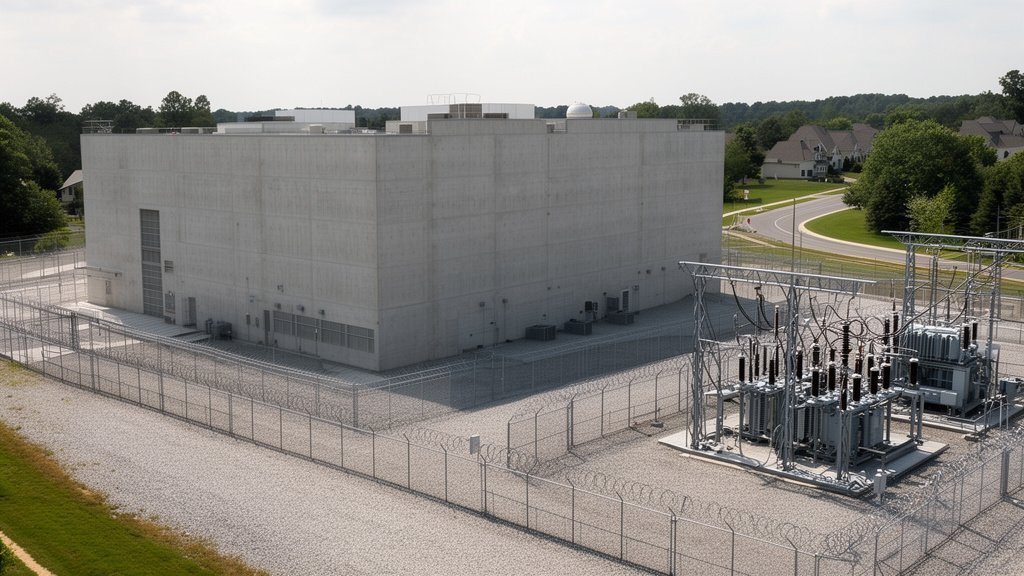
The political resistance is evolving from isolated complaints to systemic policy shifts. Across the United States and Europe, we are seeing a rise in “data center moratoriums.” Local governments, previously eager to lure Big Tech with massive tax incentives and promises of high-tech jobs, are hitting the brakes. The economic reality is that data centers are capital-intensive but labor-light; they generate millions in tax revenue but employ relatively few people once construction is complete. This disconnect between the promise of an “economic boom” and the reality of a fenced-off, automated facility has galvanized neighborhood associations and environmental groups alike.
This is a fundamental shift in local democracy. Residents are demanding more transparency regarding how power grid capacity is allocated, arguing that their local infrastructure should serve their community’s immediate needs—such as housing and small business development—rather than being monopolized by the private infrastructure of a Silicon Valley conglomerate. The narrative is shifting from “progress at any cost” to “infrastructure accountability.”
The AI-Driven Infrastructure Crisis
The current backlash is inextricably linked to the AI arms race. The rush to train Large Language Models (LLMs) requires an exponential increase in compute power. As companies like Microsoft, Google, and Amazon Web Services (AWS) scramble to secure land and power, they are bypassing traditional community planning processes. This “move fast and break things” ethos, which worked in software development, is disastrous when applied to physical construction and zoning.
When a data center is built, it is not a temporary installation; it is a concrete, steel, and cable commitment that lasts for decades. The infrastructure built today to train an AI model may become a stranded asset if the technology shifts, but the environmental and grid impact will remain. Communities are now cognizant of this long-term risk. They are asking hard questions about what happens when the “AI hype” dies down and the town is left with a massive, energy-draining shell. This foresight is leading to stricter zoning laws, noise pollution regulations, and requirements for closed-loop cooling systems that do not rely on local freshwater sources.
The Path Forward: Regulation and Sovereignty
The future of the data center industry will likely be defined by a movement toward “digital sovereignty” and hyper-local regulation. We are already seeing the emergence of new mandates: requiring data centers to fund their own renewable energy plants rather than drawing from the public grid, enforcing the use of recycled wastewater, and mandating that these facilities provide tangible community benefits, such as localized district heating (using waste heat to warm local buildings).
Big Tech can no longer rely on the anonymity of the cloud. As these facilities become more physical and invasive, the corporate response must move away from defensive lobbying and toward genuine integration with community needs. If they fail to do so, the backlash will only intensify, potentially slowing the very infrastructure development upon which the future of AI depends. The era of the “invisible data center” is over; the era of the “accountable data center” is just beginning.