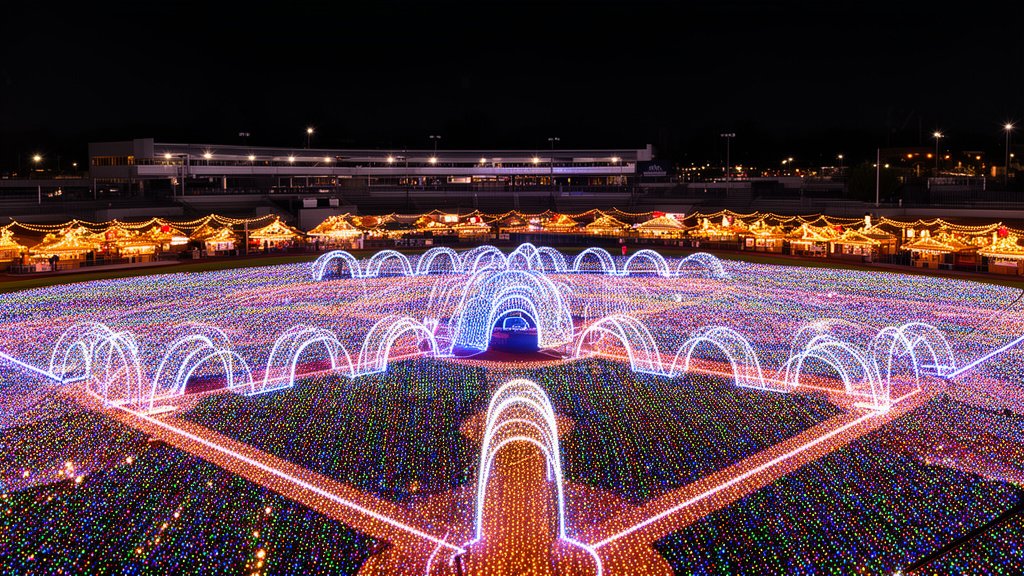
Keizer, Oregon, is poised to become the brightest spot in the Willamette Valley this holiday season. Starting November 27, the iconic Volcanoes Stadium will undergo a dramatic transformation, shedding its baseball skin to become the host site for the GLOW Oregon holiday lights festival. This massive installation promises an immersive experience for families and tourists alike, serving as a beacon of festive celebration that utilizes over 1 million synchronized LED lights to create a landscape of light and sound.
The Transformation of Volcanoes Stadium
The choice of Volcanoes Stadium as the venue for GLOW Oregon is not merely a logistical decision; it represents a strategic shift in how mid-sized stadiums are utilized beyond the standard sports season. By converting the baseball field and surrounding concourses into an expansive event space, the organizers have created a controlled, ticketed environment that can manage high volumes of visitors while providing a safe, walk-through experience. The sheer scale of the 1 million-light display requires weeks of careful engineering and electrical synchronization, turning the stadium’s rigid architecture into a fluid, glowing, and ever-changing environment of holiday spirit.
Exploring the Immersive Attractions
At the heart of the GLOW Oregon event is a commitment to interactivity. While many light festivals in the Pacific Northwest focus purely on passive observation—driving through a tunnel of lights or viewing static displays from a distance—GLOW Oregon aims for deeper engagement. A standout feature of this year’s setup is the ‘Naughty or Nice’ Lava Lodge. This thematic centerpiece leans into local branding, offering a unique PNW-style atmosphere where visitors can gather to escape the chill.
Beyond the Lodge, the event includes a dedicated holiday market, an essential component that drives economic activity for local artisans and vendors. The inclusion of a market transforms the evening into a multi-sensory outing: visitors can shop for handcrafted gifts, consume seasonal food and beverages, and immerse themselves in the visual display, making the event a comprehensive ‘holiday experience’ rather than just a sightseeing tour.
Community and Economic Impact
For the city of Keizer, the hosting of GLOW Oregon serves as a vital economic engine during the late fourth quarter. Historically, the retail and service sectors see a significant boost when major attractions draw visitors from outside the immediate city limits. By pulling crowds from the greater Salem metropolitan area and potentially as far as Portland or Eugene, the festival creates a ripple effect: tourists visiting the stadium are more likely to dine at local restaurants, purchase gas, and potentially stay in nearby lodging.
This event also highlights the evolution of the ‘event economy.’ Stadiums that historically sat dormant during the winter months are increasingly finding new life as multi-purpose entertainment hubs. This transition is essential for the venue’s long-term sustainability, ensuring that the infrastructure—and the associated tax revenue—remains relevant throughout the year, regardless of the baseball schedule.
The Evolution of Holiday Tourism
The trend of large-scale, destination-based holiday light events has grown exponentially over the last decade. As public preference shifts away from the traditional, smaller-scale neighborhood light tours, events like GLOW Oregon offer a highly curated, ‘Instagrammable’ experience that aligns with modern social media habits. This shift is not merely superficial; it represents a professionalization of the holiday season, where production quality, lighting technology, and logistical flow are treated with the same level of seriousness as a major concert or sporting event.
For families and attendees, the focus has shifted toward high-production value and comfort. The ability to control pedestrian traffic, provide warmth through heated thematic areas like the Lava Lodge, and offer centralized amenities like restrooms and food vendors makes these ticketed stadium events significantly more attractive than the unpredictable weather and traffic associated with traditional residential light displays.
Tips for the Optimal Experience
With opening night slated for November 27, organizers advise attendees to plan ahead. Given the popularity of similar light festivals in the PNW, peak nights—specifically weekends and the dates leading up to Christmas—are expected to reach capacity. Purchasing tickets in advance is not just recommended; it is often necessary to guarantee entry. Attendees should also prepare for the elements. While the event is immersive and enchanting, it remains an outdoor experience in late November; wearing appropriate footwear for walking and layering clothing remains the best strategy for enjoying the full scope of the stadium’s light-filled path without the distraction of the cold.