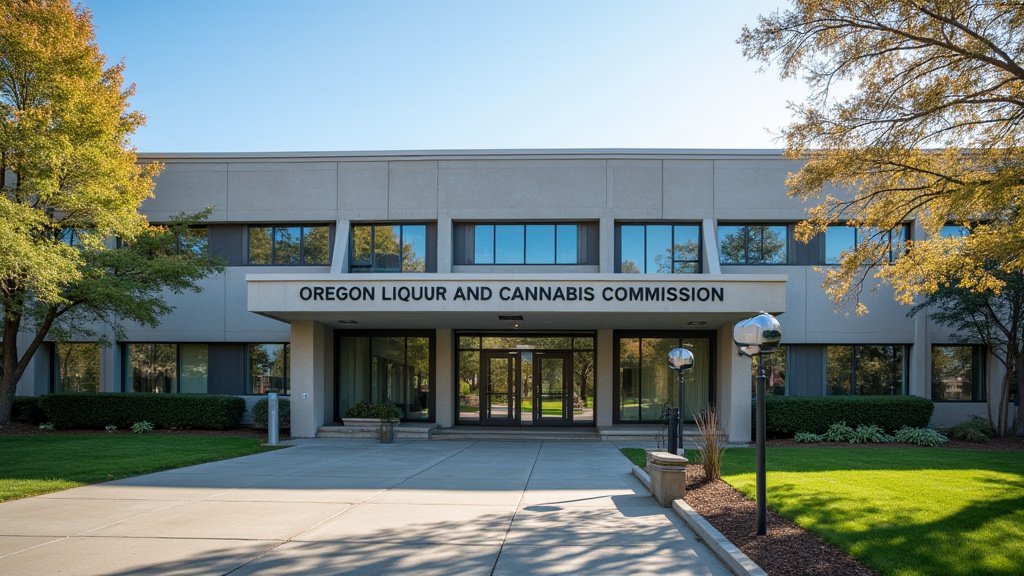
The Oregon Liquor and Cannabis Commission (OLCC) took a decisive step in state regulatory oversight on October 21, 2026, hosting a public rules hearing aimed at restructuring the state’s hemp registry. As Oregon navigates an evolving cannabis landscape, this regulatory push signifies a tightening of compliance standards for producers and processors alike, intending to bring clarity to a market often obscured by complex overlapping jurisdictions.
- OLCC held a critical public rules hearing on October 21, 2026, to refine hemp registry protocols.
- The session focused on aligning state registry requirements with current federal agricultural guidance and updated state mandates.
- Stakeholders debated mandatory reporting thresholds for hemp biomass and the handling of extraction by-products.
- The proposed rules aim to close “regulatory gaps” that have historically allowed unverified product to enter the illicit or gray-market supply chain.
Navigating the Shift in Oregon’s Hemp Oversight
For years, Oregon’s hemp sector has existed in a nebulous space, often caught between the mandates of the Oregon Department of Agriculture (ODA) and the encroaching regulatory authority of the OLCC. The hearing held on October 21, 2026, was not merely a procedural formality; it represented an aggressive attempt by the OLCC to assert control over a sector that has grown increasingly indistinguishable from the highly regulated adult-use cannabis market.
The Convergence of Hemp and Cannabis Regulations
The central tension driving this regulatory overhaul is the ongoing issue of synthetic cannabinoids and the “hemp loophole.” Since the passage of the 2018 Farm Bill, the lack of a robust, centralized registry has made it difficult for regulators to track the movement of hemp biomass. By tightening registry requirements, the OLCC aims to create an auditable trail that follows product from soil to shelf. This move is designed to ensure that materials originating in the hemp sector do not inadvertently feed into the illicit cannabis market, a persistent concern for Oregon’s law enforcement and legal dispensaries alike.
During the hearing, commissioners highlighted the need for standardized reporting. Under the new proposals, growers would be required to submit more granular data regarding their harvest volumes, specific cannabinoid profiles, and the final intended disposition of their biomass. This administrative shift is designed to reduce the volume of “rogue” product that lacks traceability.
Economic Implications for Producers
For legitimate hemp farmers in Oregon, the proposed rules present a mixed bag. On one hand, a more transparent registry could stabilize the market, weeding out bad actors who operate without proper licensing or safety testing. By formalizing the registry, the OLCC is implicitly creating a “verified” class of hemp producers, which could be leveraged for marketing and B2B contracts.
However, the cost of compliance is a significant concern for small-scale operators. The regulatory burden of reporting, coupled with potential increases in registration fees or inspection frequencies, could force smaller family-owned farms out of the market. During the public comment session, several trade association representatives expressed apprehension regarding the technical requirements for digital reporting, suggesting that the OLCC provide subsidized training or software portals to ease the transition.
The Future of Regulatory Enforcement
The OLCC’s strategy appears to be a long-term play for total industry harmonization. By integrating hemp registry data more tightly with the Cannabis Tracking System (CTS), the commission hopes to eventually oversee a unified supply chain. This would allow for real-time monitoring of all THC-containing products, regardless of their botanical source.
As the public comment period concludes and the commission moves toward final rule adoption, the industry is bracing for a new era of enforcement. The message from the hearing was clear: the era of the “Wild West” in Oregon hemp is coming to an end, replaced by a rigid, bureaucratic framework intended to safeguard public health and market integrity. Observers suggest that if Oregon succeeds in creating this robust registry, it could serve as a model for other states struggling to manage the complex overlap between industrial hemp and psychoactive cannabis.
FAQ: People Also Ask
Q: Why is the OLCC involved in hemp regulation instead of just the Department of Agriculture?
A: While the Oregon Department of Agriculture focuses on the agricultural aspects of hemp, the OLCC is increasingly involved due to the product’s proximity to the recreational cannabis market. The overlap of synthetic cannabinoids and the potential for hemp-derived products to enter the regulated cannabis stream require the OLCC’s specific expertise in enforcement and market tracking.
Q: What was the primary goal of the Oct 21, 2026 hearing?
A: The goal was to refine and tighten the regulations governing the state’s hemp registry. The OLCC aimed to address transparency issues, mandate better reporting for biomass and by-products, and ensure that hemp operations align more closely with state compliance standards.
Q: How does this affect licensed hemp farmers in Oregon?
A: It introduces stricter reporting requirements, potentially increasing administrative overhead. While it may provide more stability by excluding illicit players, small-scale farmers will need to invest in better documentation and digital reporting systems to remain compliant.