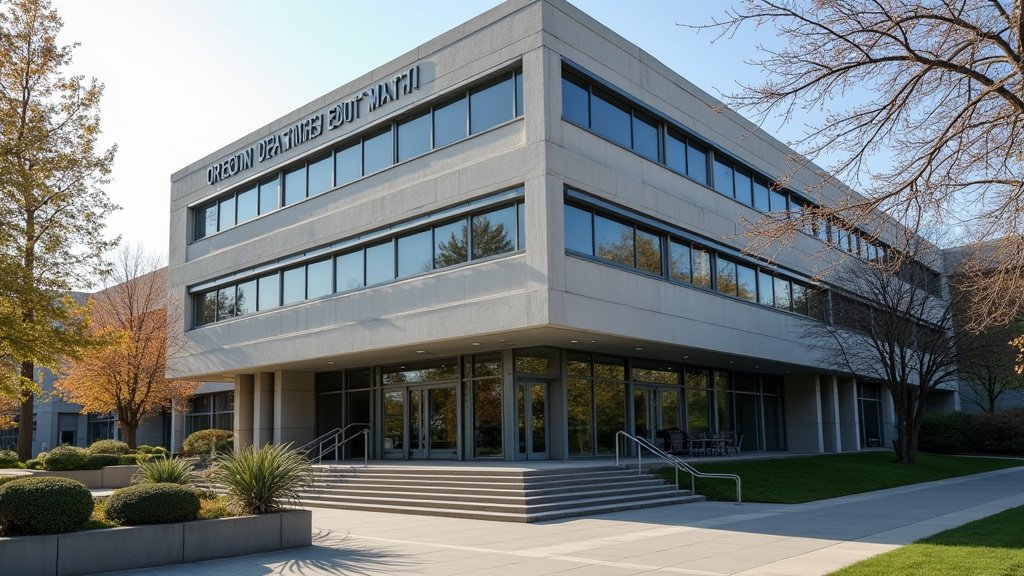
The Oregon Department of Education (ODE) is facing intense scrutiny following a recent state audit that highlights significant systemic failures in overseeing the $338 million High School Success program. Despite the program’s noble mandate—designed to boost high school graduation rates and career-technical education—the audit reveals a pattern of negligence, specifically regarding the agency’s failure to address critical recommendations issued in a previous 2024 assessment. This breakdown in administrative oversight threatens to undermine one of the state’s most significant investments in public education, raising urgent questions about how taxpayer dollars are being tracked and whether the intended outcomes for Oregon’s students are being achieved.
Key Highlights
- Funding Oversight Crisis: The audit explicitly cites a failure by the Oregon Department of Education to exercise sufficient control and monitoring over the $338 million budget allocated to the High School Success program.
- Repeat Failures: The current findings represent an alarming trend, as the ODE has failed to implement or address the majority of corrective actions recommended by auditors in early 2024.
- At-Risk Outcomes: With graduation rates and career readiness hanging in the balance, the lack of data-driven oversight may jeopardize the long-term effectiveness of the initiative.
The Accountability Crisis: Assessing the Audit Findings
The recent audit conducted by the Oregon Secretary of State’s office serves as a stark indictment of bureaucratic inertia. At the center of the controversy is the ‘High School Success’ program, a cornerstone of Oregon’s educational strategy funded by Measure 98. This program was established with the explicit goal of improving graduation rates, expanding access to career and technical education (CTE), and providing students with college-level coursework. However, the findings suggest that the agency responsible for distributing these funds has struggled to maintain the necessary oversight to ensure the money is achieving those specific outcomes.
The Measure 98 Mandate vs. Administrative Reality
When voters approved Measure 98 in 2016, the mandate was clear: inject substantial funding into high schools to combat dropout rates and prepare students for the modern workforce. The $338 million biennial allocation was intended to be transformative. Yet, the auditor’s report suggests that the actual management of these funds has been far from efficient.
Critics of the ODE point to the ‘oversight gap’ as the primary issue. The department is tasked not only with distributing these funds to school districts but also with auditing how that money is spent. The recent report indicates that the ODE lacks a robust framework for monitoring whether school districts are utilizing the funds effectively or even in accordance with state guidelines. This lack of visibility means the state effectively distributed millions of dollars without clear verification of the tangible impact on student performance.
The Friction Between Auditor and Agency
The 2024 audit was not the first time the Secretary of State’s office raised these concerns. The fact that the ODE has failed to address the majority of recommendations from that initial audit points to a deeper institutional failure. In bureaucratic terms, this represents a ‘failure to remediate,’ where administrative feedback is acknowledged but not acted upon. For the taxpayer, this is more than just a procedural error; it represents a lack of accountability regarding one of the largest budget items in the state’s education sector.
Economic and Educational Implications
The economic impact of this oversight failure is twofold. First, there is the immediate risk of wasted taxpayer funds. If districts are not being held accountable for how they spend High School Success money, there is no guarantee that the funds are actually reaching the students who need them most. Second, there is the long-term cost of lost human capital. By failing to ensure that career and technical education programs are properly funded and executed, the state risks failing an entire generation of students who may graduate without the skills required for the modern economy.
Future Predictions: The Path to Reform
The Oregon Legislature is expected to intervene following the release of this audit. The most likely outcome involves stricter legislative mandates for the ODE, potentially requiring more frequent third-party auditing of district expenditures. Furthermore, there is growing pressure from education advocacy groups for the department to overhaul its data collection and reporting mechanisms. If the agency cannot demonstrate that it can manage the current $338 million allocation, lawmakers may be forced to consider restructuring the distribution model entirely, potentially moving away from the current ODE-managed system in favor of a more transparent, perhaps external, administrative body.
FAQ: People Also Ask
What is the High School Success program?
Funded by Measure 98, it is a $338 million biennial state initiative designed to improve high school graduation rates, increase career and technical education (CTE) access, and expand college-level coursework for students across Oregon.
Why did the Oregon Secretary of State audit the ODE?
The audit was conducted to determine if the Department of Education was fulfilling its legal obligation to monitor and oversee the distribution and utilization of the $338 million in Measure 98 funds, following concerns about administrative efficacy.
What were the primary failures identified?
The audit found that the ODE failed to address recommendations from a 2024 audit, lacked sufficient oversight of district spending, and failed to adequately verify whether the funds were producing the intended improvements in student outcomes.
What happens next for the ODE?
The department is now under significant pressure to implement the auditor’s corrective recommendations. This will likely involve a combination of legislative oversight hearings, a complete overhaul of their reporting processes, and potentially a new, more rigorous framework for evaluating district-level compliance.