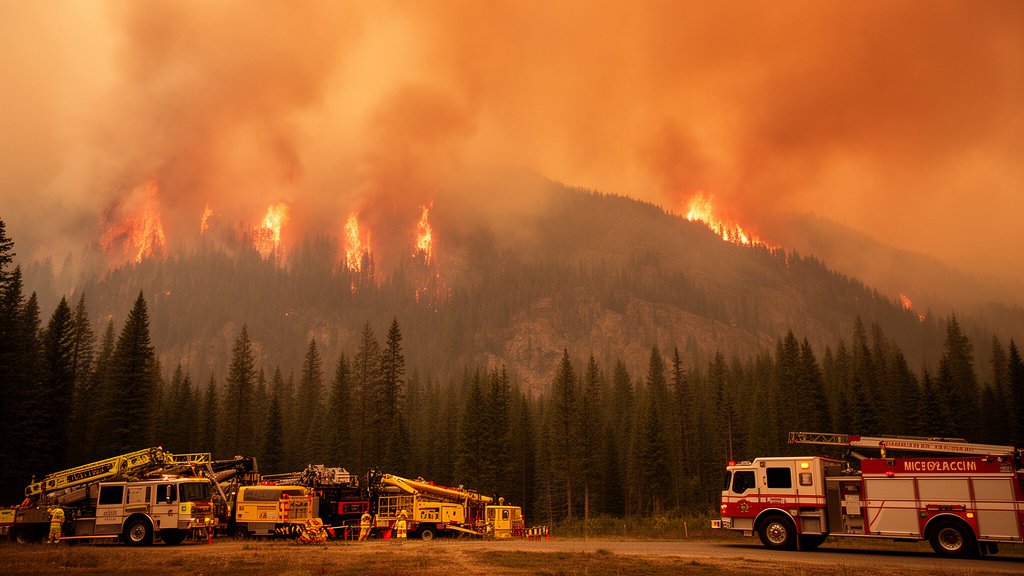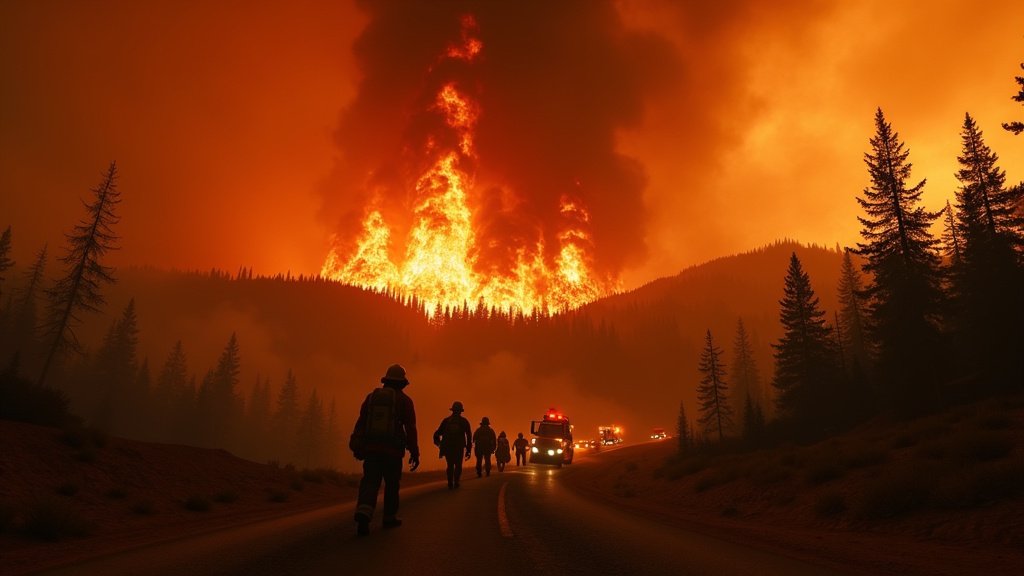
In the arid, wind-swept landscapes of the Columbia River Gorge, the question for Mosier, Oregon, is not if another wildfire will threaten the community, but when. As regional climate patterns shift toward hotter, drier summers, the residents of Mosier are moving away from traditional, reactive fire-fighting models. Instead, they are pioneering a grassroots effort to form a Prescribed Burn Association (PBA)—a model that returns fire to the landscape in a controlled, planned manner, echoing the ancestral practices of Indigenous peoples who stewarded these lands for millennia.
Rethinking the Risk: The Mosier Fire Strategy
For decades, the standard protocol for communities in the Wildland-Urban Interface (WUI) has been total fire suppression. Every flame, regardless of size, was met with aggressive containment. However, forest ecologists and fire management experts now argue that this century of suppression has resulted in a dangerous accumulation of ‘fuel load’—dry brush, dead timber, and undergrowth that turns minor incidents into catastrophic conflagrations. In Mosier, the landscape is characterized by steep, grassy slopes and oak woodlands, terrain that, when combined with the relentless Gorge winds, creates a ‘chimney effect’ capable of carrying fire through neighborhoods in minutes.
The PBA Model: Community-Led Mitigation
The proposed Prescribed Burn Association in Mosier aims to decentralize fire management. Unlike large-scale federal burns that often require months of bureaucratic approval, a PBA is a local, peer-to-peer organization. It serves as a coalition of neighbors, landowners, and local experts who pool their resources, equipment, and knowledge to conduct controlled burns on private property.
By organizing under a PBA structure, Mosier residents aim to lower the barriers to entry for land management. The association provides training, ensures participants are insured, and facilitates the complex permitting process required by the Oregon Department of Forestry. It transforms the act of fire management from a specialized, distant task into a community-led maintenance project, similar to how one might organize a volunteer neighborhood cleanup.
Integrating Indigenous Wisdom
The reliance on Prescribed Burn Associations is rooted in a fundamental shift in perspective: recognizing that fire is an integral, natural component of the ecosystem, not just an enemy to be fought. Indigenous communities in the Pacific Northwest practiced cultural burning for thousands of years, utilizing low-intensity fires to encourage native plant growth, manage pests, and create natural firebreaks. Modern PBAs are essentially working to recover this ‘lost knowledge,’ applying modern safety standards and meteorological data to a practice that was once the status quo.
Technical and Logistical Hurdles
Despite the clear ecological and safety benefits, the road to implementing a PBA in Mosier is fraught with technical complexity. The primary challenge remains the regulatory environment. Oregon’s smoke management and air quality regulations are stringent; even if a day is perfect for fire, a sudden shift in wind direction or an air quality advisory can scrub a planned burn at the eleventh hour. Furthermore, liability remains a significant hurdle. Landowners are often hesitant to allow fire on their property, fearing potential escapes. The PBA acts as a buffer here, providing the professional expertise and insurance frameworks necessary to mitigate these risks, ensuring that participants are not working in a vacuum.
The Economic and Ecological Impact
Beyond the immediate threat of wildfire suppression, the long-term impacts of adopting this model are significant.
- Insurance Mitigation: As private insurers increasingly pull out of high-risk fire zones in the American West, proactive risk reduction can become a bargaining chip. Homes and properties that are demonstrably ‘fire-adapted’—clear of dangerous brush and surrounded by managed vegetation—may find more stability in the increasingly volatile insurance market.
- Biodiversity and Forest Health: Controlled fire does not just clear brush; it triggers germination for native species, clears out invasive weeds that thrive in stagnant conditions, and recycles nutrients back into the soil, creating a healthier, more resilient forest structure.
- Future Predictions: Experts suggest that if the Mosier model proves successful, it could serve as a template for other vulnerable communities along the Columbia River Gorge. The goal is to create a mosaic of ‘treated’ landscapes, where fire intensity is naturally limited by gaps in fuel, effectively slowing the spread of any future mega-fire.
FAQ: People Also Ask
What exactly is a Prescribed Burn Association?
A Prescribed Burn Association is a collaborative, grassroots organization that empowers private landowners to use controlled fire as a land management tool. It facilitates the sharing of equipment, training, and labor, making it easier for individuals to conduct burns that reduce wildfire fuel on their property.
How is a ‘prescribed burn’ different from a wildfire?
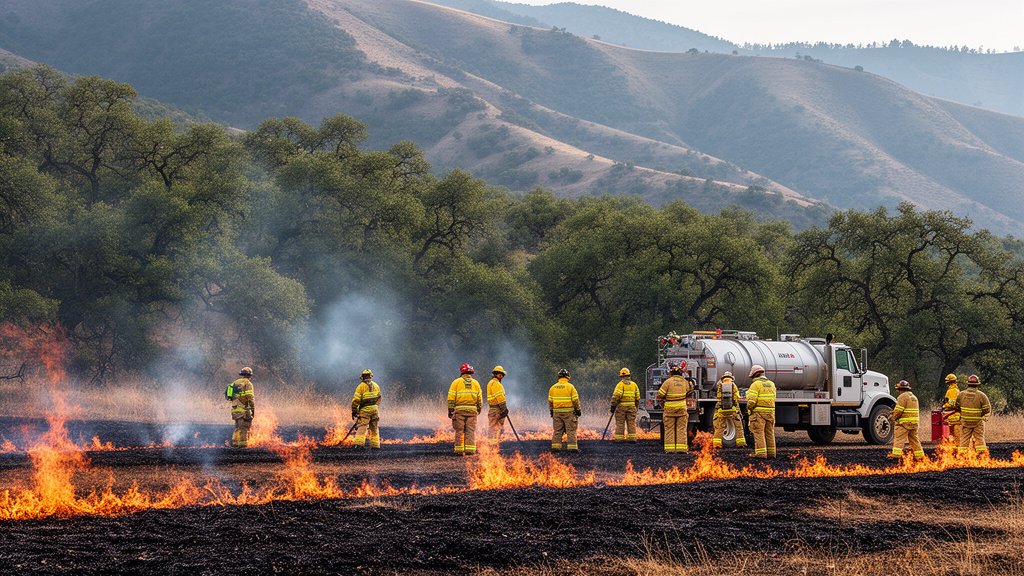
A prescribed burn is a carefully planned event, executed under precise weather conditions (temperature, humidity, and wind) and specific fuel moisture levels. It is designed to consume only targeted undergrowth, whereas a wildfire is an unplanned, uncontrollable event that spreads without limits, often driven by extreme weather conditions.
Is it safe to burn in a residential area like Mosier?
Yes, when managed correctly. PBAs operate under strict safety protocols, including the creation of firebreaks (cleared paths that stop fire), water trucks on-site, and professional supervision. The goal is to create a ‘low-intensity’ fire that smolders on the ground, minimizing smoke impact and avoiding the canopy-level heat that characterizes dangerous wildfires.