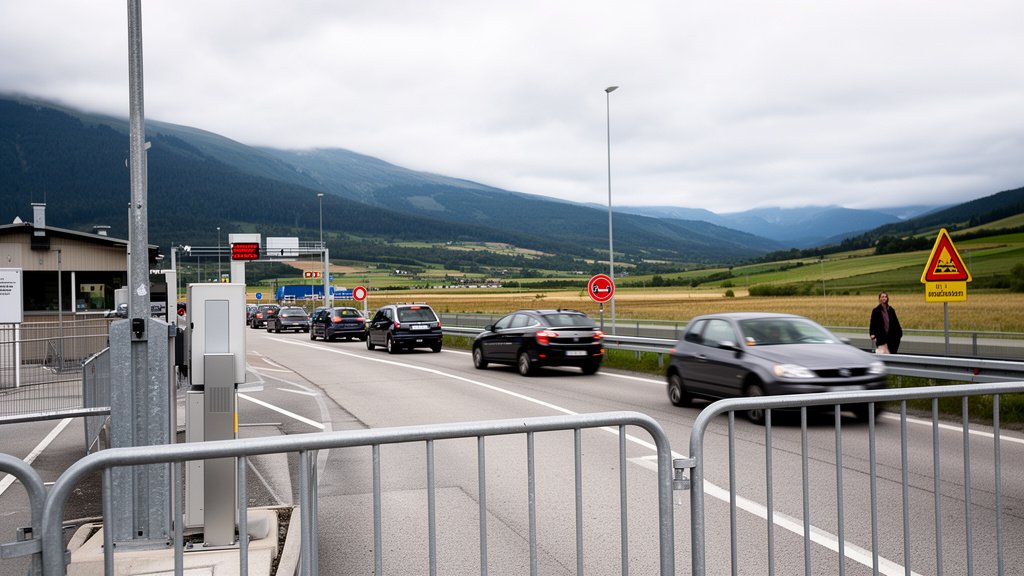
Italy has officially implemented a temporary suspension of the Schengen free-movement agreement with Spain, citing an urgent security and public order necessity following a catastrophic border incident at the Spanish enclave of Ceuta. The move, which effectively restores border checks between the two nations, comes in the wake of a tragic humanitarian event that resulted in the confirmed deaths of 57 migrants attempting to breach the perimeter of the North African territory. This unprecedented decision marks a significant rupture in European border unity, sending shockwaves through the European Commission and forcing a reassessment of migration policy across the Mediterranean.
Key Highlights
- Emergency Suspension: Italy has invoked Article 25 of the Schengen Borders Code to unilaterally pause free movement with Spain.
- Ceuta Disaster: The move follows a surge at the Ceuta border fence that claimed the lives of 57 migrants, intensifying political pressure on border management.
- Security Justification: Rome cites internal security threats and the inability of current border infrastructure to manage the sudden, high-volume influx of asylum seekers.
- EU Relations: The decision challenges the Dublin Regulation and highlights growing friction between EU member states regarding migration quotas and responsibility.
A Rupture in the Schengen Framework: The Geopolitics of Border Control
The suspension of the Schengen Agreement—the cornerstone of European integration that allows for passport-free travel across most of the continent—represents a dramatic escalation in the ongoing debate over border security. By reintroducing internal border controls with Spain, Italy is signaling a profound dissatisfaction with the current burden-sharing mechanisms that govern the European Union’s external frontiers. The tragedy at Ceuta, which claimed the lives of 57 individuals, has served as the catalyst for this decision, transforming a humanitarian crisis into a major diplomatic impasse.
The Tragedy at Ceuta: A Boiling Point
The events at Ceuta were characterized by an overwhelming rush on the perimeter fences, creating chaotic conditions that overwhelmed local security forces. As migrants sought to enter Spanish territory, the resulting crush and subsequent incidents led to the confirmed death toll of 57. This tragedy has not only ignited international condemnation from human rights organizations but has also provided the political leverage for Rome to act. The Italian Ministry of the Interior has argued that the porous nature of the EU’s southern borders—specifically those in Spain—creates an uncontrollable flow that eventually impacts the northern and central Mediterranean states. By suspending Schengen, Italy is effectively attempting to insulate itself from the secondary movement of asylum seekers who traverse Spain on their way to other parts of Europe.
The Legal Basis for the Suspension
Under the Schengen Borders Code, member states are permitted to temporarily reintroduce border controls in situations of serious threats to public policy or internal security. However, these measures are intended to be a last resort. Rome’s decision to trigger this clause is being scrutinized by Brussels, as it sets a potentially destabilizing precedent. Legal experts note that while Article 25 provides a temporary mechanism for such actions, the duration and scope of Italy’s suspension will be the subject of intense litigation and diplomatic pressure. The European Commission is expected to conduct an urgent review to determine if the measures are proportionate to the threat or if they represent a political maneuver to shift the burden of migration management back onto Madrid.
The Strain on the Dublin Regulation
The Dublin Regulation, which requires asylum seekers to be processed in the country of their first entry into the EU, has long been a point of contention. Italy has historically argued that this regulation places an unfair and disproportionate weight on frontline states. By suspending Schengen with Spain, Italy is essentially rejecting the operational reality of the Dublin system. Analysts suggest this move is a strategic attempt to force a complete overhaul of the EU’s migration pact, arguing that until external borders are secured and the load is shared equitably, member states will continue to opt out of the collective spirit of the Schengen Area.
Humanitarian Concerns and Future Outlook
While the political debate rages, the humanitarian reality remains grim. The 57 deaths at Ceuta have highlighted the lethal risks associated with the current restrictive migration policies. Human rights groups and NGOs are calling for a shift away from border fortification and toward humanitarian aid, legal migration pathways, and robust search-and-rescue operations. However, the current political climate in Europe suggests that security-focused measures will likely dominate the conversation in the near term. As diplomatic tensions between Rome and Madrid persist, the impact on cross-border trade, tourism, and daily travel remains significant, with long queues and logistical disruptions expected at checkpoints until the situation is resolved.
FAQ: People Also Ask
1. Why did Italy specifically target the Schengen agreement with Spain?
Italy claims that the management of the Ceuta border by Spanish authorities failed to prevent a mass surge, leading to a humanitarian disaster and a subsequent influx of migrants moving north. The suspension is a direct response to what Rome perceives as an unmanageable security threat coming through the Spanish route.
2. Is this suspension permanent?
No. Under the Schengen Borders Code, any reintroduction of internal border controls must be temporary. Italy has classified this as an emergency, time-bound measure, though the specific duration will depend on ongoing diplomatic negotiations with the European Commission and the Spanish government.
3. How does this affect travelers moving between Italy and Spain?
Travelers should expect immediate disruptions. The reintroduction of border controls means that passport checks, vehicle inspections, and potentially longer transit times at land borders and transit points are now in effect, effectively ending the era of seamless, barrier-free travel between the two nations for the duration of the suspension.
4. Will other EU countries follow suit?
There is significant concern in Brussels that Italy’s decision could trigger a domino effect. If other nations perceive their own borders to be compromised by similar migration pressures, they may also choose to suspend Schengen protocols, which would severely undermine the integrity of the borderless European project.