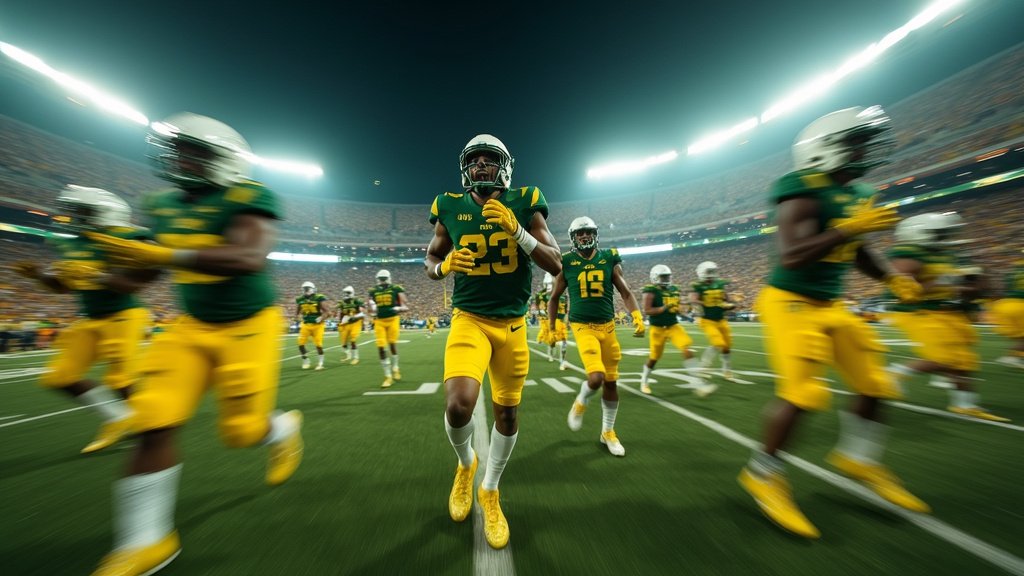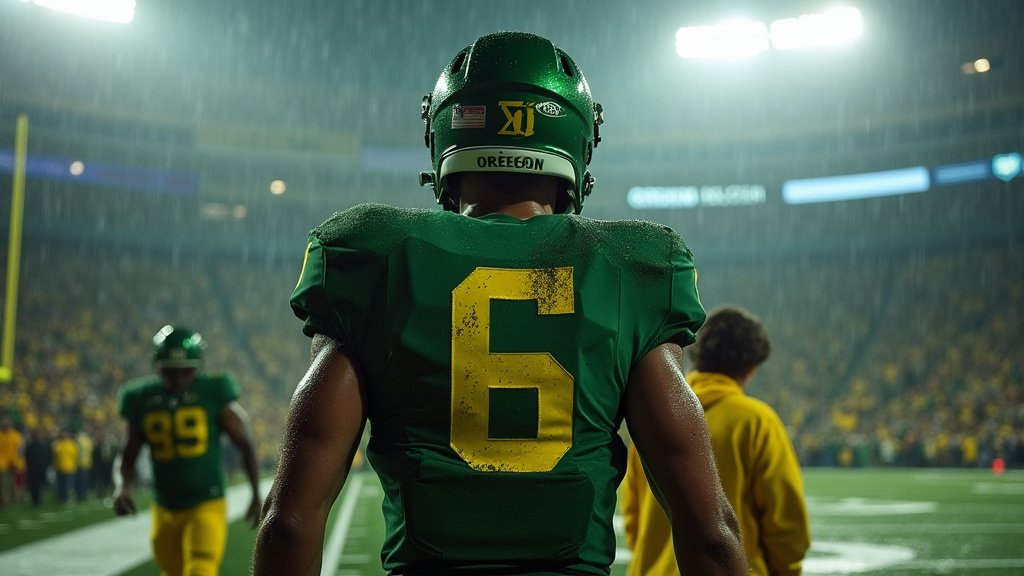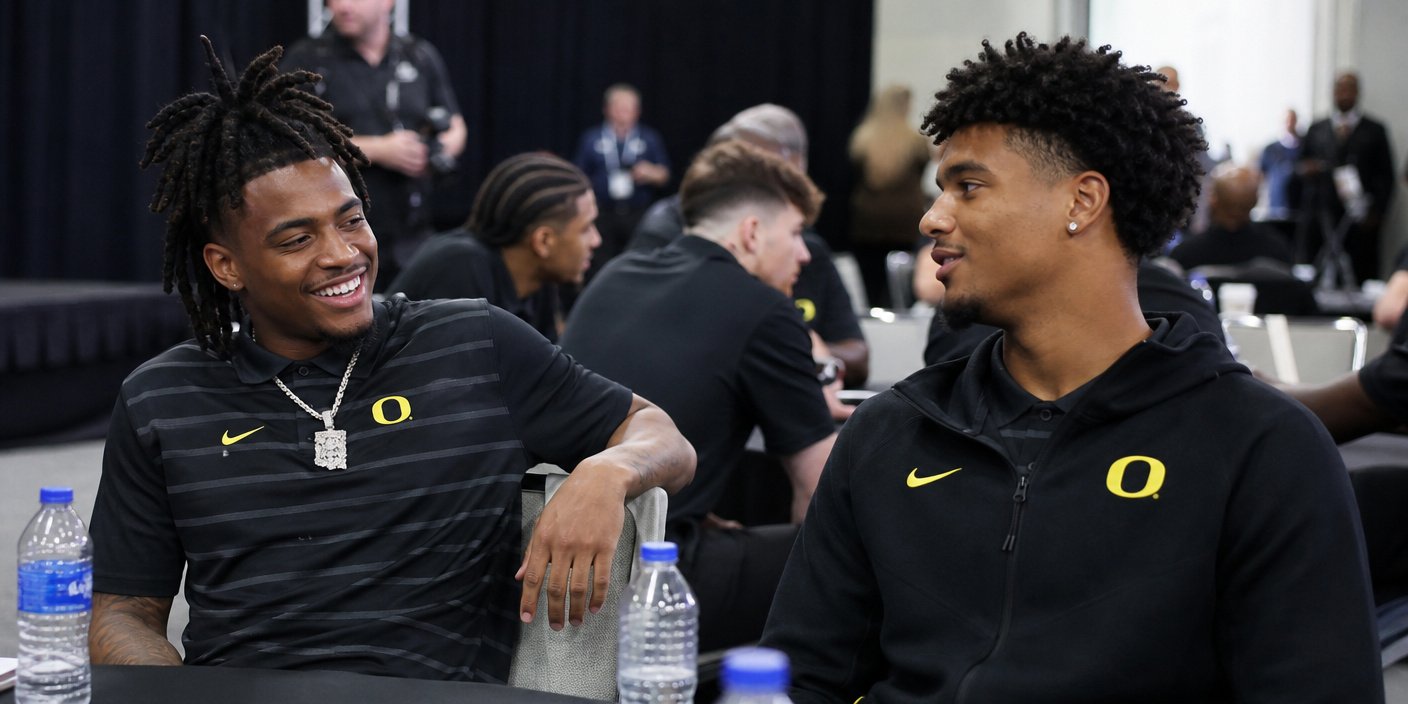
At the 2024 Big Ten Media Days in Indianapolis, the serious business of conference realignment and championship aspirations took a humorous turn. Amidst the polished PR responses and strategic breakdowns, Oregon tight end Jamari Johnson provided a candid, off-the-cuff reveal regarding the Oregon Ducks huddle culture. Johnson admitted that quarterback Dante Moore—a high-profile transfer from UCLA—has a recurring habit of flatulence within the huddle. Rather than a source of contention, Johnson framed the behavior as a unique, albeit aromatic, team-bonding tradition that serves as a stress-relief mechanism for the squad.
Key Highlights
- The Reveal: Oregon tight end Jamari Johnson publicly disclosed that quarterback Dante Moore frequently passes gas during the team’s huddle sequences.
- The Context: The revelation occurred during Big Ten Media Days in July 2024, highlighting the lighthearted side of Oregon’s intense preparation.
- Team Dynamics: Johnson characterized the behavior not as a nuisance, but as a deliberate part of the team’s humor-based bonding tradition.
- Viral Impact: The quote gained immediate traction on social media, becoming a symbol of the relaxed, unified culture the Ducks are fostering ahead of their inaugural Big Ten season.
The Psychology of the Gridiron Huddle
The American football huddle is perhaps the most pressurized, intimate square footage in all of professional and collegiate sports. It is the tactical nerve center where 11 athletes stand in tight proximity, sweat-drenched and adrenaline-fueled, executing complex plays that require absolute precision. Historically, the huddle is depicted as a place of stoicism and intense focus—the domain of legendary quarterbacks commanding respect. However, the admission by Jamari Johnson about Dante Moore offers a revealing glimpse into the modern, humanized locker room culture that defines current collegiate programs like the Oregon Ducks.
In high-stress environments, humor is often utilized as a coping mechanism. The physiological demands of playing for a powerhouse like Oregon, coupled with the rigorous expectations of the Big Ten conference, create an atmosphere that can easily become stifling. By introducing an element of absurdity—or, in this case, biological spontaneity—into the huddle, the players are effectively breaking the tension. Psychologists who study team dynamics often note that shared humor, even when crude, acts as a “leveler.” It reminds players that, beyond the helmet and the uniform, they are a group of young men sharing a communal experience. When Dante Moore, a quarterback bearing the weight of massive expectations, can laugh at himself or be the butt of a joke, it signals to the rest of the roster that the team is comfortable, secure, and unified.
The Transition Factor: Integrating Dante Moore
For Dante Moore, the transition to the Oregon program is a critical pivot point in his career. Transferring from UCLA, Moore entered a quarterback room teeming with talent and a fanbase with championship-or-bust expectations. Integrating a new leader into a well-established roster is notoriously difficult. Building rapport is not just about executing routes or timing throws; it is about finding a social rhythm. The huddle tradition mentioned by Johnson suggests that Moore has successfully integrated into the “Oregon way.” It implies he is not standing on ceremony or demanding reverence based on past accolades; he is simply one of the guys. This type of social permeability is often the underrated factor in championship runs. Teams that play well together usually like each other, and they are usually comfortable enough to tolerate each other’s quirks.
Levity in the Big Ten Era
Oregon’s move to the Big Ten is arguably the most significant shift in the school’s athletic history. The change brings new travel schedules, new climate considerations, and a new roster of formidable opponents. The media has focused heavily on the logistics—the cross-country flights, the adaptation to different styles of physical play in the Midwest—but less on the emotional adaptation. The viral nature of this story, while admittedly humorous, serves a broader narrative purpose: it suggests that the team is remaining grounded.
Media days are traditionally highly sanitized events. Athletes are coached to provide “coach-speak”—rehearsed, safe, and ultimately boring answers. When a player breaks that script to share a locker room secret, it creates a moment of authenticity. It shifts the perception of the Oregon Ducks from a corporate machine to a group of athletes possessing personality and camaraderie. For the fanbase, this is engaging; for the team, it is a sign that they have maintained their identity despite the major structural shift in their conference affiliation.
The Media Day Paradox
Finally, we must consider the modern evolution of the athlete-media relationship. In the NIL (Name, Image, and Likeness) era, players are more empowered and more visible than ever before. They are no longer just pawns in a university’s athletic PR machine. They are brands in their own right, and they have the agency to determine how they are perceived. Jamari Johnson’s decision to share this anecdote during a media scrum highlights the shift toward “unfiltered” sports media. Fans are hungry for the behind-the-scenes reality, not just the stat sheets. They want to know who the players are, what they talk about, and what makes them laugh. By leaning into the viral nature of this comment, the Ducks demonstrated a high level of media savvy, effectively humanizing their team to a national audience before the season even kicked off.
FAQ: People Also Ask
Q: Did this comment hurt Dante Moore’s reputation?
A: Quite the opposite. In the context of team sports, this kind of revelation humanizes the quarterback and highlights the close-knit nature of the Oregon Ducks locker room, generally seen as a positive sign of team chemistry.
Q: Is this a common practice in college football?
A: While specific “huddle habits” vary by team, locker room humor is a staple of collegiate athletics. Athletes spend countless hours together, and informal bonding rituals are a standard part of navigating the intense physical and mental strain of the sport.
Q: Why was this discussed at Big Ten Media Days?
A: Athletes are often asked open-ended questions about team dynamics and relationships. Jamari Johnson likely shared the story to illustrate the closeness of the team and the relaxed, yet focused, environment the Oregon Ducks have cultivated under their coaching staff.
Q: How does this impact the Ducks’ performance in the Big Ten?
A: While it has no direct impact on gameplay statistics, it is a strong indicator of team morale. Unified teams that feel comfortable with one another tend to handle adversity better on the field, which is a necessary trait for any team navigating the challenges of a major conference transition.