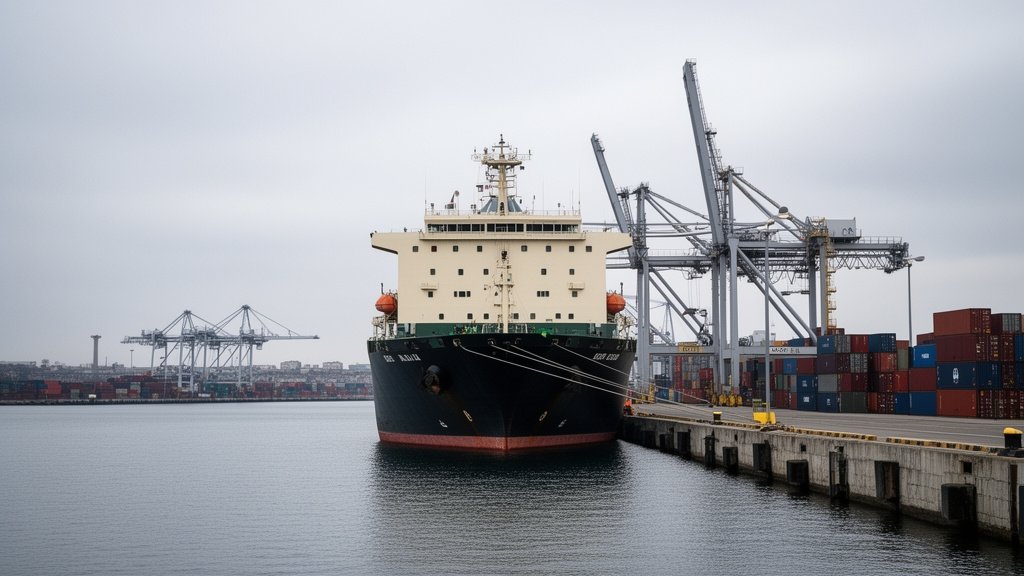
The Indian Embassy in Ukraine is currently engaged in urgent diplomatic coordination following a projectile strike on the cargo vessel MV AGN RAGNAR at the port of Odessa. As the geopolitical situation in the Black Sea remains volatile, the safety and status of the four Indian nationals aboard the vessel have become the focal point of New Delhi’s intervention in the region. According to the latest situational report, while two of the Indian crew members have been successfully accounted for, the status of the remaining two continues to be the subject of an active investigation, with local authorities and diplomatic representatives working to clarify the circumstances.
Key Highlights
- Immediate Incident: The cargo ship MV AGN RAGNAR was struck by a projectile while docked at the port of Odessa, a key logistical hub in the ongoing Ukraine conflict.
- Crew Safety Status: Out of the four Indian nationals identified on the manifest, two have been confirmed safe; the whereabouts and status of the other two remain under intense investigation.
- Diplomatic Response: The Indian Embassy in Ukraine has activated emergency communication channels with Ukrainian authorities and relevant stakeholders to ensure the safety of the affected citizens.
- Operational Complexity: The strike underscores the persistent and heightened risks for commercial shipping and civilian maritime personnel operating within the Black Sea theater.
The Maritime Crisis in the Black Sea Corridor
A Volatile Theater for Commercial Shipping
The incident involving the MV AGN RAGNAR is a stark reminder of the fragile nature of maritime security in the Black Sea, which has served as a critical, yet perilous, corridor for global trade since the commencement of the conflict. Odessa, once a bustling hub for grain exports and international commerce, has frequently become the site of kinetic activity. For commercial vessels, the transition from high-seas transit to port docking operations creates a vulnerable window of exposure. The strike on the MV AGN RAGNAR highlights the difficulty of establishing safety guarantees in an environment where dual-use infrastructure—such as ports—is continuously monitored and contested by various military factions.
This event also brings to the forefront the challenges faced by the International Maritime Organization (IMO) and other regulatory bodies in enforcing safety protocols for merchant ships in conflict zones. Unlike military vessels, commercial cargo ships often lack the sophisticated defensive capabilities required to mitigate risks from precision-guided projectiles or drone strikes. Consequently, the onus falls heavily on diplomatic missions to negotiate temporary de-confliction zones, a task made significantly more complex by the fluidity of the front lines.
The Diplomatic Balancing Act
For the Indian government, this incident necessitates a highly calibrated diplomatic approach. New Delhi has consistently maintained a stance of cautious neutrality throughout the conflict, prioritizing the safety of its diaspora and protecting its economic interests, particularly regarding energy imports and food security. The Indian Embassy’s immediate response to the MV AGN RAGNAR incident is indicative of this policy: rapid, humanitarian-focused, and non-confrontational. By engaging directly with local Odessa port authorities and the broader Ukrainian diplomatic apparatus, India is seeking to expedite information gathering without exacerbating regional tensions.
This diplomatic maneuver is not isolated; it reflects India’s broader strategy of using its bilateral relationships to influence outcomes for its citizens. The Ministry of External Affairs (MEA) faces the difficult challenge of working with local contacts who are operating under the immense stress of a wartime economy. Every detail regarding the two missing crew members requires verification that is often hampered by the disruption of communication infrastructure in the strike zones.
Human Element: The Plight of Maritime Workers
Beyond the geopolitical grandstanding, there is a profound human element that cannot be ignored. The crew members of vessels like the MV AGN RAGNAR are caught in the crossfire of a conflict far removed from their personal geopolitical affiliations. For the two individuals still under investigation, the lack of immediate confirmation of their safety represents a harrowing experience for their families and a logistical nightmare for their employers.
Maritime unions and international welfare organizations have repeatedly warned about the mental and physical toll on seafarers who continue to serve on ships passing through, or docking at, Black Sea ports. The psychological burden of operating under the constant threat of aerial bombardment is immense. In the wake of this incident, there is likely to be a renewed call for better safety insurance protocols and, potentially, the implementation of more robust ‘safe passage’ corridor guarantees for commercial maritime personnel.
Economic Implications and Future Outlook
The strike on the MV AGN RAGNAR will undoubtedly ripple through the global shipping insurance market. Insurance premiums for vessels traversing the Black Sea are already significantly elevated due to the ‘war risk’ premium surcharge. Incidents involving projectile strikes often lead to further spikes in these rates, effectively making the cost of trade in the region prohibitive for smaller operators.
Looking ahead, stakeholders in the shipping industry will be closely watching how this incident is resolved. If the safety of the remaining Indian crew members can be confirmed quickly, it may provide a minor sense of stability. However, if the status of the missing personnel remains ambiguous, it will likely serve as a catalyst for a more cautious approach from shipping companies, potentially leading to further delays in the supply chain of vital commodities, particularly grain and fertilizer, which depend heavily on the Odessa export hub.
FAQ: People Also Ask
1. What is the current status of the Indian crew members?
As of the latest reports, two of the four Indian nationals on board the MV AGN RAGNAR have been accounted for. The status of the remaining two crew members is currently under investigation by the Indian Embassy in coordination with local authorities.
2. Is the Port of Odessa closed following the strike?
While operational disruptions occur following such strikes, the port’s status remains fluid. Shipping companies are advised to monitor official notices and maritime safety warnings (NAVAREA) regarding transit through the Black Sea.
3. How is the Indian government assisting?
The Indian Embassy in Ukraine is in constant contact with local authorities in Odessa to ascertain the welfare of the crew and provide necessary consular support. The MEA is monitoring the situation hour-by-hour to ensure all diplomatic channels are utilized to secure the crew’s safety.