In a defining shift for international diplomacy, Spanish Prime Minister Pedro Sánchez and Brazilian President Luiz Inácio Lula da Silva have launched a pivotal two-day summit in Barcelona. The gathering, which brings together over a dozen heads of state from the Global South, aims to construct a unified front against isolationist US policies, specifically challenging the current Washington administration’s approach to global trade, security, and multilateralism. This unprecedented meeting signifies a strategic pivot for Spain, positioning the nation not merely as a European state, but as a critical bridge between the European Union and emerging global powers seeking autonomy from traditional, US-led paradigms.
Key Highlights
- Deepening Bilateral Ties: Spain and Brazil solidified their partnership by signing 15 comprehensive bilateral agreements focused on critical minerals, telecommunications, and artificial intelligence.
- Building a Counter-Bloc: The summit is explicitly designed to position Barcelona as a hub for “progressive resistance,” aiming to revive left-wing political trends and defend multilateral institutions from the pressures of the current US administration.
- Economic Autonomy: The talks emphasize reducing dependence on US-controlled supply chains, with a heavy focus on securing independent access to resources essential for the global green energy transition.
- Defending Multilateralism: Leaders expressed unified opposition to US foreign policy interventions, framing their collaboration as a necessary defense of international law and democratic norms.
The Barcelona Declaration: Architecting a New Global Order
The summit in Barcelona, currently underway at a former royal palace, represents more than a routine diplomatic engagement. It is a calculated effort to institutionalize a coalition that can act as a counterbalance to the unilateralism emanating from Washington. Prime Minister Sánchez and President Lula, both standard-bearers for the progressive left in their respective regions, have framed this alliance as a fundamental necessity for global stability. The central thesis of the summit is that the current US administration, through its aggressive tariffs, threats to abandon international agreements, and perceived “law of the jungle” approach to foreign policy, has created a vacuum of leadership that the Global South must now fill.
The Shift Toward Sovereign Strategic Autonomy
One of the primary thematic pillars of this summit is the concept of “strategic autonomy.” For years, the European Union has debated this term largely within the context of defense and security. However, in Barcelona, the scope has expanded to include economic and technological sovereignty. By signing agreements on artificial intelligence and telecommunications, Spain and Brazil are signaling to global markets that they intend to build digital and technological infrastructures that are not reliant on US-sanctioned providers. This shift is not merely ideological; it is a pragmatic move to insulate their respective economies from the volatility of US domestic policy shifts, such as sudden tariff impositions or restrictions on foreign investment.
The Mineral Security Pact
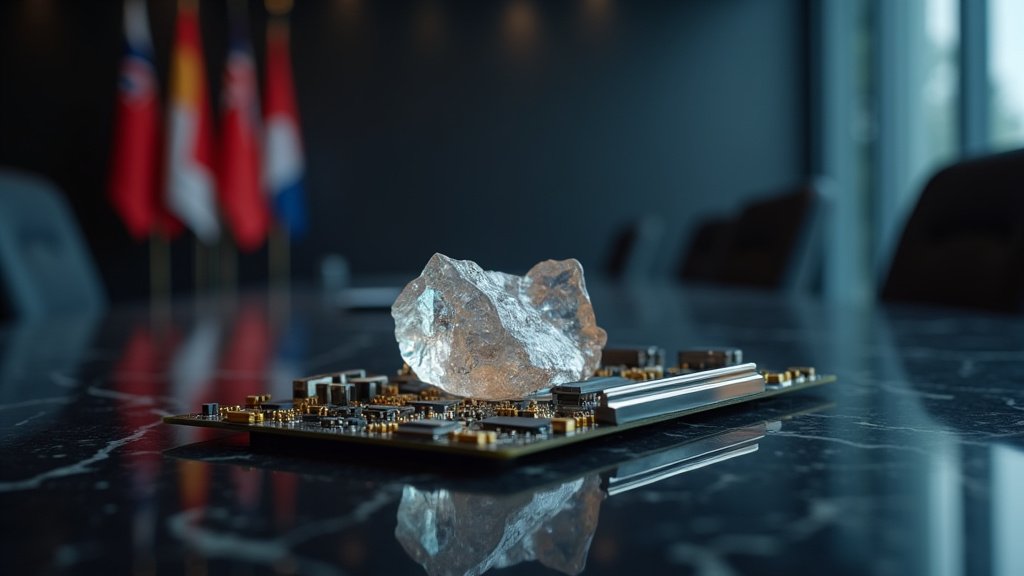
Perhaps the most concrete outcome of the initial phase of the summit is the focus on critical minerals. As the world transitions toward renewable energy and high-tech manufacturing, the competition for lithium, cobalt, and rare earth elements has intensified. The US administration’s protectionist policies have created supply chain bottlenecks, leaving many nations scrambling for security. By coordinating their acquisition and processing strategies, Spain and Brazil—and the other attending nations—are establishing a “resource-sharing” framework. This pact is designed to ensure that the Global South maintains greater control over its raw materials, preventing them from being exploited under terms dictated by a increasingly isolationist Washington.
Geopolitical Realignment: Beyond the Traditional West
The discussions in Barcelona reflect a broader, more profound realignment. For decades, the geopolitical axis was firmly anchored in the Transatlantic relationship. However, the current US administration’s strained relations with traditional allies in Europe and its erratic engagement with Latin America have accelerated the search for alternative partners.
The Role of Spain as an Intermediary
Spain is uniquely positioned in this new era. As a member of the EU and NATO, it retains deep connections to Western institutions. Yet, by spearheading this initiative with Brazil, it is acting as a conduit between the industrialized North and the burgeoning South. This dual role allows Spain to amplify the concerns of the Global South within the halls of European power, while simultaneously providing a platform for those nations to assert their interests on the world stage. Sánchez’s assertion that the relationship between Spain and Brazil “goes far beyond the purely bilateral” suggests that Spain is effectively seeking to lead an intra-European shift toward a more independent foreign policy stance, one that is less beholden to the whims of the US executive branch.
The Impact of Populism and the Counter-Movement
It is impossible to ignore the domestic political context of this summit. Both Sánchez and Lula are operating in environments where far-right populism remains a potent force. By successfully convening a diverse group of international leaders in Barcelona, they are attempting to project an image of competency, internationalism, and progressive efficacy. The narrative they are crafting is one of “healing”—contrasting their approach with what they describe as the “wounding” and “divisive” policies of Donald Trump. This framing is essential for their domestic audiences, serving to highlight that there is a viable, organized alternative to the nationalist currents currently sweeping through the West.
FAQ: People Also Ask
1. Why is this summit being held in Barcelona rather than a capital city?
Barcelona was chosen for its symbolic significance as a hub of progressive politics and its strong international connectivity. It allows the summit to take place in a neutral, highly globalized environment, free from the immediate bureaucratic constraints of a capital city like Madrid or Brasília.
2. Is this officially an ‘anti-Trump’ summit?
While organizers, including President Lula, have publicly distanced the summit from a single personality—stating they are focused on democracy and multilateralism—the underlying subtext and policy goals are explicitly aimed at mitigating the negative effects of the current US administration’s policies on global trade and security.
3. What does this mean for the future of NATO?
While the summit does not directly threaten NATO, it highlights the growing divergence in strategic priorities between the US and its allies. By forging deeper independent partnerships, participating nations are hedging their bets, recognizing that they can no longer rely solely on US security guarantees or economic leadership.
4. Will more countries join this alliance?
The summit is being treated as the launchpad for a broader initiative. Organizers have indicated that the agreements signed in Barcelona are designed to be scalable, with the intention of bringing in additional partners from across the Global South in the coming months.